Semrush vs Similarweb: Which One Fits Your Work?
By Toy Wen Da, Co-Founder · Updated · 5 min read · scored 97/100
If you're choosing between Semrush and Similarweb, the short answer is this: Semrush fits teams doing hands-on SEO and content work, keyword research, rank tracking, site audits. Similarweb fits teams that need competitive traffic and market intelligence first, SEO features second. This Semrush vs Similarweb comparison walks through where each one pulls ahead.

Semrush vs Similarweb at a Glance

| Category | Semrush | Similarweb | Why It Matters |
|---|---|---|---|
| Starting price | See their pricing page | See their pricing page | Both platforms adjust tiers often; check current rates before budgeting |
| Free plan | Limited free account with daily search caps | Free account with capped lookups | Good for testing before you buy either tool |
| Best for | SEO teams, content marketers, agencies | Marketers tracking competitors, market research, media buyers | Matches the tool to the actual job |
| Standout feature | Keyword research, rank tracking, content tools, site audits | Traffic estimation, audience and market share data | Each tool leads with a different core use case |
| Main limit | Traffic estimates are modeled from rank data, not direct user panels | SEO toolset is narrower than a dedicated SEO suite | Know the gap before you rely on it for the other job |
Similarweb's own comparison page claims it delivers "a full marketing stack for only $399/month," while it says comparable Semrush plans run "over $450." That's Similarweb's framing of the cost gap, not an independently confirmed price match, tier names and features differ enough that the comparison isn't apples-to-apples. Check each vendor's current pricing page directly.
Features, Data, and Who Wins Each Fight
Keyword and Content Features
Semrush was built for SEO teams first. Keyword research, content gap analysis, rank tracking, and site audits all live natively in the platform. If your week involves finding keywords, tracking rankings, and planning content, this is the deeper toolset.
Similarweb includes keyword research too, listing "advanced keyword analysis" among its reasons to switch. But its core strength sits elsewhere, traffic and audience data, not content planning.
Winner for day-to-day SEO work: Semrush.
Traffic and Market Data
This is where the two tools diverge most. Semrush estimates traffic largely from ranking positions and keyword data. Similarweb says its traffic numbers come from a mix of first-party, third-party, and partnership data, including real user behavior.
Similarweb points to a SparkToro study it cites as finding its data more closely aligned to Google Analytics than competitors', by what it describes as "at least 30%." That's Similarweb's own cited source, worth weighing but not independently verified here.
Winner for competitive traffic and market sizing: Similarweb.
Ease of Use and Support
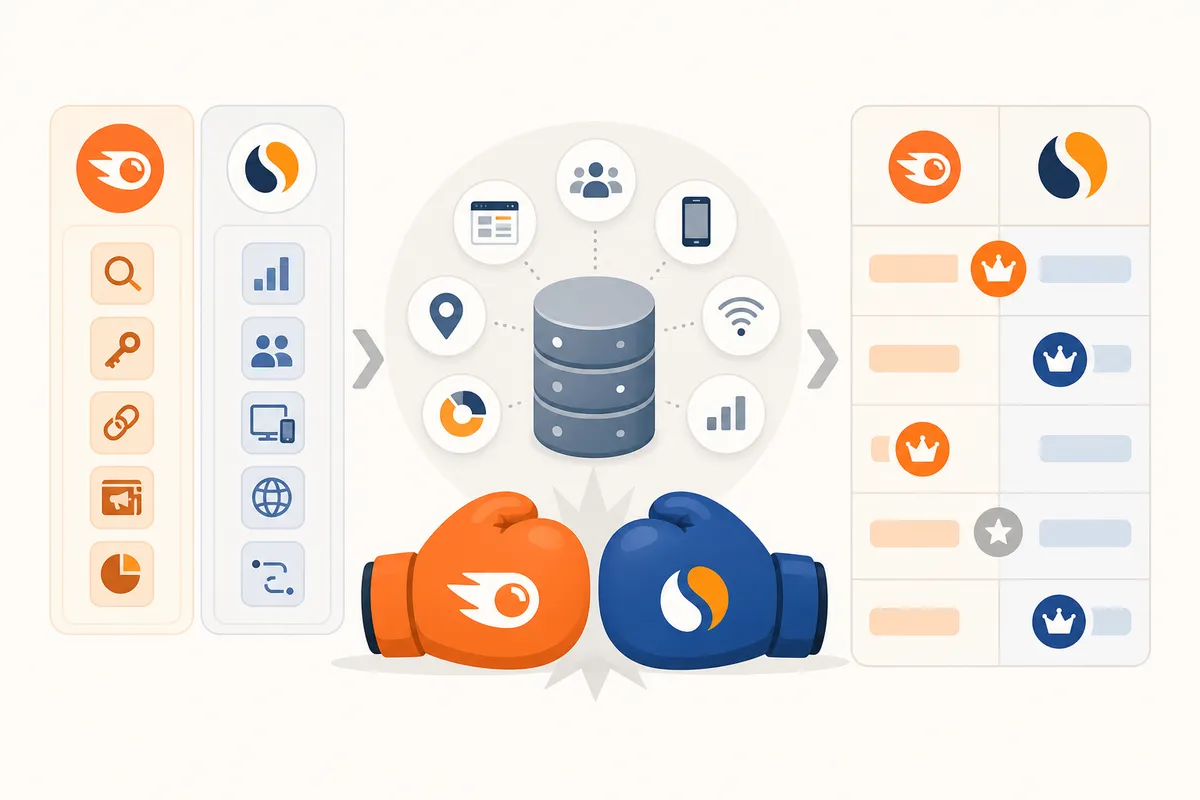
Similarweb references G2 user ratings on its own comparison page: reviewers rated its ease of use at 86%, its web traffic reporting at 89%, and its support quality at 87%. Similarweb also notes it placed in G2's 2024 Best Software Awards, among more than 150 ranking reports out of 3,395 eligible products that year, landing at #33 in the overall top 100.
Semrush has a steeper learning curve for new users, given how many modules it packs in, though most of its reports are self-explanatory once you're oriented.
Winner for a gentler learning curve: Similarweb, by its own cited ratings.
Pricing Structure
Neither company publishes every tier's exact price in a way that stays stable for long, so treat any number as a snapshot. Confirm the current figure on each company's pricing page before budgeting, since plans and credit limits shift between updates.
Winner on raw cost claims: Similarweb, by its own framing, but compare actual feature parity for your use case before deciding either one is "cheaper."
Common Mistakes When Choosing Between Them

- Picking based on price alone. A cheaper plan that lacks the keyword depth your content team needs isn't a bargain.
- Assuming traffic numbers are exact. Both tools estimate traffic. Treat the numbers as directional, not precise.
- Ignoring your actual workflow. If your job is writing and ranking content, a traffic-intelligence tool won't replace an SEO suite.
- Skipping the free trial. Both offer limited free access, test real workflows before paying.
- Comparing list prices instead of the plan you'd actually use. Entry tiers often cap the features that matter most.
If you're also weighing cost against a third option, this Ahrefs vs Semrush cost breakdown walks through where the real spending differences show up.
FAQs
Is Semrush or Similarweb more accurate for traffic data?
Similarweb cites a SparkToro-attributed study claiming closer alignment to Google Analytics than competitors, by what it describes as at least 30%. Semrush estimates traffic from ranking and keyword signals rather than a user panel. Neither figure is independently verified here, so test both against your own analytics before trusting either.
Can I use Semrush and Similarweb together?
Many agencies do, Semrush for keyword research and content planning, Similarweb for competitive traffic and market context. They answer different questions rather than duplicating each other.
Does Similarweb have SEO tools like Semrush?
Yes, Similarweb lists site audit, backlink analysis, rank tracking, and keyword research among its features. But its core identity is traffic and market intelligence, not a dedicated SEO suite.
Which tool is better for small businesses?
It depends on the job, not company size. A small business doing content and keyword work leans toward Semrush. One focused on sizing up competitors leans toward Similarweb.
Do both tools offer free plans?
Both offer limited free access with daily or monthly caps on lookups. Neither free tier replaces a paid plan for ongoing work, check current limits on each pricing page.
Put the Right Tool Next to Your Actual Workflow
Before you commit to either platform, write down the three reports you pull most often, keyword gaps, rank changes, or competitor traffic, and match that list against what Semrush and Similarweb actually cover. That's a more reliable test than any feature chart, including the full Semrush vs Similarweb comparison you just read. If you want a clearer read on what your own site needs before you add either tool to the budget, talk to the team and get a sample SEO report built from your actual data.
## Resources / References

1. [G2's](https://www.g2.com)

## Sources

- [Semrush vs. Similarweb: Which Is Better & More Accurate?](https://trafficthinktank.com/semrush-vs-similarweb/)
- [Ahrefs vs Semrush vs Similarweb traffic estimates? Or ...](https://www.reddit.com/r/bigseo/comments/os22b5/ahrefs_vs_semrush_vs_similarweb_traffic_estimates/)
- [Similarweb vs. Semrush - See Why We Are the Best](https://www.similarweb.com/corp/search/similarweb-vs-semrush/)
- [Semrush vs Similarweb: Best SEO Tool In 2026?](https://www.youtube.com/watch?v=uxG8nuh7nWY)
- [Semrush vs Similarweb 2026: Our In-Depth Comparison](https://www.01net.com/en/seo/tools/semrush-vs-similarweb/)
About the author
SearchBlueprint researched, wrote and scored this article with the content pipeline our customers run on their own sites. The score in the byline is what our content engine gave this page before it published. Nothing here is reviewed by hand, which is the point: it is the product's output, published where anyone can check it.