9 Best Rated Competitor Analysis Tools for AI Search Optimization in 2026 (Free and Paid)
By Toy Wen Da, Co-Founder · · 12 min read · scored 99/100
The best rated competitor analysis tools for AI search optimization combine two jobs: tracking what rivals rank for in Google, and tracking how ChatGPT, Perplexity, and AI Overviews describe your brand versus theirs. SearchBlueprint is the strongest starting point for most small businesses; agencies tracking AI prompts across engines may prefer Profound or Peec AI instead.

This guide ranks nine options, tells you what each one actually does, and gives you real prices so you're not guessing. None of it is paid placement, it's built from public pricing pages and product documentation.
How We Chose the Best Competitor Analysis Tools for AI Search Optimization
This comparison is built from each provider's own website, documentation, and pricing pages, not hands-on testing of every tool. Four criteria mattered most for the reader comparing options before picking one:
- Price and free plan. What it costs to start, and whether you can try it without a credit card.
- What it does well. The one or two jobs each tool is genuinely strong at.
- Its limits. What you'd still need a second tool for.
- Fit for AI search, not just classic SEO. Whether it tracks how AI engines cite and describe your brand, not only where you rank on Google.
That last point matters more each year. Gartner has predicted that traditional search engine volume will drop 25% by 2026 as more queries move to AI chatbots and virtual agents, according to its February 2024 press release. That's one reason competitor analysis tools for AI search optimization are a different category than the backlink checkers of a few years ago. For a deeper look at why this shift matters for traffic specifically, see how AI search optimization tools increase organic traffic.
If you're choosing across a wider set of SEO jobs than just competitor tracking, it helps to work through how to choose the best AI SEO tools job by job before you commit budget to any one platform.
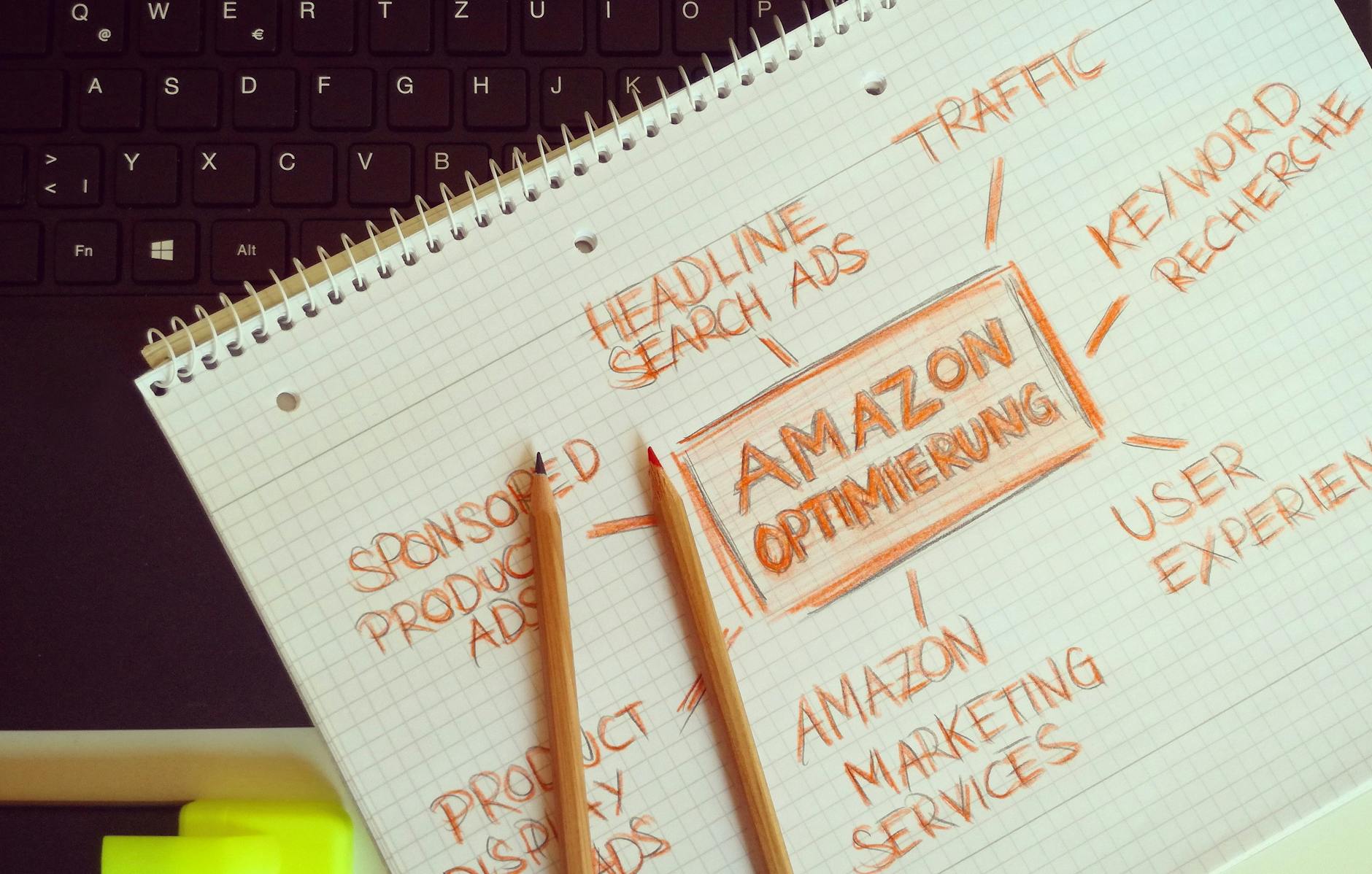
The 9 Best Rated Competitor Analysis Tools for AI Search Optimization
1. SearchBlueprint: best for small businesses and agencies that want it built into a weekly plan
SearchBlueprint runs keyword research and competitor analysis as part of a wider SEO plan that maps each target search to a specific page on your site. It also tracks rankings and AI search visibility over time, and runs technical, on-page, and schema audits so you can see where a competitor is beating you and why. The platform then writes and publishes weekly articles to WordPress, Shopify, Wix, or Webflow once you approve them, and refreshes pages that start slipping.
Pricing: there's a free plan to start, with paid Base and Agency tiers above it, see their pricing page for current rates. SearchBlueprint also offers 60+ free SEO tools and a free SEO Academy.
- Pick it if: you want competitor and keyword research tied directly to content production, not a separate dashboard you have to interpret yourself.
- Skip it if: you need deep backlink-gap analysis at Ahrefs's depth, or a dedicated multi-engine AI-prompt tracking console like Profound's.

2. Semrush: best for an all-in-one SEO and competitor stack
Semrush covers SEO, PPC, content, and social in one platform. Its Market Explorer shows market share and competitor positioning at a glance. Keyword Gap and Backlink Gap tools surface keywords and links your competitors have that you don't, and Traffic Analytics breaks down where their visitors come from.
Semrush's Pro plan is listed from $139.95 a month, as of October 2026, with no standalone free plan, only a free trial. For AI search tracking specifically, Semrush offers an add-on (built on its Otterly acquisition) that checks 4 AI engines on a weekly basis, starting around $99/month on top of a core plan.
- Pick it if: you want one login for SEO, ads, content, and social competitor data.
- Skip it if: you need daily AI-visibility tracking, Semrush's AI add-on only refreshes weekly.
3. Ahrefs: best for backlink-driven competitor research
Ahrefs is built around Site Explorer, which shows any competitor's organic traffic, top pages, and referring domains. Content Gap and Keyword Explorer find topics and terms you're missing, and the Backlink Tracker shows new links pointing at rivals in near real time.
Pricing starts from $129 a month for the Lite plan, as of October 2026, with no free plan beyond a trial. Ahrefs also added Brand Radar AI, which tracks brand mentions across ChatGPT, Perplexity, Gemini, Copilot, and Google AI Overviews, though it's a signal layer bolted onto the existing product, not a full AI-visibility workflow.
- Pick it if: backlinks and organic traffic are your main competitive lever.
- Skip it if: you need prompt-level AI tracking or content tools built for AI citations, Brand Radar doesn't include either.
Best Dedicated AI-Visibility Trackers

4. Profound: best for enterprise teams tracking AI visibility across prompts
Profound tracks brand visibility across ChatGPT, Perplexity, Gemini, Copilot, and Google AI Overviews. Its standout feature, Prompt Volumes, shows what real users ask AI engines, broken down by region and demographic, a dataset few competitors ship.
Pricing starts at $99/month for a ChatGPT-only plan with 50 tracked prompts. Full multi-platform coverage starts at $399/month, and features like Prompt Volumes, full API access, and unlimited seats are enterprise-only at custom pricing. Profound doesn't support multi-account management, so an agency running five client accounts needs five separate subscriptions.
- Pick it if: you're an enterprise team that needs panel-level data on what people actually ask AI engines.
- Skip it if: you're an agency managing multiple clients, the lack of multi-account support gets expensive fast.
5. Peec AI: best for a quick AI-visibility snapshot
Peec AI offers daily prompt monitoring, sentiment scoring, and share-of-voice charts across ChatGPT, Claude, Perplexity, Grok, and DeepSeek. The interface is simple, with a short learning curve compared to larger platforms.
Pricing runs roughly $95 to $199 a month, as of October 2026, with no published free plan. It leans toward passive monitoring: there's no AI traffic attribution and no content creation or optimization built in, so you'll export the data and act on it elsewhere.
- Pick it if: you want a clean, affordable read on AI visibility without a steep setup.
- Skip it if: you want the tool to also suggest or write content fixes, Peec only reports.
6. AthenaHQ: best for turning AI visibility gaps into tasks
AthenaHQ covers 8 AI engines on every plan, and its Action Center converts visibility gaps into structured, assignable tasks rather than just a report. The company says it was founded by former Google Search and DeepMind engineers.
Pricing starts at $295/month for 3,600 credits, with overage priced at $100 per 1,250 additional credits. That credit model can make monthly spend unpredictable, tracking 50 prompts across 8 engines daily can burn through the limit before the month ends. The most advanced features, including its ACE Citation Engine and API access, sit behind a $2,000+/month enterprise tier.
- Pick it if: you want visibility gaps turned into a task list your team can execute against.
- Skip it if: you want predictable flat-rate pricing, the credit system punishes heavy daily tracking.
Best Budget and Niche Competitor Tools

7. Moz Pro: best for budget-conscious keyword gap analysis
Moz Pro's Keyword Gap tool compares your rankings against competitors' and surfaces terms you're missing. Its Rivalry feature uses domain authority and keyword overlap to help identify who your real competitors are, and Link Explorer breaks down their backlink profiles.
The Starter plan runs $49/month (1 user, 1 tracked site, 50 tracked keywords), with Standard at $99/month, Medium at $179/month, and Large at $299/month, as of October 2026. Reviewers on G2 rate it 4.3/5 across 568 reviews, and Capterra shows 4.5/5 across 348 reviews. One noted limit: competitor content analysis isn't included, and data on niche or emerging competitors can be thin.
- Pick it if: budget is tight and you mainly need keyword-level competitor comparisons.
- Skip it if: you need competitor content analysis in the same tool, you'll need to add one for that.
8. Search Atlas: best for automation plus bundled research credits
Search Atlas pairs Site Explorer, Keyword Gap, and Backlink Analyzer with Scholar, a content-scoring tool, and OTTO, an AI assistant that automates on-page and technical fixes as Google's algorithm changes.
The Starter plan is $99/month (2,000 competitor research credits, 500 keyword lookups), Growth is $199/month (200,000 credits), and Pro is $399/month (500,000 credits), as of October 2026. G2 reviewers rate it 4.8/5 across 91 reviews, and Capterra shows 4.9/5 across 63 reviews. One cited limit: the breadth of features can overwhelm SEO beginners, and the platform has had past growing pains with stability as it scaled.
- Pick it if: you want bundled research credits and some of the fix work automated for you.
- Skip it if: you're new to SEO tools and want something simpler to start with.
9. SimilarWeb: best for benchmarking traffic and market share
SimilarWeb focuses on web and app traffic estimates, audience overlap, and market share rather than keyword-level SEO data. It's useful for a quick read on how much traffic a competitor pulls and where it comes from, without logging into their analytics.
Pricing is by request, see their pricing page for current rates, since no public starting price is confirmed as of October 2026.
- Pick it if: you need a fast, high-level read on competitor traffic and market position.
- Skip it if: you need precise, keyword-level competitor data, SimilarWeb works in estimates, not exact figures.
Competitor Analysis Tools Compared at a Glance
| Tool | Best For | Free Plan | Starting Price (Oct 2026) | Main Limit |
|---|---|---|---|---|
| SearchBlueprint | Small businesses & agencies wanting an all-in-one plan | Yes | Free to start, paid tiers, see pricing page | Not a standalone deep backlink or multi-engine AI tracker |
| Semrush | All-in-one SEO and competitor stack | No (trial only) | From $139.95/mo | AI add-on costs extra, checks weekly |
| Ahrefs | Backlink-driven competitor research | No (trial only) | From $129/mo | Brand Radar AI lacks prompt-level search |
| Profound | Enterprise AI-engine visibility | No | From $99/mo (1 engine) | $399+/mo for full coverage; no multi-account support |
| Peec AI | Fast AI-visibility snapshot | No | ~$95/mo | No AI traffic attribution or content tools |
| AthenaHQ | Turning AI gaps into tasks | No | From $295/mo (credits) | Credit model makes spend unpredictable |
| Moz Pro | Budget keyword gap analysis | No | From $49/mo | No competitor content analysis |
| Search Atlas | Automation plus research credits | No | From $99/mo | Can overwhelm SEO beginners |
| SimilarWeb | Traffic and market share benchmarking | No | See pricing page | Estimates, not exact keyword data |
Prices reflect each provider's published plans as of October 2026. Check each company's own pricing page before you buy, since plans and tiers change.
When the Free Plan Is Enough (and When It Isn't)
When free covers it
If you're a solo owner or small team just starting to size up the competition, free tools go a long way. You can see which keywords competitors rank for, check a few pricing pages manually, and skim how they show up in an AI Overview. SearchBlueprint's free plan and its 60+ free SEO tools can cover basic keyword and content-idea research without a subscription. If your content needs are simple, a content optimization tool comparison can help you fill remaining gaps without paying for a full competitor suite.
When you need a paid plan
Once you're tracking five or more competitors, checking AI visibility across multiple engines, or need weekly backlink and traffic updates, free tools stop being enough. That's the point where a paid plan, whether it's Semrush, Ahrefs, or a dedicated AI-visibility tracker like Profound, starts paying for itself in time saved. Agencies reporting to multiple clients usually hit this wall fastest, since manual checks don't scale past two or three accounts.
FAQs
What's the best competitor analysis tool for AI search optimization on a tight budget?
Moz Pro's Starter plan, from $49/month, is the cheapest paid option on this list for classic keyword-gap tracking. For AI-visibility monitoring specifically, Peec AI's roughly $95/month tier is the lower-cost entry point. SearchBlueprint's free plan is the only no-cost option here.
Can I track AI search visibility without buying a separate tool?
Partly. Ahrefs and Semrush both added AI-tracking add-ons to their existing platforms, so if you already pay for one, that's often cheaper than adding a dedicated tool like Profound or AthenaHQ. SearchBlueprint also tracks AI search visibility as part of its core rank tracking rather than as a separate add-on.
Do Semrush and Ahrefs track AI Overviews and ChatGPT mentions?
Yes, with limits. Semrush's add-on checks 4 AI engines weekly. Ahrefs's Brand Radar AI covers 5 engines but without prompt-level search or daily tracking. Dedicated tools like Profound and Peec AI track more engines, more often.
How often should I run a full competitor analysis?
A common rule of thumb is every 3 to 6 months, or sooner after a ranking drop or before launching a new product. AI visibility can shift faster than that, since chatbot answers update continuously, so checking monthly is reasonable if you're relying on AI search for leads.
What's the real difference between a competitor analysis tool and an AI search optimization tool?
Competitor analysis tools (Semrush, Ahrefs, Moz Pro) focus on keywords, backlinks, and traffic in traditional search. AI search optimization tools (Profound, Peec AI, AthenaHQ) focus on how your brand is described and cited inside AI-generated answers. The strongest setups use both, which is part of why bundled plans like SearchBlueprint's are appealing for smaller teams.
If you're also weighing broader content or writing tools alongside competitor analysis, it's worth comparing AI content writing tools and, for schema-heavy sites, what structured data does for rankings and AI search. SaaS teams specifically can check which schema types to implement first for AI search. And if you're publishing on a modern site builder, see the best AI website builder for every budget before you pick a CMS to pair with your SEO tools. For a wider marketing toolkit beyond SEO, there's also a roundup of AI marketing tools with real prices, and SEO professionals specifically may want the shorter list of the best 6 AI SEO tools for professionals. If your scope stretches past SEO into general software, the best AI tools for small business is a useful companion read.
Pick One Tool and Run It for 30 Days
Don't sign up for three platforms at once, pick the one that matches your biggest gap right now, whether that's keyword tracking, backlinks, or AI visibility, and give it a full month before adding another. If you want to see what a competitor and keyword analysis actually looks like before committing to a plan, talk to the team and ask to see a sample SEO report first. Whichever of the best rated competitor analysis tools for AI search optimization you land on, give it the full 30 days before judging the results.
## Resources / References

1. [February 2024 press release](https://www.gartner.com/en/newsroom/press-releases/2024-02-19-gartner-predicts-search-engine-volume-will-drop-25-percent-by-2026-due-to-ai-chatbots-and-other-virtual-agents)

## Sources

- [Best AI Tool for Competitor Research: 10 Tested, 1 Winner](https://resources.opencraftai.com/blog/best-ai-tool-for-competitor-research-10-tools-i-tested-plus-the-one-that-ties-them-all-together/)
- [12 Competitive Intelligence Tools for SEO (Expert's Choice)](https://trafficthinktank.com/competitive-intelligence-tools-for-seo/)
- [We Tested 8 AI Visibility Optimization Tools. What Works ?](https://www.tryanalyze.ai/blog/leading-ai-visibility-optimization-tools)
- [AI Competitor Analysis: What It Is & 10 Best Tools for 2025](https://searchatlas.com/blog/ai-competitor-analysis/)
- [12 Best AI Tools for Competitor Analysis in 2026](https://www.sembly.ai/blog/best-ai-tools-for-competitor-analysis/)
About the author
SearchBlueprint researched, wrote and scored this article with the content pipeline our customers run on their own sites. The score in the byline is what our content engine gave this page before it published. Nothing here is reviewed by hand, which is the point: it is the product's output, published where anyone can check it.