Manual Backlinks: The Step-by-Step Way to Earn Links by Hand
By Toy Wen Da, Co-Founder · Updated · 9 min read · scored 98/100
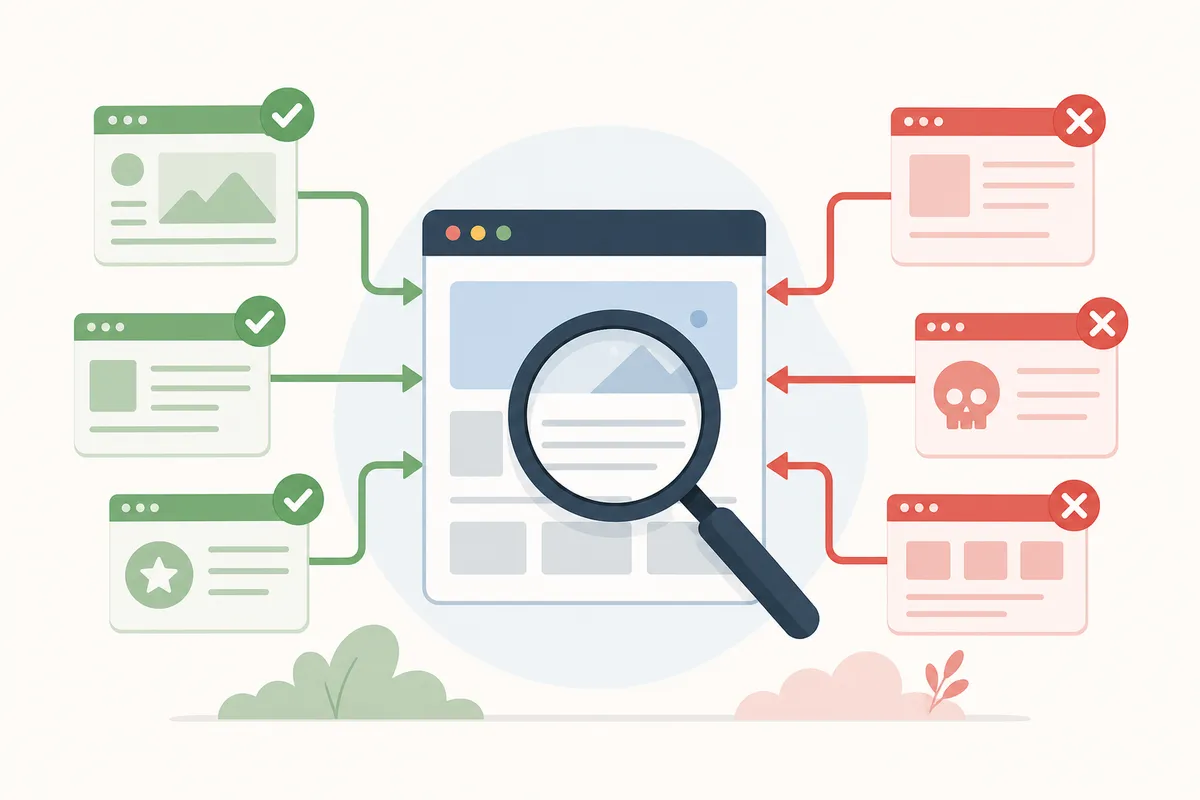
Manual backlinks are links to your site that a real person placed on purpose, through outreach, a guest post, or a mention they agreed to add, rather than links generated by software or bought in bulk. Before chasing any new ones, audit what you already have, because you can't judge whether your strategy is working without a starting point. Some sites already have solid links sitting unused, and others carry risky ones that need cleaning up before new outreach makes sense.

What manual backlinks actually means
A manual backlink is one a person decided to add, link by link. Someone read your content, judged it useful and linked to it, or you asked them directly and they agreed. Links that a bot drops into blog comments or forum signatures by the thousand are a different thing, as are links you simply pay for on a marketplace.
Search engines draw the same line. Google's link spam guidance treats paid and automated link schemes as violations of its spam policies, while editorially given links, the kind manual outreach produces, are what the system is designed to reward.
Manual vs. automated backlinks at a glance
| Factor | Manual Backlinks | Automated or Bought Links |
|---|---|---|
| How the link gets placed | A person reviews your pitch or content and adds it | Software, bots, or a paid network inserts it |
| Relevance to your site | High, you choose sites in your niche | Often low, links appear on unrelated, low-quality pages |
| Risk under Google's guidelines | Low when done through genuine outreach | High, flagged as a link scheme |
| Time investment | Hours of research and personalized outreach per link | Minutes to set up, little ongoing effort |
| Durability | Tends to stay live for years on maintained sites | Often disappears when the scheme site is deindexed |

Start by auditing what you already have
Before you send an outreach email, find out what your backlink profile looks like today. Skip this and you may chase links you already have, or miss spam links that are quietly hurting you.
Check Google Search Console first
Google Search Console lists every backlink it has indexed for your domain, for free. If you've never looked, this guide on how to find backlinks in Google Search Console shows where to click to pull that list.
Scan it for links that look off, such as unfamiliar foreign-language domains, link farms or sites with no real content. This process for checking spam backlinks using Search Console shows how to separate normal links from the kind worth disavowing.
Look beyond Search Console too
Search Console is a good start but not the only source. SearchBlueprint's free broken link checker can scan a specific page and flag dead outbound links on it, which is useful groundwork before you pitch that page as a replacement resource to other sites. For a fuller picture, these three reliable methods for finding backlinks in Google cover search operators and manual checks that catch links Search Console sometimes misses.
Your own social accounts count too. Profiles on LinkedIn, Twitter/X and Facebook often carry links back to your site that you forgot you added, and this rundown on checking social backlinks across your profiles shows how to pull that list together.
How to build manual backlinks, step by step
Once the audit is done, the work follows a repeatable sequence. Skip a step and you end up with a pile of sent emails and nothing to show for them.
1. Find sites worth a link
Not every site in your niche deserves outreach. Look for real traffic, an active audience and content that's actually related to what you offer. A backlink from a dormant blog with three posts a year won't move your rankings much, however relevant it looks on paper.
It also pays to know which types of sites to avoid altogether. This breakdown of backlink sources that actually help versus ones to skip is a useful filter before you spend hours on outreach that won't pay off.
2. Pick the right outreach angle
Different situations call for different techniques, and matching the angle to the site saves you from sending the same generic pitch everywhere and getting ignored.
| Technique | What You Actually Do | Best For | Typical Effort |
|---|---|---|---|
| Guest blogging | Write a full article for another site in exchange for a link | Niche blogs that accept outside contributors | High, a full piece per placement |
| Broken link building | Find a dead link on a relevant page, offer your content as the replacement | Resource pages and "best of" lists | Medium, research plus a short pitch |
| Unlinked mentions | Ask a site that already named your brand to add a link | Sites that cover your industry or company news | Low, a quick, friendly email |
| Journalist requests | Answer reporter queries in exchange for a citation and link | Sites looking for expert quotes on deadline | Medium, fast replies, no guaranteed placement |
Guest blogging still earns solid links when you target sites with real editorial standards, and this guide on guest blogging for backlinks and what still works explains how to spot the ones worth the effort. Journalist request platforms work on a similar logic but move faster and pay off less often per pitch. The economics are laid out in what HARO backlinks cost and your odds of landing one.
3. Send personalized outreach
Generic templates get ignored or marked as spam. A short email that names the exact page you're referencing and explains why your link helps their readers performs far better than a mass-sent pitch. Mention one concrete detail from their site, such as a recent post, a broken link you found or a gap in their resource list, so the recipient knows a person looked at their page.
4. Track what you send and what lands
Manual backlinks aren't a one-time project. You'll send far more pitches than you get replies, and without a system you'll lose track of who you contacted, when, and what they said. A simple ongoing process, covered in this guide on managing backlinks with a repeatable system, keeps outreach from turning into a scattered mess of forgotten follow-ups.
When free tools are enough, and when they're not
Free tools cover a lot of ground, but they have real limits, so decide how much tooling you need based on scope.
One page vs. the whole site
Checking a single page, say confirming that one article's outbound links aren't dead before you pitch it as a resource, is what free tools are built for. Run the page through a broken link checker, fix what's flagged and move on.
Monitoring an entire site's backlink profile over time is a different job. You're watching dozens or hundreds of referring domains for new spam links, lost links and new opportunities, continuously, and free one-at-a-time tools weren't built for that.
A one-off check vs. a recurring problem
If you're dealing with a single bad link someone pointed out, or verifying that one new placement went live, a manual check in Search Console or a free tool answers it in minutes. If you find spam links every month, or your backlink count keeps dropping and you don't know why, the problem is recurring. It needs a standing process rather than a one-time lookup, which is where the ongoing system approach pays off.
Common mistakes in manual link building
Most manual backlinks programs don't fail because the strategy is wrong. They fail because of a handful of avoidable habits.
- Mass-sending the same template. Site owners can spot a copy-pasted pitch instantly, and it damages your reputation for future outreach.
- Chasing volume over relevance. Ten links from sites in your actual niche beat a hundred from unrelated directories.
- Ignoring anchor text patterns. Using the same keyword-stuffed anchor text on every link looks manipulative.
- Ignoring your existing links. If you don't check your profile first, you might be building on top of a manual action risk you don't know about. If your rankings have already dropped sharply and you suspect a penalty, see this fix for a Google manual action before doing any further outreach.
- Treating it as a one-time project. A burst of outreach that stops after a month doesn't build the kind of steady profile search engines reward over time.
How long manual backlinks take, and what they cost
Manual backlinks don't have a price tag the way an ad does. The cost shows up as time: hours spent researching sites, drafting personalized emails, and following up with people who don't reply the first time. Expect a low reply rate on cold outreach and plan for it, rather than judging success after a single round of emails.
Results build slowly and compound. A link earned this quarter can still be sending value years from now if the site that hosts it stays maintained, which is part of why manual backlinks tend to outlast links from paid or automated sources.
FAQs
What's the difference between manual and automated backlinks?
Manual backlinks are placed by a person who reviewed your content or responded to direct outreach. Automated backlinks come from software, bots, or paid link networks that insert links in bulk, often on low-quality or unrelated pages.
Are manual backlinks safe under Google's guidelines?
Yes, as long as the links are earned through genuine outreach or relevant content rather than paid placement disguised as editorial. Google's spam policies target schemes designed to manipulate rankings, and they don't target links a person chose to add because the content was useful.
How many manual backlinks do I actually need?
There's no fixed number. A smaller set of relevant, high-quality links from sites in your niche typically does more for your rankings than a large pile of unrelated ones.
Can I build manual backlinks myself without hiring an agency?
Yes. The process is time-consuming but technically simple: audit your current links, find relevant sites and send personalized outreach. The limiting factor is usually the hours you have available.
How do I know if a backlink is actually helping my site?
Check that it's indexed, that it comes from a site relevant to your topic, and that it isn't flagged as spam in your Search Console data. A link on an unrelated, low-traffic page rarely moves the needle even if it technically exists.
Audit your backlinks before you build more
Pull your current backlink list and sort out what's helping from what's hurting. That tells you whether your next move should be new manual backlinks or cleanup first. Talk to the team to see what a full sample SEO report would show for your site.
Resources / References
Sources
Disclaimer: This article is general information about rules and figures that applied when it was written, not personalised financial, tax or investment advice. It does not take account of your income, obligations, risk tolerance or goals, and rates and thresholds change. Verify the current position with the relevant authority, and speak to a licensed adviser or a qualified accountant before acting.
About the author
SearchBlueprint researched, wrote and scored this article with the content pipeline our customers run on their own sites. The score in the byline is what our content engine gave this page before it published. Nothing here is reviewed by hand, which is the point: it is the product's output, published where anyone can check it.