Serpstat vs Ahrefs: The 2026 Verdict for Your Budget
By Toy Wen Da, Co-Founder · Updated · 11 min read · scored 99/100
Serpstat vs Ahrefs comes down to budget and data depth. Serpstat gives you a full SEO toolkit at a lower entry price and a short learning curve, while Ahrefs has the largest, fastest-refreshing backlink index for teams that can absorb a higher bill. Small teams tend to lean Serpstat, and agencies running daily link outreach lean Ahrefs.
This guide draws on each platform's own website and documentation and on published third-party reviews, not on hands-on testing of either tool.
Serpstat vs Ahrefs at a glance

Here is the short version before the feature detail. The table pulls from how each product and independent reviewers describe them.
| What Matters | Serpstat | Ahrefs |
|---|---|---|
| Starting price | $59/month, per SoftwareSuggest | $99/month, per SoftwareSuggest |
| Free plan | No permanent free plan; a 7-day free trial, per Exploding Topics | No free trial; a free Webmaster Tools product exists, per Exploding Topics |
| Best for | SEO agencies, content teams and businesses that want one dashboard without a steep learning curve | Agencies and in-house teams running daily backlink and competitive research at scale |
| Standout features | White-label reports, a Local SEO add-on, AI content tools, a keyword gap report | A very large backlink index, intent-classified keyword data, detailed site audit reports |
| Main limits | Smaller backlink and keyword index; data refreshes about every two to four weeks | Several reports sit behind a higher-tier plan |
How we compared
We checked each vendor's public pricing and feature pages and the review sites listed in Sources. No paid accounts were tested, so every claim here rests on those published materials. Prices are the figures the named source reports, so confirm them on each vendor's pricing page before you buy.
1. Serpstat: best for small teams that want one simple dashboard
Serpstat is an all-in-one SEO platform that handles keyword rank tracking, competitor analysis, site audits and content strategy. It has also added AI tools for drafting articles and metadata, along with a detector for AI-written content.
Pick it if you manage a few sites on a tight budget and want usable results without a long onboarding period. Skip it if you run daily link prospecting and need the freshest backlink data.
2. Ahrefs: best if you need deep, fast-refreshing backlink data
Ahrefs centers on keyword research, backlink analysis, site audits and competitor monitoring, backed by a large backlink and keyword index. It recently added Brand Radar, which tracks how often your site shows up in AI Overviews and large language model answers.
Pick it if you run SEO at scale and can budget for credits and tier upgrades. Skip it if cost is your main constraint or you need a team productive within days.
Pricing: what each tool costs

Sticker prices rarely tell the full story with either platform, and reviewers quote different numbers because plans, regions and promotions shift what they see.
Entry pricing
SoftwareSuggest lists Serpstat at $59/month and Ahrefs at $99/month. One other reviewer found Ahrefs' limited Starter plan cheaper than Serpstat's entry plan, so the order can flip depending on which Ahrefs plan you compare. Both products scale up sharply on higher tiers.
The hidden cost: credits and tier gates
The advertised price is rarely what a working team pays. Ahrefs runs on a credit system: each Site Explorer query or Keywords Explorer lookup uses credits, as does each newly rank-tracked domain, and a single competitor deep-dive can consume 100-150 of them. Teams on lower tiers often hit their monthly limit well before the month ends. According to Exploding Topics, several Ahrefs reports (broken backlinks and outgoing links, plus linking authors) require the $249/month plan. Serpstat's credit allowance tends to be more generous on entry plans, but it limits export row counts and API calls instead.
If you're also weighing Semrush in this budget bracket, our breakdowns of Semrush vs Serpstat: The 2026 Verdict for SEO Teams and Ahrefs vs Semrush: The Real Cost Difference in 2026 lay out how that third option compares on the same cost questions.
Serpstat wins on raw entry price and feature access at lower tiers. Ahrefs fits teams that need its data depth and can plan around credit use.
Keyword research: which tool finds better opportunities
Serpstat splits keyword research between a Keywords dashboard and a Keyword Gap tool, with extra reports such as Related Keywords and Search Questions under Keyword Research. Its Search Suggestions report shows the autocomplete terms Google surfaces as people type, which helps spot subtopics and search intent.
Ahrefs puts everything in Keywords Explorer, which shows high-volume keywords, related terms, question keywords and what top-ranking pages also rank for in one view. Its Parent Topic column groups keywords into clusters for pillar content planning.
Ahrefs also classifies keywords by intent (commercial, informational or transactional) and estimates click-through potential, so you can judge whether traffic will convert before you write anything. Serpstat leans toward fast "can I rank for this" discovery rather than intent modeling. If content scoring and on-page optimization matter more to your workflow than raw keyword volume, read Surfer SEO vs Ahrefs: Pick the Right Tool for Your Job, because neither Serpstat nor Ahrefs scores on-page content the way a dedicated tool does.
Ahrefs comes out ahead by consolidating more keyword data in one dashboard and adding intent classification, though Serpstat still works well for fast, practical keyword lists.
Backlink analysis: index size vs. freshness
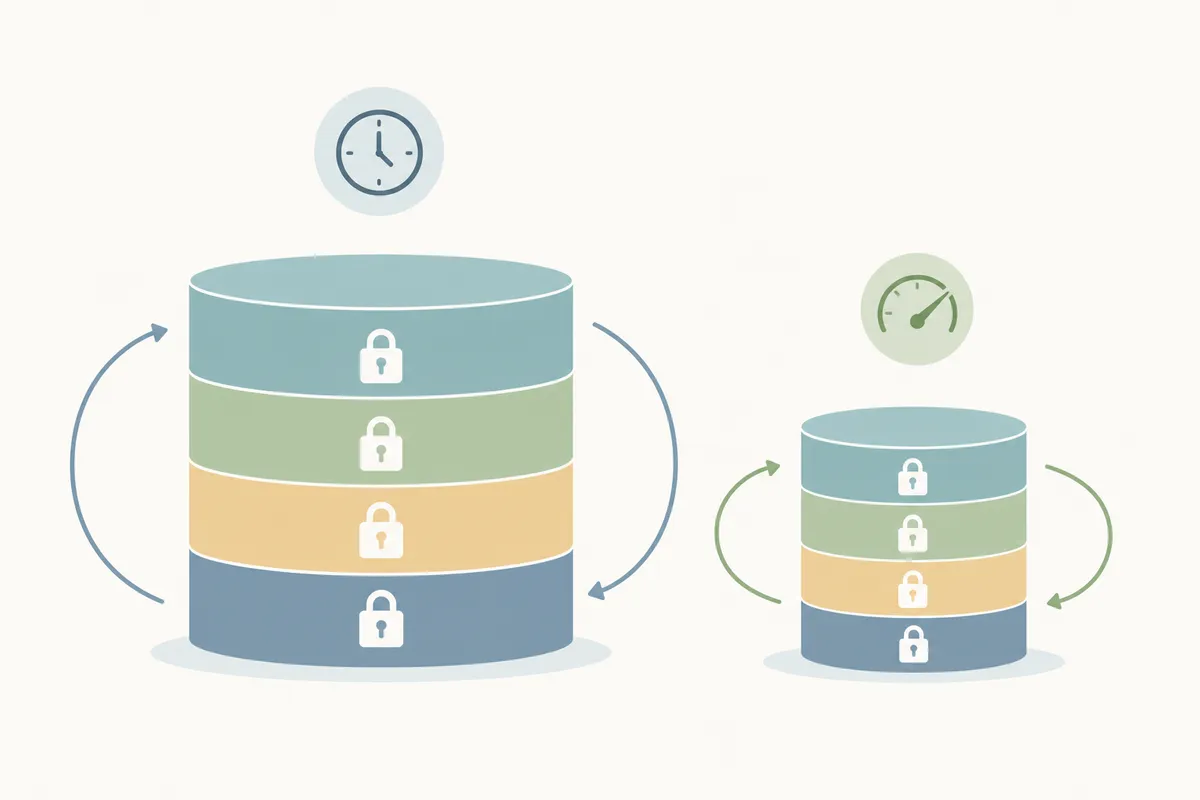
This is where the two tools diverge most, and reviewers disagree on the winner.
| Factor | Ahrefs | Serpstat |
|---|---|---|
| Index size (as reported) | Described as the larger index, in the trillions of links by some reviewers | Described as smaller, in the billions of links by the same reviewers |
| Refresh cadence | Updates reported within days of a new link being found | Refresh cycle reported at roughly two to four weeks |
| Report access | Broken backlinks, outgoing links, and linking authors gated to a higher-tier plan | Backlink dashboard reports available without an upgrade prompt, per Exploding Topics |
| Best suited for | Active, daily link-building and competitive intelligence | High-level monitoring, quarterly reporting, defensive link checks |
Freshness matters more than size for time-sensitive link prospecting. If a competitor lands a strong placement, Ahrefs' faster crawl cadence makes it more likely you'll see it within days, while Serpstat's slower refresh can miss that window by weeks.
Exploding Topics nonetheless preferred Serpstat's backlink dashboard for its cleaner visuals and because none of its core reports sat behind an upgrade wall, unlike Ahrefs, where several backlink reports require the $249/month plan. For passive monitoring rather than active outreach, Serpstat's data is often enough.
Each platform's authority score also differs from Ahrefs' Domain Rating and Moz's Domain Authority. Moz DA vs Ahrefs DR: What Each Score Really Tells You explains why those two scores shouldn't be compared directly, and the same applies to Serpstat's own authority metric.
Ahrefs is the pick for active link building and competitive intelligence. Serpstat suits teams that only need to monitor backlink health without daily digging.
Competitor analysis tools
Both platforms let you enter a competitor's URL and see what it ranks for and which pages perform best, with backlink sources alongside.
In Ahrefs, Site Explorer gives that overview, though the dedicated Competitor Analysis toolset sits behind a paid upgrade. Serpstat's Competitors report, built on its Keyword Gap tool, lets you edit your competitor list and toggle between paid and organic keywords, and each missing keyword is a click away as an instant content idea. None of the basics sits behind a paywall.
If pay-per-click spend matters as much as organic visibility in your competitor research, neither tool specializes in that the way a PPC-focused platform does; see Ahrefs vs SpyFu: The 2026 Verdict for Your Budget for how that comparison plays out.
Serpstat wins here for putting competitor data in a straightforward dashboard without upsell prompts, although Ahrefs is the better value if you already pay for its higher tiers.
Site audits and technical SEO
Ahrefs' Site Audit dashboard offers a long list of reports covering links, indexability, internal link opportunities and a page explorer, all laid out cleanly. Serpstat's audit dashboard is simpler: a summary report plus All Issues, Custom Overview and Page Audit reports. It groups issues into priority buckets, which helps less experienced users decide what to fix first.
Neither tool replaces a dedicated crawler for deep technical work. If you need granular crawl control, pairing one with Screaming Frog is common practice; see Screaming Frog vs Ahrefs: The 2026 Verdict for Your SEO Budget for how that pairing compares.
Ahrefs wins on audit data volume and cleaner navigation, but Serpstat's priority breakdown is a real advantage for SEO beginners.
Ease of use and customer support
Serpstat's dashboard is built for speed, and Flying V Group reports that new users can generate keyword and backlink reports within about 15 minutes of logging in. The tradeoff is less customization and fewer advanced filters.
Ahrefs asks for more patience. Its dashboard supports deep customization, but learning every feature takes real time, and Flying V Group estimates a team needs roughly two to three weeks to get fully productive. The investment tends to pay off for teams who use the tool daily.
Both platforms offer live chat and email support alongside a knowledge base. Serpstat's response times run around 24-48 hours by most accounts, while Ahrefs' documentation and video tutorials are more extensive and its larger user community tends to produce faster answers to common questions. On third-party review sites, Exploding Topics notes Ahrefs scores above 4.5 out of 5 on both G2 and Capterra but sits at two stars on Trustpilot, a dip the article ties to a past price increase. SoftwareSuggest separately lists both tools at 4.8 out of 5, from a small sample of reviews on its own platform.
For teams also evaluating rank tracking and crawler-style tools in this price range, SE Ranking vs Ahrefs: The 2026 Verdict for Your Budget and Screaming Frog vs Semrush: The 2026 Verdict for SEO Teams cover two more common pairings worth checking before you commit.
Serpstat wins on fast onboarding and simplicity, while Ahrefs suits teams willing to invest time for deeper control and faster support resolution.
Serpstat vs Ahrefs: which should you pick?
Flying V Group frames the decision around team size and how fast you need results, not just sticker price. Their scenario breakdown is a useful starting point:
| Your Situation | Better Fit | Reported ROI Timeline |
|---|---|---|
| Freelancer managing a handful of sites | Serpstat | 30-60 days |
| Small agency with 10-15 clients | Serpstat or a hybrid approach | 60-90 days |
| Mid-market agency with 20+ clients | Hybrid, both tools in rotation | 2-3 months |
| Enterprise in-house SEO team | Ahrefs | 3-6 months, based on content velocity |
Choose Serpstat if you're managing a small number of sites, budget is a real constraint and you want usable results without a long onboarding period. Choose Ahrefs if you're running SEO at scale, need the deepest and freshest backlink data available and can budget for the credit system and tiered upgrades that come with it.
Common mistakes when comparing these two tools
A few patterns come up repeatedly when teams pick the wrong tool for their situation:
- Comparing sticker prices alone misleads, because credit use and gated reports often force an upgrade after you've signed up.
- Ahrefs' Keyword Difficulty estimates the backlink investment needed to rank, while Serpstat's is a broader composite score, so a 30-point gap on the same keyword doesn't mean either tool is wrong.
- A large backlink index that refreshes slowly can be less useful than a smaller one that updates quickly, especially for time-sensitive link prospecting, so don't choose on index size alone.
- Serpstat offers a 7-day trial, so use it to confirm the dashboard fits your actual workflow before you commit to a monthly plan.
- Many teams run a budget tool alongside a specialist one. If cost is the deciding factor, Mangools vs Ahrefs: The Right Pick for Your 2026 Budget and Ubersuggest vs Ahrefs: Which One Fits Your Budget in 2026? cover two tools priced well below both Serpstat and Ahrefs.
FAQs
Is Serpstat cheaper than Ahrefs?
Most third-party reviews put Serpstat's entry-level pricing below Ahrefs', though exact figures vary by source. Check each company's own pricing page for current rates, since both scale up sharply on higher tiers.
Can I use Serpstat and Ahrefs at the same time?
Yes. Some agencies use Serpstat for day-to-day keyword and competitor checks and Ahrefs for deeper backlink and content gap analysis. It costs more than running one tool, but it covers each platform's weak spots.
Which tool is better for backlink analysis?
Ahrefs generally wins on index size and refresh speed, according to multiple reviewers, which matters most for active link building. Serpstat's backlink data is considered adequate for high-level monitoring and quarterly reporting.
Does Serpstat offer a free trial?
According to Exploding Topics, Serpstat offers a 7-day free trial. Ahrefs does not offer a free trial, though it provides a free Webmaster Tools product for basic site checks.
Is Ahrefs worth the higher price for a small business?
It depends on how often you need fresh backlink data and intent-classified keyword research. Freelancers and small agencies often get a faster return from Serpstat's lower entry price, per Flying V Group's scenario breakdown, while enterprise teams tend to justify Ahrefs' cost over a longer timeline.
See your own site's numbers before you commit
Feature comparisons only get you so far. Before you pick a side in the Serpstat vs Ahrefs decision, it helps to see what either tool would find on your own site: your current rankings, plus the backlink gaps and technical issues behind them. Talk to the team and request a sample SEO report to see that data laid out plainly, with no tool to learn first.
Resources / References
Sources
About the author
SearchBlueprint researched, wrote and scored this article with the content pipeline our customers run on their own sites. The score in the byline is what our content engine gave this page before it published. Nothing here is reviewed by hand, which is the point: it is the product's output, published where anyone can check it.