SEO vs PPC: Which Actually Grows Your Business Faster?
By Toy Wen Da, Co-Founder · · 11 min read · scored 95/100
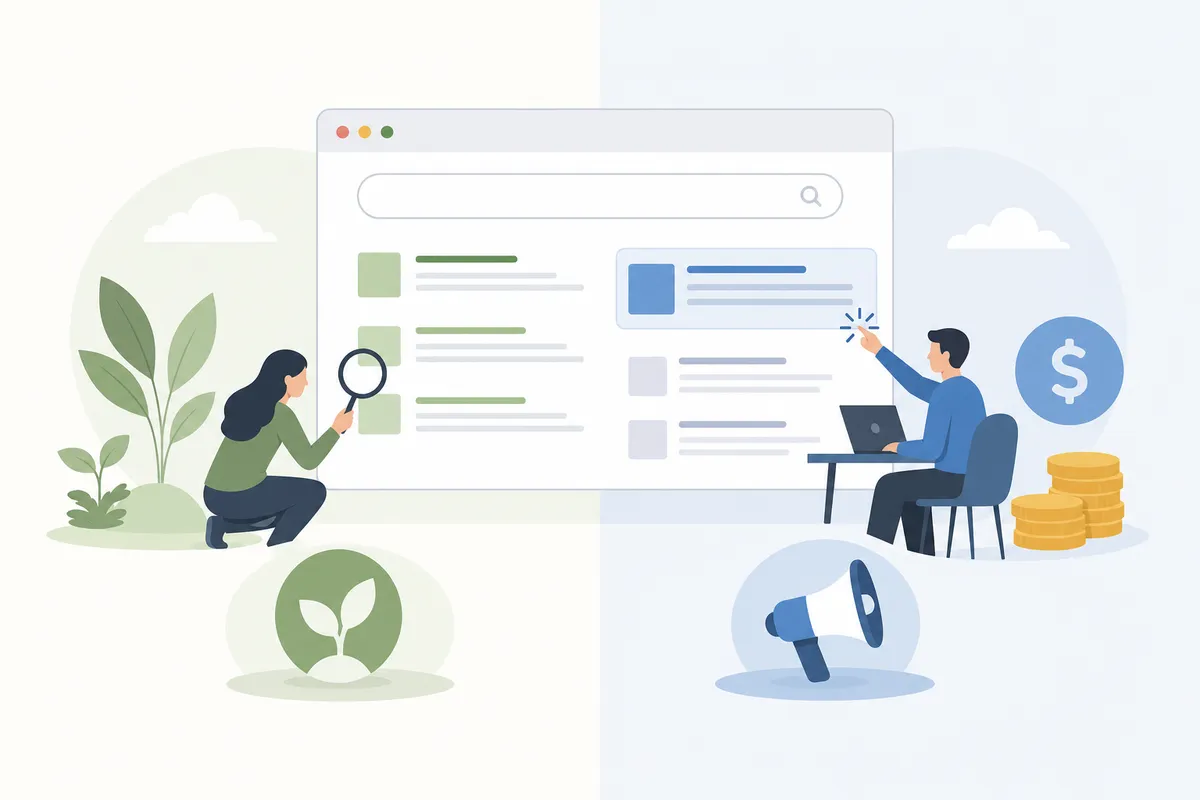
SEO vs PPC comes down to timeline and budget. Pay-per-click ads buy instant traffic that disappears the moment you stop paying. Search engine optimization earns traffic that keeps working months after you publish. Most businesses eventually need both, PPC for leads today, SEO for growth that compounds.

Before you split a single dollar between the two, run your numbers through the free SEO ROI Calculator. Plug in your current traffic, conversion rate, and planned ad spend. It shows roughly how long organic growth would take to beat what you're currently paying per click, a far clearer starting point than guessing.
What SEO and PPC Actually Mean
SEO (search engine optimization) is the practice of improving a website so it ranks higher in the unpaid, organic section of search results. You don't pay Google for each visitor. You pay, in time, content, and technical work, to earn the ranking itself.
PPC (pay-per-click advertising) is the practice of buying placement, most often at the top of the results page, and paying a fee each time someone clicks your ad. Google Ads is the most common platform, but PPC also runs on Bing, Facebook, Instagram, and TikTok.
Both aim at the same outcome: getting your website in front of someone who's already searching for what you sell. They just get there on completely different timelines, with completely different cost structures.
How Each Channel Actually Works
How SEO Builds Rankings
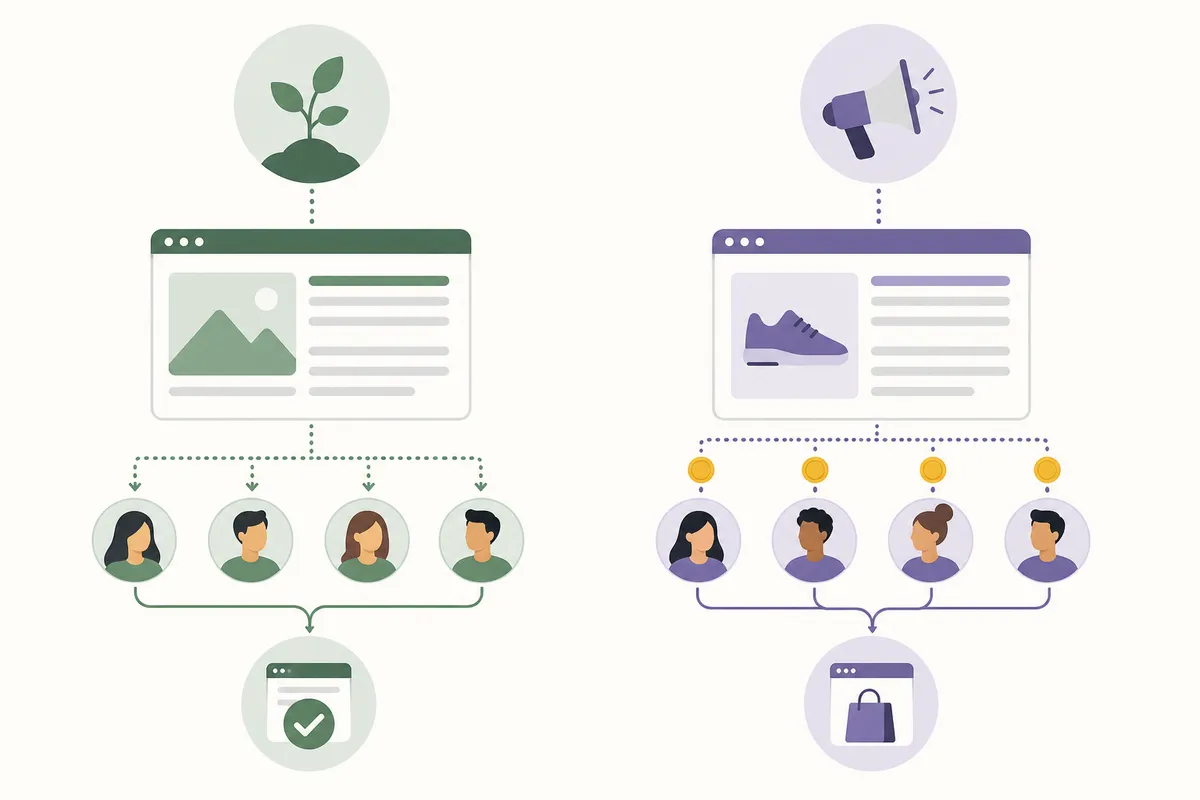
Search engines crawl your site, index its pages, and rank them based on relevance, quality, and trust signals. Google's own guidance on search essentials lays out the baseline: your pages need to be crawlable, genuinely useful to the person searching, and free of practices designed to manipulate rankings rather than earn them.
In practice, SEO work breaks into a few buckets:
- Keyword research, finding what people actually type into the search bar, and matching content to it.
- Content creation, pages, posts, and resources that answer the search intent behind those keywords.
- On-page optimization, title tags, headers, internal links, and clean URL structure.
- Technical SEO, site speed, mobile usability, structured data, and a crawlable site architecture.
- Off-page SEO, earning backlinks from other sites, which act as a vote of confidence.
None of this happens overnight. Rankings typically shift gradually over weeks and months, not days.
How PPC Auctions Work
PPC runs on a bidding system. You choose keywords, set a maximum bid, and compete against other advertisers targeting the same terms. Google then ranks ads using a mix of your bid and a quality score based on ad relevance, landing page quality, and expected click-through rate.
Cost per click varies widely by:
- Competition, more advertisers chasing a keyword pushes the price up.
- Keyword length, short, broad terms cost more; specific long-tail phrases usually cost less.
- Quality score, a well-matched ad and landing page can lower what you pay per click.
- Location and timing, geographic targeting and time of day both affect the going rate.
Unlike SEO, PPC visibility starts the moment your campaign goes live and ends the moment your budget runs out.
Why Ranking Position Still Decides Everything

Whether you get there through SEO or PPC, where you land on the page matters enormously. Research widely cited by outlets like Search Engine Journal shows click-through rate falling off sharply the further down the rankings you go.
| Position | Approximate Click-Through Rate |
|---|---|
| Rank 1 | 28.5% |
| Rank 2 | 15.7% |
| Rank 3 | 11% |
| Rank 4 | 8% |
| Rank 5 | 7.2% |
| Rank 6 | 5.1% |
| Rank 7 | 4% |
| Rank 8 | 3.2% |
| Rank 9 | 2.8% |
| Rank 10 | 2.5% |
That drop-off is the whole argument for fighting for position 1, whether you earn it through SEO or buy it through PPC. One industry analysis found that owning both the top paid ad slot and the top organic result for the same keyword can capture roughly 49% of all clicks to a site on that search. That's the case for running both channels on your most valuable terms, at least for a while.
SEO vs PPC: Side-by-Side Comparison
| Factor | SEO | PPC |
|---|---|---|
| Traffic source | Organic, unpaid search results | Paid ads, charged per click |
| Time to results | Typically months before meaningful movement | Visible within hours of launch |
| Cost structure | Time and content investment, no per-click fee | Ongoing cost every time someone clicks |
| What happens if you stop | Rankings and traffic usually persist for a while | Traffic drops to near zero almost immediately |
| Best for | Long-term brand authority and compounding traffic | Launches, promotions, and time-sensitive offers |
| Trust perception | Seen as more credible by many searchers | Clearly labeled as an ad, which some users skip |
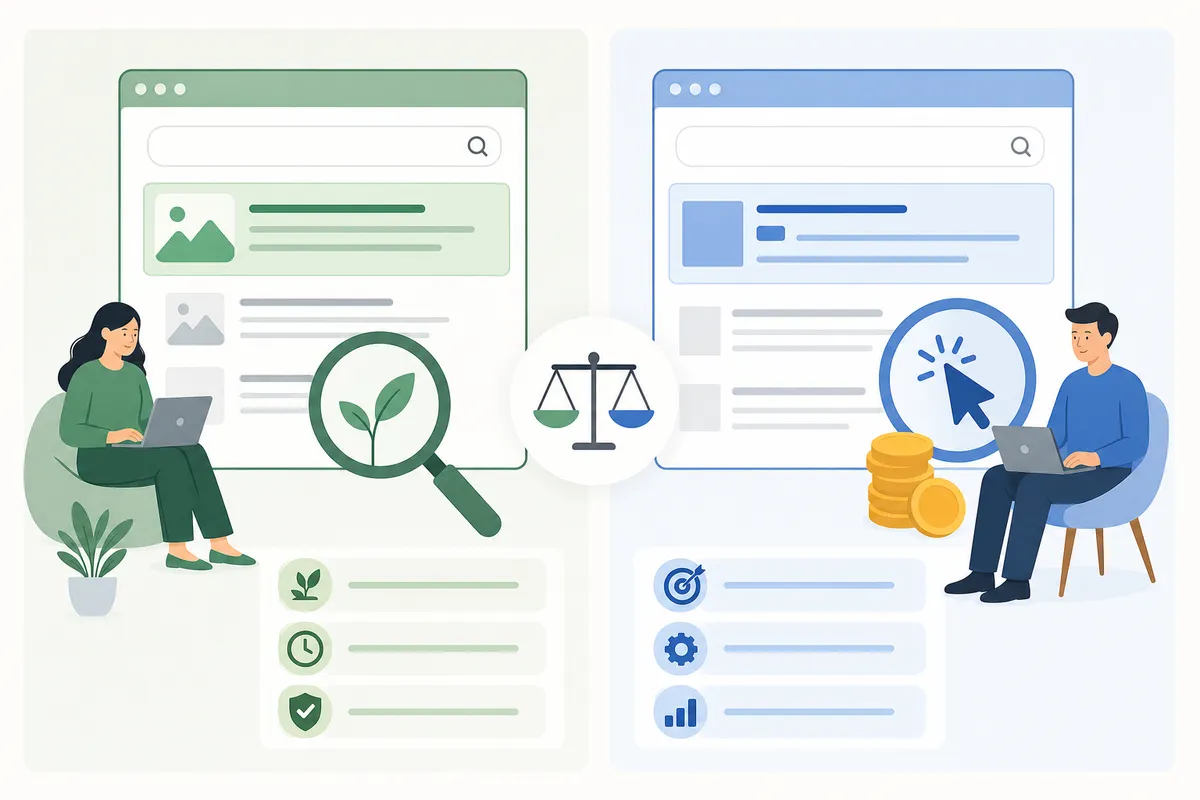
Neither column is "better" in the abstract. The right one depends on how fast you need results and how much runway you have.
When to Lean on PPC vs When to Lean on SEO
| Your Situation | Lean Toward | Why |
|---|---|---|
| Launching a new site or product | PPC | You have no organic rankings yet, so paid gets you visible immediately |
| Running a time-sensitive sale | PPC | Campaigns can go live the same day and stop the same day |
| Testing which keywords convert | PPC | Fast data lets you validate before committing to long-term content |
| Building long-term brand authority | SEO | Rankings compound and don't disappear when you pause spending |
| Working with a limited, ongoing budget | SEO | No recurring per-click cost once a page ranks |
| Competing on highly contested terms you can't rank for yet | PPC | Paid placement buys visibility organic hasn't earned |
How to Check Which Channel Is Actually Working on Your Site
You don't need to guess. Most of this diagnosis happens inside tools you likely already have access to.
- Open Google Search Console and check the Performance report. This shows your organic clicks, impressions, and average position for every query your site shows up for.
- Open Google Analytics and look at your traffic-acquisition breakdown by channel. Compare organic search sessions against paid search sessions over the same date range.
- Open your Google Ads dashboard (if you're running campaigns) and review cost-per-click and conversion rate by campaign, not just by overall spend.
- Cross-reference the two. If a keyword already ranks well organically, note it, that's a candidate for pausing or lowering PPC spend on that exact term.
- Check which pages rank for nothing. Pages with zero organic impressions after months live are strong candidates for a content refresh rather than more ad spend propping them up.
If you want a single view of what's ranking, slipping, or missing entirely, a sample SEO report shows the kind of diagnostic most site owners are missing from their own dashboards.
When Your Own Tools Are Enough, and When They Aren't
Be honest with yourself about scope here, because it changes the right next step.
Your own tools are usually enough when:
- You're diagnosing a single page or a single keyword, not the whole site.
- The issue is a one-off, a page dropped in rank after an update, or a campaign underperformed for a week.
- You just need directional data (is organic growing or shrinking?) rather than a full technical audit.
Your own tools usually aren't enough when:
- The problem is site-wide, rankings slipping across dozens of pages, not one.
- It's recurring, the same pages keep losing ground month after month despite fixes.
- You need to prioritize dozens of competing issues (technical fixes, content gaps, backlink gaps) and don't have a system for ranking them.
- You're trying to decide SEO vs PPC budget allocation across an entire content calendar, not a single campaign.
A one-off dip is a spreadsheet problem. A recurring, site-wide pattern is a strategy problem, and that's usually where dashboards built specifically for ongoing SEO tracking start to pay for themselves.
What SEO and PPC Actually Cost You
PPC cost is transparent and immediate: you set a budget, you pay per click, you can stop anytime. SEO cost is less obvious because it's mostly time and labor rather than a line-item ad spend.
If you're trying to execute SEO yourself, the real cost comparison against hiring out the work is worth running the numbers on, see the real cost math behind DIY SEO versus hiring an agency for a full breakdown. Link building in particular has an enormous price range; what a backlink service actually costs can run from a few dollars to tens of thousands depending on quality and scale.
Once you've decided to invest in SEO, the next decision is who or what executes it. That choice between an SEO agency and SEO software often matters as much as the SEO-vs-PPC decision itself, since it determines how fast your organic side can actually move.
The Tools Behind the Work
If you're running SEO yourself, the plugin or platform you choose shapes how fast you can act on findings. On WordPress specifically, the debate between Rank Math and Yoast or All in One SEO and Yoast comes up constantly, and the right pick depends on what you're already managing. A broader roundup of the best WordPress SEO tools is worth a look if you haven't settled on a stack yet.
For content optimization specifically, comparisons like Surfer SEO against Semrush and Surfer SEO against Ahrefs help narrow down which tool fits the actual work you're doing, rather than which one has the longer feature list.
Combining Both: A Smarter Budget Split
Treating SEO vs PPC as an either/or choice wastes the strongest part of each channel. A few ways to run them together:
- Use PPC data to guide SEO. Paid campaigns generate fast click-through and conversion data. Feed that into which keywords you prioritize organically.
- Pause PPC where you already rank. If a page ranks #1 or #2 organically for a term you're also bidding on, cutting or lowering that bid often frees up budget without losing traffic.
- Keep PPC on highly contested terms. For keywords you can't realistically rank for yet, paid placement fills the gap while SEO work builds toward it.
- Retarget organic visitors with ads. Someone who found you organically but didn't convert is a strong candidate for a paid remarketing campaign.
- Improve landing pages for both channels at once. A page that converts better for ad traffic usually converts better for organic traffic too.
One industry analysis found that 95% of underperforming paid campaigns trace back to poor optimization or under-investment in testing, not to PPC being an inherently weak channel. The lesson applies in both directions: a channel performing badly is rarely proof the channel itself is wrong.
Common Mistakes People Make Comparing SEO and PPC
- Treating it as a one-time decision. The right mix shifts as your site matures, heavy PPC early, more SEO weight as rankings build.
- Judging SEO by month-one results. Expecting organic traffic in weeks sets you up to abandon a strategy before it's had time to work.
- Calling SEO "free." It isn't. You're paying in content production, technical work, and time instead of a per-click fee.
- Running PPC with no landing page optimization. A high bid on a weak landing page burns budget without improving your quality score or your conversion rate.
- Ignoring the overlap. Not cross-checking which keywords already rank organically means you're often paying for clicks you could get for free.
- Picking a channel based on what's trendy, not what matches your timeline. A product launch next week needs PPC. A two-year growth plan needs SEO.
FAQs
Is SEO or PPC better for a new website?
PPC is usually better for a brand-new site because you have no organic rankings yet. Paid ads can get you visible within hours, while SEO typically takes months to show meaningful movement, even on a well-built site.
Does running PPC ads help my SEO rankings?
PPC doesn't directly boost organic rankings, but the keyword and conversion data it generates can sharpen your SEO targeting, showing you which terms actually convert before you invest months of content work into them.
How long does SEO take to show results?
Most sites see initial organic movement within a few months of consistent work, with stronger gains building over six months or longer. Timelines vary by competition, site age, and how much content and technical work goes in.
Can I run SEO and PPC on the same keywords at once?
Yes, and it's often a smart move. Holding both the top organic spot and the top ad slot for the same keyword can capture a disproportionate share of clicks compared to holding just one.
What happens to my traffic if I stop paying for PPC?
Traffic from paid ads drops close to zero almost immediately once a campaign stops, since that visibility was rented, not earned. Organic traffic from SEO tends to persist, though it can erode over time without ongoing maintenance.
Put Your Own Numbers Behind the Decision
Checking Search Console, your analytics acquisition report, and your ads dashboard side by side will tell you more about your SEO vs PPC split than any general rule of thumb. Run your current traffic and spend through the free ROI calculator mentioned earlier to see where your next dollar actually goes further. When you're ready for a clearer, ongoing view of what's ranking, what's not, and where budget is leaking, talk to the team.
Resources / References
Sources
About the author
SearchBlueprint researched, wrote and scored this article with the content pipeline our customers run on their own sites. The score in the byline is what our content engine gave this page before it published. Nothing here is reviewed by hand, which is the point: it is the product's output, published where anyone can check it.