SEO for Credit Unions: The Checklist That Gets You Found
By Toy Wen Da, Co-Founder · Updated · 8 min read · scored 99/100
SEO for credit unions means tuning your website, your local listings and your content so members find you before a national bank or a fintech app does. Start with a technical audit of your own site, then fix local listings, then strengthen the content that proves you're a trustworthy financial source.

SearchBlueprint's local SEO features are built for this problem. They show which branch pages are missing consistent address data, where your Google Business Profile falls short, and which local terms your credit union isn't ranking for yet. Run that check before you touch any code.
Fix the technical basics on your own site first

Before you touch content or links, open your site in an incognito browser tab and look at it the way a new visitor would.
Page speed and mobile rendering
Financial marketers widely cite a two-to-three-second patience window. Make a visitor wait longer than that and a meaningful share will bounce to a competitor's site. Credit union sites are notorious for this because they stack calculators, rate widgets and chat plugins on every page.
Check your Lighthouse score in your browser's developer tools, or run your branch and product pages through a dedicated speed test. If your largest image or your rate-table script is the slowest element, compress it or lazy-load it before you do anything else.
HTTPS and semantic HTML
Every page needs a valid, unexpired SSL certificate, which is non-negotiable for a site that handles account numbers and loan applications. How your developer marks up the page matters too. Pages built with proper semantic tags (a real <header>, <nav>, <main> and <article>) are easier for search engines to parse, while pages where every element is a generic <div> give them less structure to work with.
The risk peaks during a website redesign. A new design can look great and still strip out semantic structure, and rankings can quietly drop even though nothing in the content has changed.
If your site is managed through a standard content management system, check your platform's settings against our CMS SEO guides, which walk through the exact menu paths for the most common platforms. If your developers deploy the site through version control instead, see our guide to SEO for sites built through GitHub commits for the equivalent checks in that workflow.
Local SEO: make every branch findable
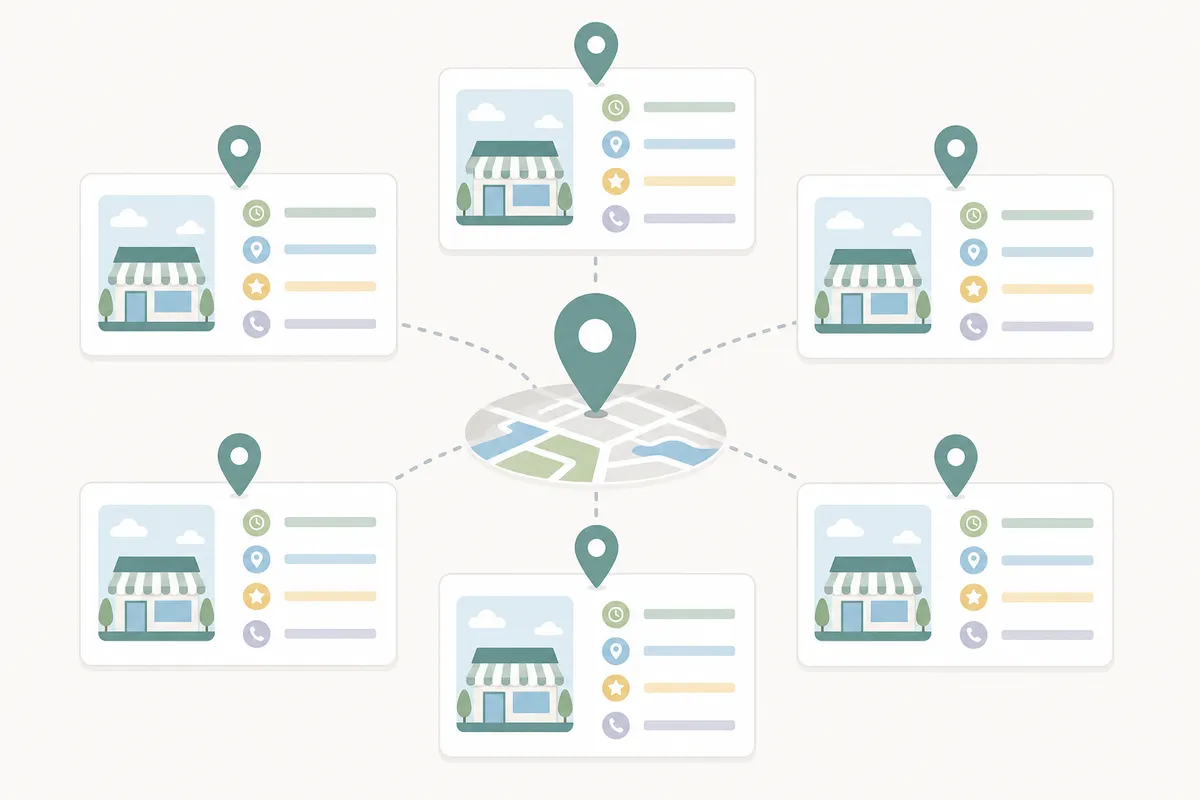
Credit unions are local institutions competing against both local banks and national online-only players. Local SEO is how you win the "near me" and "in [city]" searches members actually type.
NAP consistency
NAP is name, address, phone number. It needs to match exactly across your website, your Google Business Profile, Apple Maps and any directory that lists you. A branch phone number that's outdated in one directory and correct in another sends a trust signal search engines don't like.
Reviews and Google Business Profile
Encourage members to leave reviews after a positive loan or account experience, and respond to every review, good or bad, in a professional tone. It's one of the few SEO levers a credit union's marketing or branch staff can pull without a developer, and a QR code at the teller window or a follow-up email is all it takes.
| Local SEO element | Who usually owns it | How often it needs checking |
|---|---|---|
| NAP consistency across listings | Marketing team or agency | Quarterly, or after any branch change |
| Google Business Profile posts and hours | Branch or marketing staff | Monthly |
| Review responses | Member service or marketing | Weekly |
| Branch page schema markup | Developer or SEO tool | Once per branch, then on changes |
Content that meets the YMYL bar
Google treats financial content as Your Money or Your Life content, so it holds credit union pages to a higher bar for Experience, Expertise, Authoritativeness and Trustworthiness, commonly shortened to E-E-A-T. Google's own Search Essentials guidance shows that sites covering financial topics need real expertise and transparency as well as keyword coverage.
What actually builds E-E-A-T for a credit union
- A clear "About Us" page naming real staff, their titles and their qualifications, instead of a generic stock-photo team page.
- Rate pages, loan calculators and a glossary of financial terms that are kept current rather than published once and left alone.
- Backlinks from reputable financial media, local news coverage and community partners, rather than paid directory submissions.
- Member stories and local sponsorship coverage that prove community roots, which a national or online-only bank can't replicate.
Other YMYL-adjacent industries face the same trust bar. CPA firms run into almost identical content and credibility requirements, and SEO for CPA firms offers a useful side-by-side comparison. Crypto brands sit at the opposite extreme, regulated and distrusted by Google by default, and SEO for crypto shows what happens when a search engine plays it safe with a financial niche.

When your website's own tools are enough

Not every SEO problem needs an agency or a developer sprint.
| Situation | Can you fix it yourself? | Why |
|---|---|---|
| One page has a wrong title tag or meta description | Yes | A quick CMS edit, done in minutes |
| One broken link on a single landing page | Yes | Fixable through your CMS's link editor |
| Site-wide slow load times across every page | Usually not alone | Points to hosting, scripts or image pipeline issues a developer should diagnose |
| Recurring duplicate content from press releases appearing in two sections | Usually not alone | Needs a canonical tag strategy applied consistently across the site |
| A full redesign changing site structure | No | Needs SEO review built into the project plan before launch |
A plugin on your CMS, something like Yoast SEO on WordPress, might flag a page as "poor" for on-page SEO. That's a one-URL problem you can usually fix yourself in the editor. If the same plugin flags dozens of pages, or the issue keeps returning after a fix, you're looking at a sitewide pattern, and patterns need a process.
Off-page SEO and community signals
Off-page signals are the links and mentions pointing at your site from elsewhere, and they matter because they show other sites vouch for you. For a credit union the strongest version is hyper-local. Sponsor a youth sports league, run a free financial literacy workshop at a local high school or partner with a community charity, and each can earn a genuine backlink from a local organization's website that carries more trust than a generic directory listing.
AI search is becoming a second front door
Members increasingly ask AI assistants questions like "what's the best HELOC rate near me" instead of typing them into Google. One credit union-focused research report found a stark gap: for every visit an AI assistant sends to a financial institution's site, a traditional search engine sends roughly 1,000. Classic SEO for credit unions remains the dominant channel by far, but the same report flagged AI as the second-most-used research channel among under-45 consumers evaluating financial institutions.
Structure your content so each section stands alone as a complete, quotable answer. It serves human readers and gives AI tools something accurate to cite, an approach sometimes called generative engine optimization.
Common mistakes to avoid
| Mistake | Why it hurts | Better approach |
|---|---|---|
| Letting branch NAP details drift out of sync across listings | Confuses both search engines and members | Audit all listings on a fixed schedule |
| Publishing rate pages once and never updating them | Stale financial content erodes trust signals | Review and refresh rate and product pages regularly |
| Redesigning the site without an SEO checklist | Can silently drop rankings site-wide | Build SEO review into every redesign sprint |
| Treating reviews as marketing-only instead of SEO | Misses a free, recurring trust signal | Route review requests through the same process as content updates |
| Skipping schema markup on product and location pages | Search engines and AI tools have less to work with | Add FinancialProduct and LocalBusiness schema where it applies |
FAQs
Does SEO for credit unions work differently than SEO for a regular small business?
Yes, mainly because of the YMYL (Your Money or Your Life) classification. Google expects higher proof of expertise, authority and trustworthiness on financial pages than it does on, say, a local bakery's site, so content and author credibility matter more.
How long does it take to see results from credit union SEO?
Technical fixes like page speed or broken links can show up in rankings within weeks. Content and E-E-A-T improvements, and off-page signals like community backlinks, typically take longer to compound.
Is Google Business Profile worth managing for every branch?
Yes. Each branch is a separate local entity in Google's eyes, and an incomplete or inconsistent profile for even one location can hold back local visibility for the whole credit union.
Do we need schema markup if our developer never mentioned it?
It's worth adding. Structured data following the vocabulary at Schema.org gives search engines and AI tools explicit context about your rates, locations and products, which plain text alone doesn't provide.
Can a small marketing team run SEO for credit unions without an agency?
For single-page fixes and review management, yes. For sitewide technical issues, recurring content gaps or a full redesign, a dedicated process or outside help is usually faster and safer, and handling those piecemeal tends to cost more in the long run.
Start with one page, then scale
Pick your highest-traffic branch or loan page and run it through a speed and mobile check. Confirm its NAP details match every listing, then verify its content answers the question a member typed. If you want a fuller picture of where your whole site stands on SEO for credit unions, talk to the team and you'll get a sample SEO report built around your site.
Resources / References
Sources
About the author
SearchBlueprint researched, wrote and scored this article with the content pipeline our customers run on their own sites. The score in the byline is what our content engine gave this page before it published. Nothing here is reviewed by hand, which is the point: it is the product's output, published where anyone can check it.