SEO for CPA Firms: The Fixes That Bring In New Clients
By Toy Wen Da, Co-Founder · · 14 min read · scored 93/100
SEO for CPA firms means getting your website to show up when business owners search for tax help, bookkeeping, or advisory services in your area. Start by claiming your Google Business Profile, then fix title tags and build a dedicated page for each service. Everything else builds on that foundation.

SearchBlueprint's local SEO tools show you exactly where a CPA firm's visibility breaks down. Your Google Business Profile might be missing categories. Your site might have no local landing pages, or your name, address and phone number might not match across directories. It's built to flag the specific gaps that keep accounting firms off the map pack, not just hand you a generic checklist.
How SEO for CPA Firms Actually Works
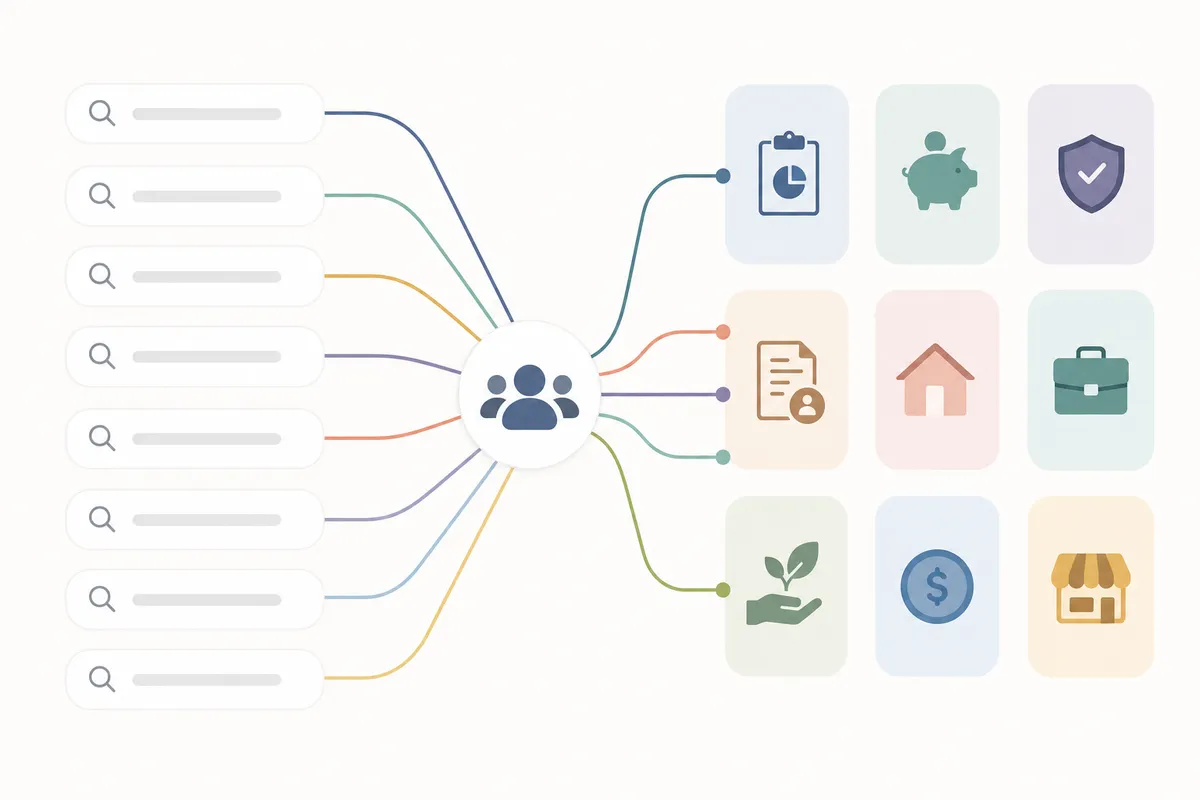
Search engines crawl your website, read what's on each page, and decide which firms deserve to rank for which searches. SEO for CPA firms isn't fundamentally different from SEO in any other local service business. It just has its own set of high-value searches: "small business tax accountant," "bookkeeping services near me," "CPA for self-employed." It also includes dozens of niche variations tied to industries you serve.
The mechanics are straightforward. You pick the services and client types you actually want more of. You build or fix pages that match those searches. You write content that proves you understand the problem better than the next firm in the results. Do that consistently, and your rankings, and the calls that come with them, compound over time.
Why "Just Having a Website" Isn't Enough
A website with no keyword targeting, thin service pages, and no local signals won't rank, no matter how professional it looks. Google needs clear signals about who you serve, where you're located, and what makes your firm credible. That's the gap SEO for CPA firms closes.
What Changed Recently
AI-powered search, Google's AI Overviews, ChatGPT, Perplexity, now answers a lot of simple questions directly, without sending a click to any website. That raises the bar for what gets cited. Content that answers a specific question clearly and with real detail is more likely to get cited than generic, keyword-stuffed pages. The practical takeaway for an accounting firm is the same one that's always mattered. Write content that's genuinely useful to the person reading it, not content aimed only at a search algorithm.
Fix It Inside Your Website: Step-by-Step
Before you touch backlinks or guest posts, fix what's inside your own site. This is the part every CPA firm can do without hiring anyone, and it's where most of the easy wins live.
Step 1: Claim and Complete Your Google Business Profile
Search your firm's name on Google. If you see a prompt to claim the listing, follow it. If not, go to Google's Business Profile Manager and start a new profile. Once you're in, fill out every field: business category, service area, hours, phone number, and a plain-language description of who you serve. For the category, choose "Accountant" or "Tax preparation service" as your primary one. Add secondary categories for bookkeeping or payroll if you offer them.
Add photos of your office and team. Add your services as individual list items rather than one paragraph. This single step is one of the highest-leverage moves in local SEO for CPA firms. A large share of local searches surface Google's map results before they surface anything else.
Step 2: Fix Your Title Tags and Meta Descriptions
Every page on your site has a title tag and a meta description. The title tag is the blue clickable headline in Google's results; the meta description is the gray summary beneath it. In most website editors, these live in an "SEO" or "Search Appearance" panel when you're editing a page. The exact label varies by platform, so look for a tab named something close to "SEO settings" near the page editor.
Write a unique title for every page. Your homepage title should name your firm and your main service area. Something like "Accounting & Tax Services in Tampa | [Firm Name]" works better than just your firm's name alone. Service pages need their own titles too: a bookkeeping page titled "Bookkeeping" alone wastes the opportunity. "Small Business Bookkeeping Services" tells both Google and the searcher exactly what's there.
Step 3: Build One Page Per Service, Not One Page for Everything
If your site has a single "Services" page listing tax prep, bookkeeping, payroll, and advisory in one block of text, split it. Give each service its own page with its own URL and its own title tag. Each page's content should answer the specific questions a client searching for that service would have. Think pricing ranges, what's included, how the process works, who it's for.
This matters because Google matches search intent to individual pages, not to your site as a whole. A searcher looking for "payroll services for small business" is more likely to land on a page built specifically for that search. A generic services page that mentions payroll in passing won't compete as well.
Step 4: Check That Your Contact Information Matches Everywhere
Your business name, address, and phone number need to match exactly across your website and your Google Business Profile. The same goes for any directory listing (Yelp, Clutch, industry associations). Mismatches confuse both searchers and search engines. A suite number on one listing and not another, or an old phone number still live on a directory, are common examples.
Step 5: Make Sure the Site Actually Works on Mobile and Loads Fast
A slow, hard-to-tap site loses clients before they ever read your content. Core Web Vitals, the loading, responsiveness, and visual stability metrics Google uses to judge page experience, are documented in detail by web.dev. Most website platforms will flag obvious speed problems if you dig into their performance or site health tools.

Step 6: Use Structured Data for Your Firm
Structured data, Schema.org's LocalBusiness or AccountingService markup, tells search engines what business you are, where you're located, and what you offer. It saves them from having to infer all that from your copy. If you're on a platform with built-in schema support, use it; if not, a developer can add it to your site's template. Schema.org maintains the full vocabulary if you want to see what's available.
For platform-specific setup, a step-by-step CMS SEO guide covers where these settings live on your CMS and what order to tackle them in. If your site is deployed through developer commits rather than a visual editor, a dedicated guide for GitHub-based sites applies instead. It covers how SEO changes should flow through that workflow.
When Your Website's Own Tools Are Enough, and When They're Not
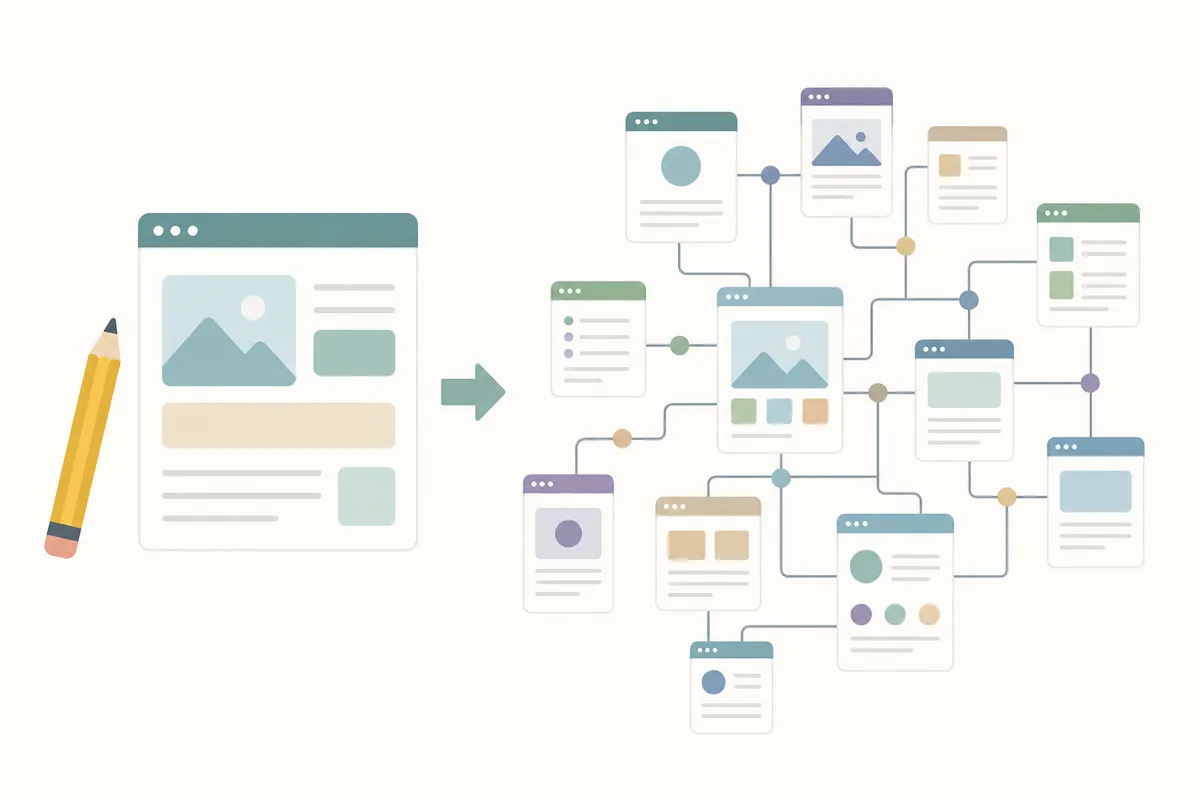
Here's the honest version: fixing one page is a DIY job. Fixing a sitewide pattern, or diagnosing why rankings dropped across the board, usually isn't. Not because it's impossible, but because it takes tools and time most firm owners don't have lying around.
| Situation | Your Website's Own Tools | When You Need More |
|---|---|---|
| One page has a weak title tag or thin content | Edit it yourself in your CMS, a 20-minute fix | Not needed, unless the page also has structural or indexing problems |
| Rankings dropped sitewide after a redesign | Your site's built-in tools won't show you why | A full technical audit, since redesigns often break redirects, title tags, or internal links across hundreds of pages at once |
| You want to know which keywords are worth targeting | Free keyword research tools give you volume and difficulty for individual terms | A full content and keyword strategy, if you're targeting dozens of services across multiple locations |
| A single broken link or 404 | A free broken link checker finds it in minutes | Not needed for a one-off; worth a full crawl if 404s are showing up across the site |
| Your Google Business Profile isn't showing in the map pack | Review and complete every field yourself | An audit of citations and local signals, if completion alone doesn't move you |
| You're not sure if competitors are outranking you firm-wide | A manual search or two gives you a snapshot | A rank-tracking and competitor-gap analysis for an ongoing, data-backed answer |
The pattern is simple: a single page, a single broken link, a single stale listing, fix it yourself. A pattern repeated across dozens of pages, or a mystery drop with no obvious cause, is different. That's where professional SEO work for CPA firms earns its cost. If you're not sure which camp a problem falls into, a sample audit report is usually enough to tell you.
Content That Builds Authority for CPA Firms
Search engines reward content that shows real expertise, not just the right keywords stuffed into a paragraph. This is part of what Google calls E-E-A-T: experience, expertise, authoritativeness, and trustworthiness. Google's Search Essentials describes it as central to how quality is judged.
Write for the Client, Not for the Algorithm
A 2,000-word guide that fully answers one question outranks five shallow 400-word posts almost every time. If a prospective client searching "tax deductions for freelancers" lands on your page, the page should answer that question completely. It shouldn't tease the answer and push them toward a call before they've learned anything.
Target Specific Client Types, Not Just Services
Instead of a generic "Bookkeeping Services" page, a firm focused on e-commerce clients might build a page around "bookkeeping for Shopify sellers." A tax-focused firm might target "tax planning for self-employed consultants." Specific pages like these convert better because the person reading them immediately recognizes their own situation.
Combine Related Topics Into Fuller Guides
Two thin posts, "What Is a Tax Deduction?" and "Top Tax Deductions for Small Business," could easily merge. Combine them into one thorough guide instead of splitting. It gives the reader more value in one place and signals to Google that you've covered the topic, not just skimmed it.
Borrow Proven Structures From Other Professional Services
The content playbook that works for CPA firms is nearly identical to what works for other trust-based, locally searched professions. Law firms face the same challenge of turning technical expertise into client-facing content. That's why the SEO playbook built for law firms covers ground that translates directly to accounting. Psychologists deal with the same conversion funnel: a visitor reads a blog post, then decides whether to call. The fixes that bring psychologists more client calls are worth studying for the same reason. Home inspectors compete on the same dynamic: getting found before someone else books the appointment. This guide on getting found before the buyer books someone else covers it well.
Local SEO: Where Most CPA Firms Leave Clients on the Table
Most accounting firm searches are local. Someone looking for help doesn't want a national brand. They want a CPA in their city who understands their state's tax rules and can meet in person if needed. That's why local SEO deserves its own focus, separate from general content work.
| Local Signal | What It Does | Effort to Fix | Priority for a CPA Firm |
|---|---|---|---|
| Google Business Profile completeness | Controls whether you show in the local map pack | Low, a single session to fill in every field | Highest |
| Consistent name, address, phone across directories | Builds trust signals and prevents confusion | Medium, requires checking multiple listings | High |
| Dedicated local landing pages (per city or service area) | Lets you rank for "[service] in [city]" searches | Medium, one page per area you genuinely serve | High if you serve multiple towns or counties |
| Client reviews on Google | Social proof that influences both rankings and click-through | Ongoing, ask satisfied clients after tax season wraps up | High, ongoing |
| Local backlinks (chamber of commerce, local business associations) | Signals to Google that local organizations vouch for you | Medium to high, requires outreach | Medium |
If you serve more than one town or county, build a real landing page for each. Don't just copy-paste a page and swap the city name, both readers and Google can spot that instantly. A genuine local page names actual neighborhoods, nearby landmarks, or state-specific tax quirks your clients deal with.
Technical SEO Basics Every CPA Firm Should Check
Beyond content and local listings, a handful of technical issues quietly cap how well a CPA firm's site can rank. This holds no matter how good the content is.
Site Speed and Mobile Rendering
Slow pages lose visitors before they read a word, and Google factors page experience into rankings. Run your homepage and your busiest service page through a speed test. Fix anything flagged as a major issue, usually oversized images or unoptimized scripts.
Indexing and Crawl Errors
If Google can't crawl a page, it can't rank it. Broken internal links, pages accidentally blocked from indexing, and duplicate content across near-identical service pages all quietly suppress rankings. These are exactly the kind of sitewide issues that are hard to catch by eye. Checking them page-by-page works for a small site, but gets unreliable past a dozen or so pages.
Backlinks and Guest Content
A backlink, a link from another website pointing to yours, tells Google that someone else vouches for your content. Not all links carry equal weight. A link from a respected small-business publication or an accounting industry site is worth more than a link from an unrelated blog. Guest posting on sites your ideal clients already read is one of the more reliable ways to earn these. It works best when the pitch is genuinely useful to that site's audience, not a thinly disguised plug.
Internal Linking
Linking from one page on your own site to another tells Google which pages matter most. For example, a blog post about year-end tax prep might link to your tax planning service page. This also helps visitors find your services naturally. If fifteen other pages on your site link to one key page, that's a strong signal it deserves attention. This works the same way across industries. A wedding venue site funnels blog readers toward its booking page. A CPA firm should funnel readers toward a consultation request the same way. This checklist for filling a wedding venue's calendar covers the pattern well.
Common Mistakes CPA Firms Make With SEO
- Treating the website like a digital business card. A site with just "Services," "About," and "Contact" and no depth has almost nothing for Google to rank beyond your firm name.
- Writing one page for every service instead of one page per service. It dilutes your relevance for any single search term.
- Skipping the Google Business Profile, or filling it out once and forgetting it. Stale hours, missing categories, and zero recent reviews all hurt visibility.
- Chasing keywords with no intent match. Ranking for a broad term that attracts the wrong audience wastes the traffic. Think DIY tax filers showing up instead of business owners who need a CPA.
- Ignoring mobile users. Most local searches happen on a phone; a site that's awkward to navigate there loses the click immediately.
- Buying backlinks from irrelevant sites. It rarely helps and can actively damage trust signals.
- Never measuring what's working. Without a baseline, rankings, traffic, and which pages generate calls, it's impossible to know whether changes are helping.
This pattern isn't unique to accounting. Service businesses that depend on local trust run into the exact same list of mistakes. That includes dog trainers trying to get found locally, junk removal companies competing on same-day visibility, and even schools trying to get found by parents. The fixes transfer almost directly.
FAQs
How long does SEO for CPA firms take to show results?
Most firms see movement in local rankings within a few weeks of completing their Google Business Profile. Fixing basic on-page issues like title tags helps too. Competitive, content-driven rankings, ranking for broader terms like "small business accountant", typically take several months of consistent content and backlink work.
Do I need a blog if I'm a small CPA firm?
Not strictly, but it helps. A blog gives you a place to target specific client questions that your core service pages can't naturally cover. Think how to file quarterly estimated taxes, or how to handle bookkeeping for Shopify sellers. Each post is another chance to rank and to earn links.
Is Google Business Profile more important than my website for local search?
Both matter, but for "near me" and city-specific searches, your Google Business Profile often shows before your website does. A complete, active profile with reviews is one of the fastest ways to show up in the local map results.
Can I do SEO for my CPA firm myself, or do I need an agency?
Fixing individual pages, claiming your Google Business Profile, and writing better content are all things you can do yourself. Diagnosing sitewide technical issues is harder to do alone. The same is true for building a full local landing page strategy across multiple cities, or running a sustained link-building campaign. That's where most firms bring in outside help, simply because of the time involved.
Does AI search like ChatGPT or Google's AI Overviews change how I should approach SEO?
Not fundamentally. Content that answers a specific question clearly and completely is more likely to get cited by AI-powered search tools. That's the same content that ranks well in traditional search. The firms getting ahead now are the ones writing genuinely useful, specific content, not the ones trying to game either system. A similar hub-and-spoke content approach is working for other service-based niches. That includes job boards working to get their listings indexed and ranking, and dermatology practices focused on getting patients to find them.
Get a Clear Picture of Where Your Firm Stands
Start with the Google Business Profile and the title tags. Those two fixes alone move the needle for most CPA firms within weeks. From there, build out service pages and fix the technical basics. Keep adding content that answers the exact questions your clients are already typing into Google. SEO for CPA firms isn't a one-time project; it's a handful of fixes done properly, followed by steady, specific content. If you want to see exactly where your firm's site stands right now, talk to the team. They'll build a sample report around your own pages.
Resources / References
Sources
About the author
SearchBlueprint researched, wrote and scored this article with the content pipeline our customers run on their own sites. The score in the byline is what our content engine gave this page before it published. Nothing here is reviewed by hand, which is the point: it is the product's output, published where anyone can check it.