How to Convert Leads Through Content (Without Cold Calls)
SearchBlueprint · · 15 min read · scored 95/100

Here is how to convert leads through content: match each piece to one stage of the buying journey, give every page a single next step, trade something worth having for contact details, and follow up more than once. Most teams lose the sale during follow-up, long after the content has done its job.
Two numbers explain why that matters. Zendesk's sales guide puts the share of website visitors ready to buy at 1 in 25. WhatConverts reports an average lead-to-sale conversion rate near 2%. Between those figures sits the frustration of most content programs: real traffic, real leads, and revenue that never arrives because publishing got treated as the finish line. The fix usually lives further down the funnel, in matching, capturing, qualifying and following up, in that order.
What converting a lead through content actually means
A lead is a person who has shown interest in what you sell and given you a way to reach them. Lead conversion is the work of turning that person into a paying customer. Content earns its place in that work because of one number. NYTLicensing's guide to content-driven lead generation cites research that 83% of the B2B sales process happens before a prospect ever reaches out. By the time someone fills in your form, your articles and comparison pages have either done most of the selling or lost it.

The three kinds of "lead" in your reports
WhatConverts draws a distinction worth stealing. A raw conversion is anyone who takes an action, such as a form fill or a phone call. A qualified lead matches your ideal customer and shows real buying intent. A sales-ready lead is prepared to make a decision. Marketing dashboards usually count the first group while sales teams only care about the third. Most arguments between the two departments are really an argument about which of these three things the word "lead" means.
If your problem sits earlier than any of this, before people convert at all, start with how lead generation works from first click to paying customer, then come back to this piece.
Where content does the selling
Every transition, from visitor to lead and from qualified lead to customer, has content that moves it and content that stalls it. A beginner guide moves a visitor to subscriber while doing nothing for a buyer weighing you against two rivals. A pricing explainer has exactly the opposite effect. Using content this way is already the mainstream play, with about 66% of marketers surveyed using their content to nurture subscribers and leads. What most of them skip is the matching, and conversion problems are usually matching problems.
Know your numbers before you touch the content
Before changing a single page, put two measurement habits in place: a working formula, and a segmented view of what it returns.

The formula and the benchmark
The math is short. Lead conversion rate = (leads converted / total leads) x 100. Method's worked example: 500 leads, 50 became customers, so (50 / 500) x 100 = 10%. Decide what "converted" means before you measure. It can honestly mean a closed sale or just a move to sales-qualified, and the two produce very different numbers.
For context, WhatConverts puts the average lead-to-sale rate near 2%. If you sit at 1%, a doubled conversion rate delivers as much revenue as doubled traffic, at a fraction of the cost. Run your own figures through the free conversion rate calculator to get a baseline and to price what a given lift would be worth.
Five metrics that find the leak
One rate cannot tell you where leads die. These five together can.
| Metric | What it answers | How to work it out | Warning sign |
|---|---|---|---|
| Lead conversion rate | How many leads become customers | Converted leads divided by total leads, times 100 | Sitting well under the roughly 2% lead-to-sale average WhatConverts reports |
| Cost per conversion | What each new customer costs to win | Total campaign spend divided by conversions | A cost per conversion higher than the profit on a first purchase |
| Conversion ROI | Whether the marketing pays for itself | Revenue per conversion set against cost per conversion | Positive in total but negative on the channel taking most of the budget |
| Time to conversion | How long a lead takes from first touch to purchase | Days between first interaction and sale, averaged | A cycle that lengthens quarter after quarter |
| Lead value | Which leads deserve the most sales attention | Expected revenue from the lead if it converts | Sales time spread evenly across leads worth very different amounts |
Zendesk's guide adds one more habit: run the rate more than once. Its example is a team whose combined conversion rate looks healthy at 34% while a single rep produces 80% of the conversions. The same trick applies to content. Run the rate per channel and per topic cluster, and the sitewide average stops hiding the truth.
Map every piece to one stage of the buying journey
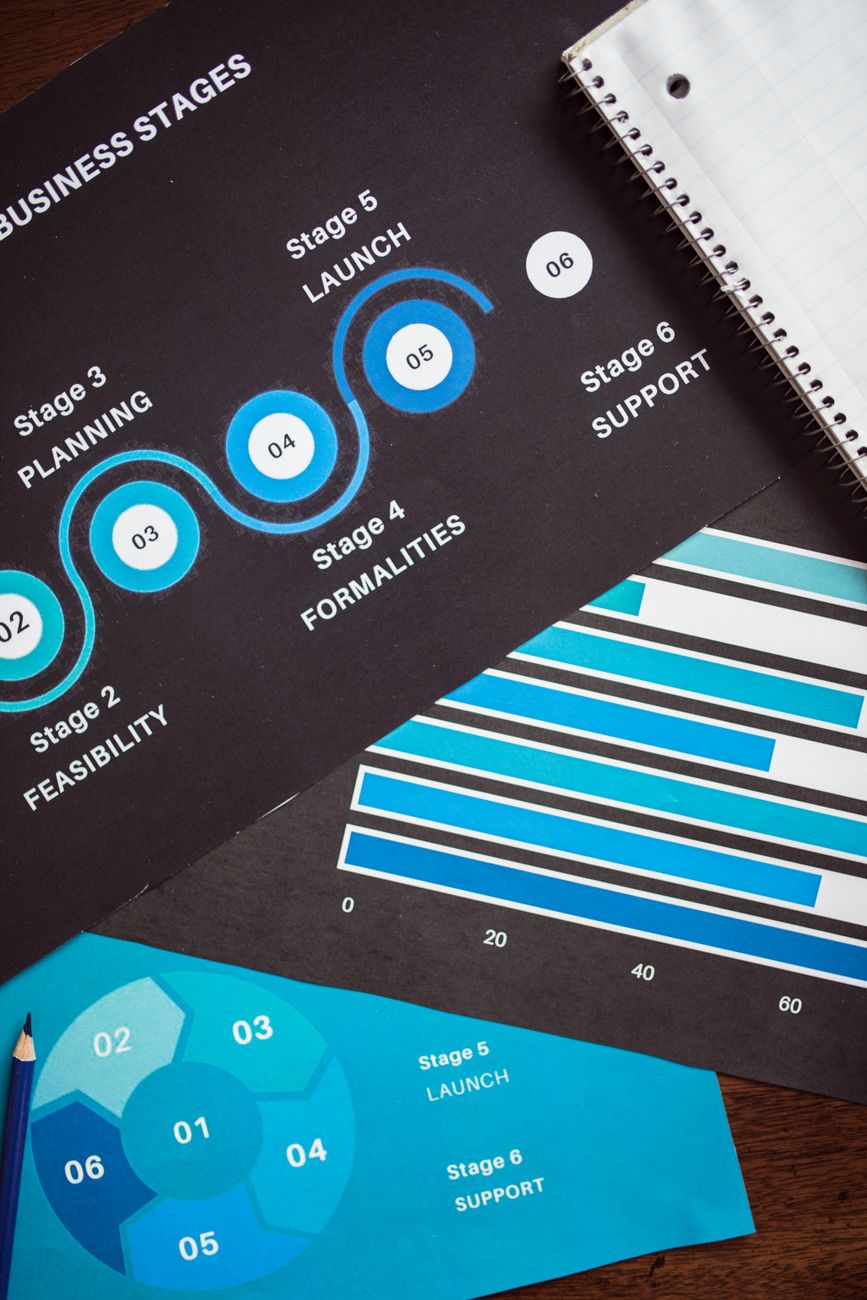
Most content converts nobody because it was written for "the audience" instead of for a person at a specific point in a decision. The map below is the working core of a content strategy in plain English: one stage, one question, one next step per piece.
| Buying stage | The reader's question | Content that converts here | The one next step to offer |
|---|---|---|---|
| Problem aware | Why is this happening to me? | Symptom and diagnosis posts that answer honestly before mentioning a product | Read the deeper guide, or subscribe |
| Solution research | What are my options? | How-to guides, explainers, checklists and templates | Download the template or run the free tool |
| Comparison | Which option fits my situation? | Comparison pages, case studies and honest pricing explainers | See a sample of the real output |
| Decision | Will this work for me specifically? | Trials, demos, audits and testimonials tied to a named problem | Start the trial or book a conversation |
| After the sale | Am I getting what I paid for? | Onboarding guides and playbooks | Review, refer or upgrade |
Match the magnet to the stage
A lead magnet is whatever you offer in exchange for contact details, and the exchange only happens when the value fits the moment. WhatConverts is blunt about the failure mode. Pitch bottom-funnel content at a top-of-funnel lead and you alienate the exact person you were trying to win. A reader still diagnosing a problem will trade an email for a checklist. Only a reader deep in comparison will trade one for a demo.
Write content that sells while it teaches
Nobody finishes an article that turned into an ad halfway through, and buyers can smell the turn coming from the subheadings. What converts is teaching that carries proof in passing.

Answer what buyers actually type
A head term like "crm" attracts browsers. A long phrase like "crm for a two-person landscaping company" attracts a buyer. Search engines see far more of the second kind than most keyword tools let on. The trade is volume for intent. That argument gets the full treatment in why long-tail keywords drive more leads than head terms. It is the cheapest win in this whole piece, because high-intent phrases are also the ones with the least competition to outrank.
Finding these phrases is closer to accounting than to writing. Pull them from sales call notes, support tickets, live chat logs and the questions comparison-stage prospects keep asking. If the well runs dry, seed the free content idea generator with your topic and mine the output for questions with buying intent.
Publish expert content with receipts
Buyers read expert content as a proxy for competence, and the survey numbers behind that habit are hard to ignore. In research cited by NYTLicensing, 54% of decision-makers said they decided to do business with a company they had not previously considered because of its content. The same research found 48% have handed business to the company that wrote it, and 89% say it improves their view of a brand. Half of C-suite respondents said this material sways their purchase decisions more in a downturn than in good times.
None of those figures reward volume. HubSpot counted 82% of marketers actively doing content marketing back in 2021, up 70% on the year before. Publishing alone separates you from no one. What separates you is a position someone could disagree with, a figure from your own work, and a plain statement of what your product will not do. That last sentence converts better than any feature list, because it is the sentence a burned buyer is scanning for. Receipts can be as simple as publishing your own results. Our writeup of a 347% traffic gain from using the product on ourselves exists because buyers check for exactly this.
Let customers do the convincing
Prospects assume you are biased about your own product. They extend no such suspicion to your customers. That is why WhatConverts calls user-generated proof the most powerful marketing there is, and why a case study built around one named problem outperforms a page of adjectives. Collect the specifics: what was broken, what changed, what it cost, how long it took.
Online stores feel this hardest, since nobody talks to a salesperson before a small purchase. Reviews, buying guides and comparison pages carry the whole persuasion load there, which is the thread running through content marketing for ecommerce.
Repurpose before you create
Not everyone reads. NYTLicensing's playbook makes room for this with format experiments and channel choice. The same argument can live as an article, a short video, a graphic and an email. The right mix depends on where your particular buyers spend attention rather than on any general rule. Repurposing beats creating from scratch because the thinking is already done. A comparison post becomes a webinar deck, three nurture emails and a one-page checklist in an afternoon.
Syndication stretches the same asset further. Partnering with a publisher that already reaches your market puts your material in front of buyers your own site will not see for years. That is the route NYTLicensing recommends for smaller businesses without a large audience of their own.
Capture the contact without wrecking the page
A page that ranks but captures nothing works like a library, while one that begs on every scroll works like a billboard. The workable space between the two is narrower than most designs assume.
Where the call to action goes
One page, one dominant call to action, placed beside the content it belongs to. A keyword guide should offer a keyword tool, and a pricing explainer should offer the sample or the trial. The generic newsletter box in the footer converts a fraction of what a stage-matched offer does. It asks for commitment while offering nothing specific in return.
Keep forms as short as the follow-up allows. Every field must earn its place in how sales will actually use it, so if nobody will ever dial the phone number, stop asking for it.
Qualify before you celebrate
A form fill proves interest and nothing more. Method's walkthrough of lead scoring is a sane starting point. Score each lead on fit (industry and role) and behavior (pricing page visits and email engagement) on a 1-to-100 scale, set a threshold such as 50, and hand sales only what clears it. The exact numbers matter less than the effect. Sales stops burning hours on tire-kickers and starts trusting what marketing sends over, which is the argument WhatConverts builds its whole qualification case on.
Follow up past the first no
The follow-up numbers are the bleakest in this subject, and the most useful. In Method's research, 48% of salespeople make no follow-up attempt after an initial no, and another 44% stop after one try. The same research found that 60% of customers say yes after first saying no. It also found it takes an average of 18 calls just to connect with a buyer. Read those together: most of the market abandons leads at the point where most of the recoverable revenue sits.
Speed compounds the effect. Method notes that reaching out within an hour of an inquiry makes you about seven times likelier to qualify the lead. A prospect who downloaded your comparison template at 10am and hears nothing until Thursday has usually already spoken to a competitor who answered at 10:15.
Content is what keeps a long sequence from decaying into nagging. Each touch should hand over something the lead has not seen: first the case study from a firm their size, then the comparison guide, then the pricing explainer, then a direct ask. Automate the sending if you like, and keep a human choosing what each lead receives. The same five emails fired at a plumber and a CFO convert neither.
When the yes finally arrives, close with the same clarity the content promised. Method's checklist for the quote covers pricing and payment terms, delivery timelines, and any warranties or guarantees. It is worth walking the customer through that document rather than attaching it and hoping. The close is also where the next conversion starts. Follow up after delivery to confirm the customer got what they paid for, watch for the natural upsell moment, and track retention and satisfaction. Method treats those post-sale numbers as the report card for the whole pipeline.
Make your content quotable to AI assistants
A growing share of buying research now happens inside ChatGPT, Perplexity and Google's AI Overviews before your analytics ever records a visit. Those systems quote passages rather than ranking pages. The passages that get quoted share a shape. They answer the question in the first sentence, they say plainly who the advice is for and where it applies, and they still make sense lifted out on their own.
That shape also converts human skimmers, so none of this is separate work. Write the direct answer first and the reasoning after. Keep one idea per paragraph. Give the FAQ section real questions with self-contained answers, since those map cleanly onto FAQ schema. The fuller argument for treating assistants as a channel is in why your buyers already ask ChatGPT first.
Give the assistant what it needs to attribute you, too. A page should state who the advice is for, what is on offer and where it applies, in plain sentences a machine can repeat without inference. A passage that only makes sense alongside the rest of the page will never be quoted. In this channel an unquoted page might as well not exist.
Run lead conversion as a system
A campaign converts for a quarter, while a system keeps converting after everyone has moved on to the next launch. The difference rests on three unglamorous habits.
Document it
Content Marketing Institute research has found, year after year, that the marketers who get results are the ones with a documented strategy. It also found that only 37% of marketers have one. Marketing Insider Group puts documentation at 65% among the most successful. The document does not need to be long. It needs to name the stages, the pieces that serve each one, the offers attached, and who follows up. A calendar keeps it honest, and content planning as a system covers how to run one without it turning into admin for its own sake.
Refresh it
Conversion decays quietly. Statistics age, the offer a call to action points at gets retired, and a competitor publishes something sharper against your best page. Refreshing an old page that already ranks usually returns more than writing a new one, which is the case laid out in why updating old content revives traffic. When you refresh, update the conversion path along with the copy.
Prove it
Sooner or later, whoever controls the budget asks what the content is worth. Have the answer ready before the question: tie leads to pages, tie pages to revenue, and report the result in money, the way tracking SEO ROI for whoever pays for it lays out. Budgets survive when the report is written in customers and revenue rather than visits.
Why your leads still are not converting
When the rate refuses to move, the cause is usually one of these.
| Symptom | Likely cause | Fix that usually works |
|---|---|---|
| Traffic grows but leads do not | Ranking pages answer informational questions and then offer nothing stage-appropriate | Add one matched offer per ranking page: a tool, template or sample worth an email |
| Sales calls the leads junk | Raw conversions are reported as leads with no qualification step in between | Agree on a definition of qualified with sales, score on fit and behavior, report only what clears the bar |
| Leads respond once and go quiet | Follow-up stops after one touch, the point where Method found 44% of salespeople give up | Build a sequence of four to six touches where every message includes a new asset |
| The rate is fine but revenue is not | The content addresses the low-value segment, so that is who converts | Weight reporting by lead value and write comparison and pricing content for the segment you want |
| A page that converted for months goes cold | The page aged, with stale figures or a retired offer | Refresh the content and the conversion path together, then promote the page again |
FAQs
What is a good lead conversion rate for content marketing?
WhatConverts reports the average lead-to-sale conversion rate is around 2%, so anything above that beats most of the market. The more honest benchmark is your own trailing number, measured per channel on a fixed definition of "converted." Beat last quarter on the same definition and you are winning.
How long does it take to convert leads through content?
It varies with price and sales cycle, so measure your own time to conversion rather than trusting an average. One number worth holding onto: 83% of the B2B buying process happens before a prospect makes contact, so much of the wait is invisible. The lead is reading and comparing long before you see them.
Should I gate content behind a form?
Gate the things a buyer would genuinely trade an email for: templates, calculators, audits and tools. Leave the persuasion ungated. A comparison page behind a form converts almost nobody, because the people who most need it have not yet decided you are worth an email address.
How many times should I follow up with a content lead?
More than once, and more than most of your competitors. Method's research found 48% of salespeople never follow up after a first no and 44% stop after one attempt, while 60% of customers who say no eventually say yes. Four to six touches, each adding a new piece of content, is a defensible default.
Does content still convert leads now that buyers ask AI assistants first?
Yes, though the winning shape has changed. Assistants quote self-contained passages that answer a question directly and name who the answer applies to. Pages written that way get cited inside the tools buyers now start in. Filler is invisible there, and it converts nothing anywhere else either.
See where your own funnel leaks
Learning how to convert leads through content only pays once you know which piece your own site is missing, whether that is the stage map, the qualification step or the follow-up. A scored audit shows all three in one read. Look through the sample SEO report to see how the gaps get found and graded, then talk to the team about running one on your pages.
Resources / References
Sources
About the author
SearchBlueprint researched, wrote and scored this article with the content pipeline our customers run on their own sites. The score in the byline is what our content engine gave this page before it published. Nothing here is reviewed by hand, which is the point: it is the product's output, published where anyone can check it.