Local SEO Benefits: What You Actually Gain in 2026
By Toy Wen Da, Co-Founder · · 6 min read · scored 94/100
The main local SEO benefits are more visibility in map results and "near me" searches, higher-intent leads who are ready to buy, stronger trust signals from reviews and a complete Business Profile, and lower long-term marketing costs than paid ads. The first step is claiming and fully filling out your Google Business Profile.
SearchBlueprint's local SEO feature shows exactly where you stand on this: a rank grid across every neighborhood or city you serve, plus auto-generated location pages, so you can see the visibility gap before you spend a dollar closing it.
Why Local SEO Benefits Your Bottom Line
Local SEO benefits show up as revenue, not just rankings. Joel House Search Media has estimated that 28% of local business revenue originates from local searches, which means a weak local presence leaves real money on the table. The intent behind those searches matters too: roughly half of people searching local terms intend to visit a store the same day, so showing up in the map pack puts you in front of people who are already close to buying.
Mobile habits make this more pressing. Research cited across the industry puts the share of smartphone users who default to a "near me" search above 80% when looking for a type of business. If your Business Profile is incomplete or your NAP details don't match across the web, you're invisible at the exact moment someone nearby is ready to choose.
Google's own documentation on ranking systems confirms that proximity, relevance, and prominence drive local results, a separate set of signals from the ones that decide regular organic rankings (Google Search Central). That's why a locally optimized small business can outrank a national brand for a "near me" query even without matching its domain authority.
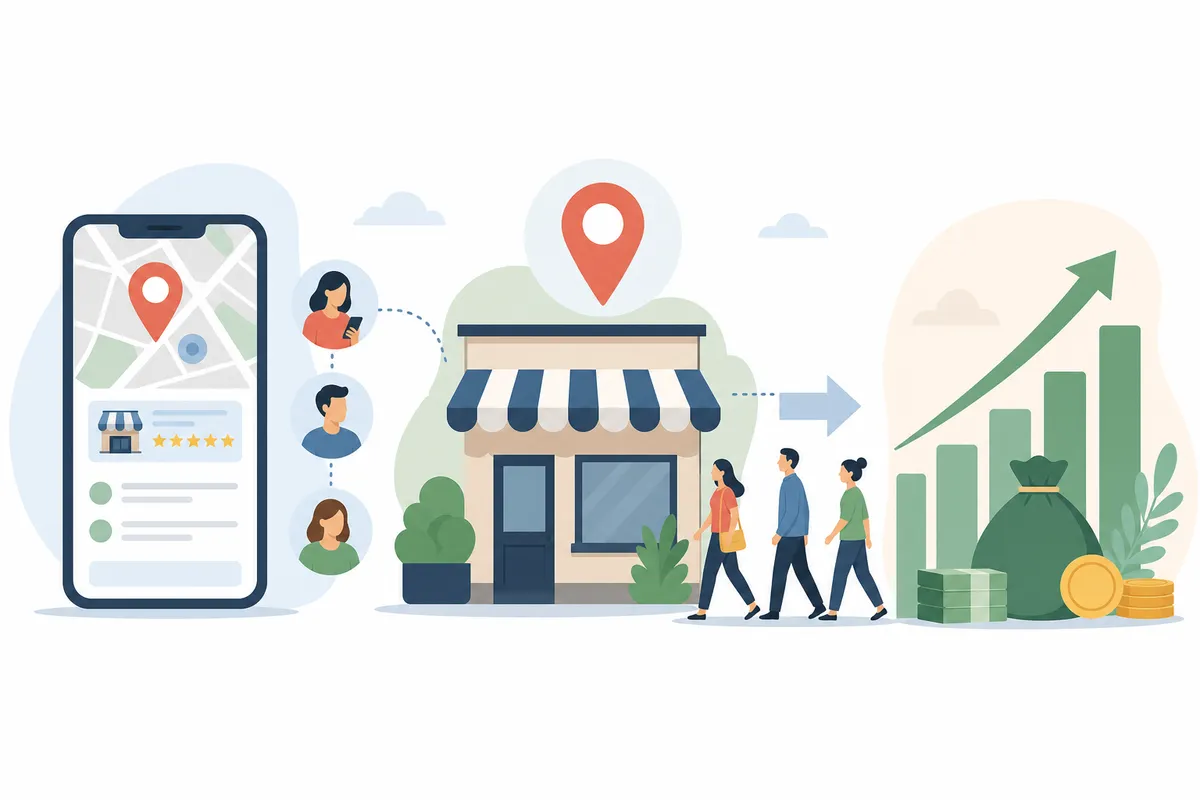
Visibility, Trust, and Cost All Move Together
These three benefits reinforce each other. Better visibility brings more foot traffic, more foot traffic brings more reviews, and a store with strong reviews and complete information converts better than one with neither. Over time, that combination tends to cost less per lead than running ads, because the ranking and the review history stay in place after you stop actively working on them, unlike a paid campaign that goes quiet the day you pause spending.
The Steps That Actually Capture These Benefits

Getting the benefits isn't automatic, it comes from a short list of concrete fixes on your own site and listings:
- Claim and verify your Business Profile on Google, then fill in every field: category, hours, service area, and photos of the actual location.
- Match your NAP everywhere, the footer of your website, your homepage contact block, and every directory listing should show the identical business name, address, and phone number.
- Build one page per location or service area you genuinely serve, with unique local detail rather than a copy-pasted template, and link each one back to your core service pages.
- Add LocalBusiness structured data to your site so search engines can read your address, hours, and service area directly from the page code (Schema.org).
- Ask for reviews after every job and respond to each one, positive or negative, since review volume and recency both feed into local ranking.
If you're weighing whether to handle this in-house or bring in help, the breakdown of local SEO cost in 2026 lays out typical price ranges for each route.
When Your Website's Own Tools Are Enough, and When They Are Not
This is the honest part most guides skip. A single location with a straightforward business can often get most of the local SEO benefits using free tools and an afternoon of work. A business with several locations, seasonal service areas, or recurring ranking drops usually needs something built to track and maintain that at scale.
| Situation | Is a DIY fix enough? | What it actually takes | Better route |
|---|---|---|---|
| One storefront, no rebrand or move planned | Yes | Verify your Business Profile, match NAP on your site, collect a handful of reviews | Your CMS editor and Google Business Profile dashboard |
| A one-off NAP typo or outdated hours | Yes | A few minutes editing the footer and your profile | Manual edit, no tooling needed |
| Multiple locations or overlapping service areas | Rarely | A unique page and consistent rank data for each city | A rank grid built for multi-location tracking |
| Rankings that keep slipping across several keywords or pages | No | Ongoing monitoring, not a one-time fix | A tool that tracks rank changes over time rather than a manual spot-check |
If you're checking one page after one change, your site's own editor and Google's free tools are genuinely enough. Once you're managing several locations or chasing a recurring drop, manual spot-checks stop scaling.
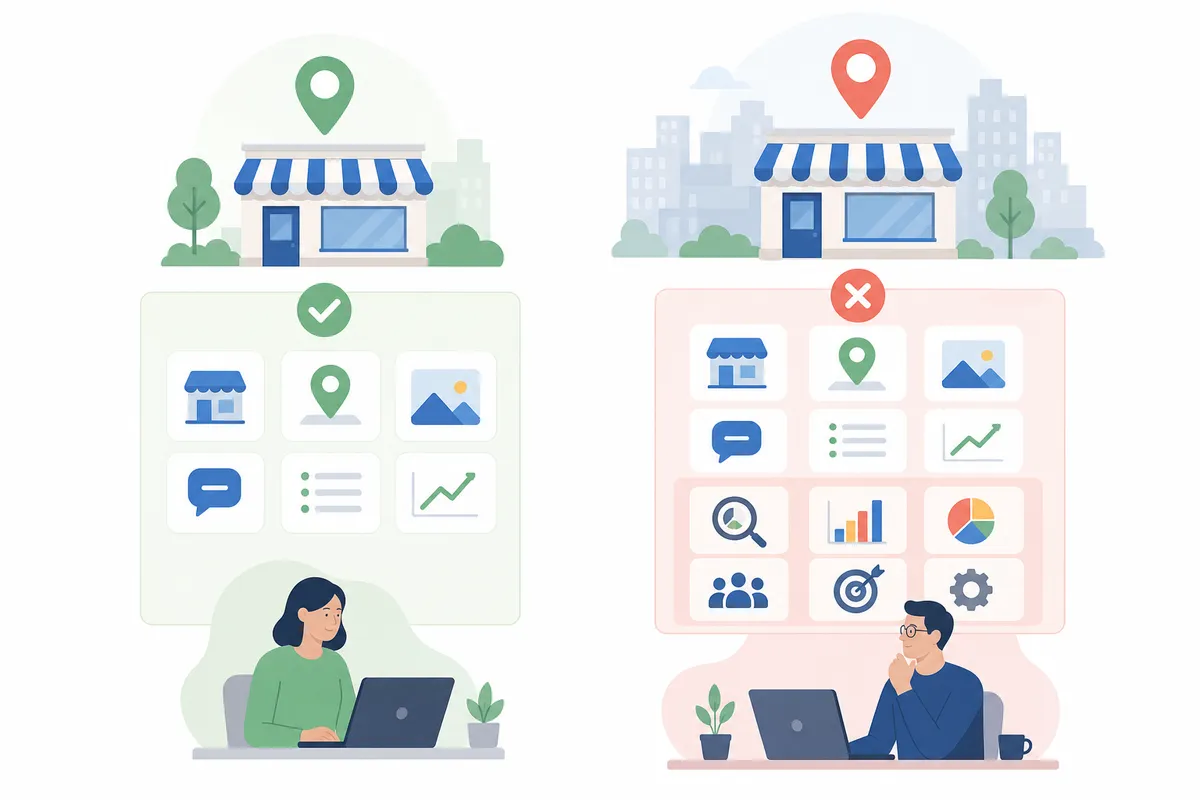
Common Mistakes That Erase Local SEO Benefits
- Inconsistent NAP data. A phone number that's different on Yelp than on your homepage confuses both customers and search engines.
- Duplicate location pages. Swapping only the city name on an otherwise identical page reads as a doorway page, not a genuine local page.
- Ignoring negative reviews. Silence looks worse than a short, professional response.
- Treating local SEO as a one-time project. Rankings and reviews need upkeep; a profile you set up once and never revisit tends to drift out of date.
- Skipping mobile optimization. Since most "near me" searches happen on a phone, a slow or hard-to-navigate mobile site undercuts everything else you've done.
FAQs
How long does it take to see local SEO benefits?
Most businesses start noticing movement in map pack visibility and profile traffic within a few months of consistent work, though exact timing depends on how competitive your category and city are.
Is local SEO worth it for a small business with one location?
Yes, especially since much of the work, claiming your Business Profile, matching your NAP, and gathering reviews, costs nothing but time and tends to keep paying off well after you stop actively working on it.
Does local SEO help businesses without a physical storefront?
Yes, if you serve a defined area. Google Business Profile supports service-area businesses, and you can still build location pages for each city or region you work in without listing a public address.
What's the difference between local SEO and regular SEO?
Regular SEO competes nationally or globally for a term; local SEO adds proximity and a verified business location as ranking factors, which is why a small local business can outrank a national brand for a "near me" search.
Can I do local SEO myself without hiring an agency?
For a single location, yes, claiming your profile, fixing NAP consistency, and collecting reviews are all manual, free steps. Multiple locations or a recurring ranking problem is where most owners start looking for dedicated tracking instead.
Start With Your Business Profile Today
Pick the one step from this list you haven't done yet, most often it's claiming your Business Profile or fixing a mismatched phone number, and do it before you touch anything else. That single fix tends to move the needle faster than any other piece of local SEO. When you want to see exactly where your rankings and local visibility stand right now, talk to the team and get a sample report built around your own local SEO benefits.
Resources / References
Sources
About the author
SearchBlueprint researched, wrote and scored this article with the content pipeline our customers run on their own sites. The score in the byline is what our content engine gave this page before it published. Nothing here is reviewed by hand, which is the point: it is the product's output, published where anyone can check it.