Is SEO Dead? No, Here's What Actually Changed in 2026
By Toy Wen Da, Co-Founder · Updated · 7 min read · scored 95/100
SEO is alive. Google and Bing still send search traffic, and sites that answer questions clearly still get found and cited by AI tools. The change is where the clicks happen, since more answers now surface first inside AI Overviews and chat tools like ChatGPT and Perplexity, and that shift rewards clear, specific content while it punishes thin, keyword-stuffed pages.

Is SEO dead, or just harder to ignore?
People ask "is SEO dead" almost every time search changes in a visible way. It happened with mobile-first indexing and again with voice search, and it's happening now because of AI Overviews and chat-based search. The pattern repeats because each shift exposes sites that were never built on substance in the first place.
Where the "SEO is dead" claim comes from
The claim usually traces back to one of a few experiences. A business saw organic traffic drop after an algorithm update and assumed SEO stopped working. A marketer watched AI Overviews push organic results further down the page and assumed clicks disappeared. Or a team tried SEO once, did it poorly and got no results.
None of those mean search stopped mattering; the bar for showing up simply moved higher. Google's own Search Essentials guidelines still describe the same core requirement, which is that content needs to be genuinely useful to the person reading it and must do more than look structured to rank. The requirement hasn't softened, and AI search has made it easier to spot who's skipping it.
What the search data shows
The numbers tell a more specific story than "SEO is dead" or "SEO is thriving." Search volume hasn't collapsed. What shifted is where an answer gets delivered and how much competition exists for the slots that remain.
| Signal | What it shows | What it means for your site |
|---|---|---|
| 80% of consumers rely on AI-generated results for ~40% of searches | AI summaries now handle a meaningful share of queries | Your content needs to be quotable, not just rankable |
| 48% of SEO marketers expect AI Overviews to improve search traffic | Many practitioners see this as an opening, not a threat | Being the cited source can drive traffic even without a top-3 ranking |
| 87% of marketers use AI to help draft content | AI-assisted writing is now standard practice | Human review is the differentiator, not AI use itself |
| Only 4% publish AI content without editing | Nearly everyone still adds human judgment before publishing | Unedited AI output is a red flag search engines are built to catch |
SEO built on volume and keyword repetition is the part that's dying. A real SEO content strategy that favors depth over output matters more now than it did five years ago.
How AI search changed the rules
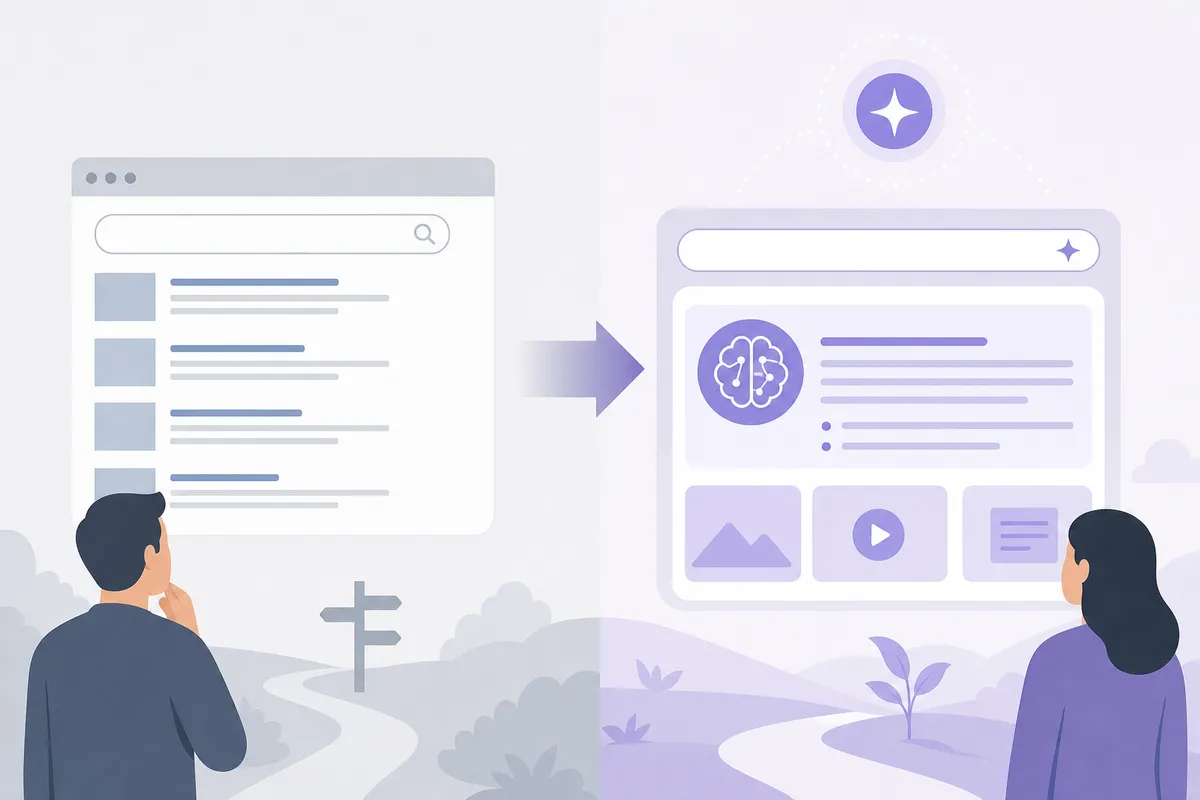
AI didn't replace search; it added a layer in front of it. Google, Bing, ChatGPT and Perplexity all still need to crawl, index and understand web pages before they can condense or cite them. SEO is the mechanism that makes that possible, and it now has a second audience alongside human readers.
AI Overviews and zero-click searches
When Google shows an AI Overview, some users get their answer without clicking through. This does reduce clicks for simple, single-fact queries like "what year was X founded." Complex questions, comparisons and anything requiring judgment still send users to the source.
Answer engine optimization comes in here. Structuring a page so an AI system can lift a clean, accurate passage out of it is a related but distinct skill from classic ranking work, and SearchBlueprint's answer engine optimization page compares it side by side with standard SEO and breaks down what makes a passage quotable.
Why content still needs to be found before AI can cite it
An AI model can only cite a page it can find, trust and understand. The unglamorous technical basics (crawlability, page speed and clean structured data) still gate everything else. Core Web Vitals remain part of how Google measures a page's loading and interactivity, and a slow or broken site gets skipped by crawlers as readily as it gets abandoned by humans.
Backlinks also work as a trust signal, both for traditional ranking and for AI citation, because a page that other credible sites reference is more likely to be treated as authoritative. A decaying backlink profile quietly hurts a site that otherwise looks fine, so it's worth tracking which links go dead through automatic backlink monitoring rather than finding out months later.
Can you still rank without a real SEO strategy?
Technically yes, for a short while. A new page can occasionally rank on luck, low competition or a lightly contested keyword. For anything with buying intent or real competition, the answer is no. Here's a plain comparison of what each path gets you.
| Approach | What it costs | What you realistically get |
|---|---|---|
| No SEO at all | Free | Occasional lucky rankings on low-competition terms; no reliable growth |
| DIY, self-taught SEO | Time, a few tools | Workable results on basics; technical issues often go unnoticed |
| Agency or in-house specialist | Budget | Structured strategy, technical fixes, and consistent content output |
| AI-assisted but unreviewed content | Low cost, high risk | Thin or inaccurate pages that search engines are explicitly built to deprioritize |
DIY SEO is genuinely fine for a small site with little competition, where fixing title tags, writing honest product descriptions and submitting a sitemap will cover most of what matters. It stops being enough once you compete for commercial terms against sites with a documented strategy, clean technical foundations and a track record other pages link to.
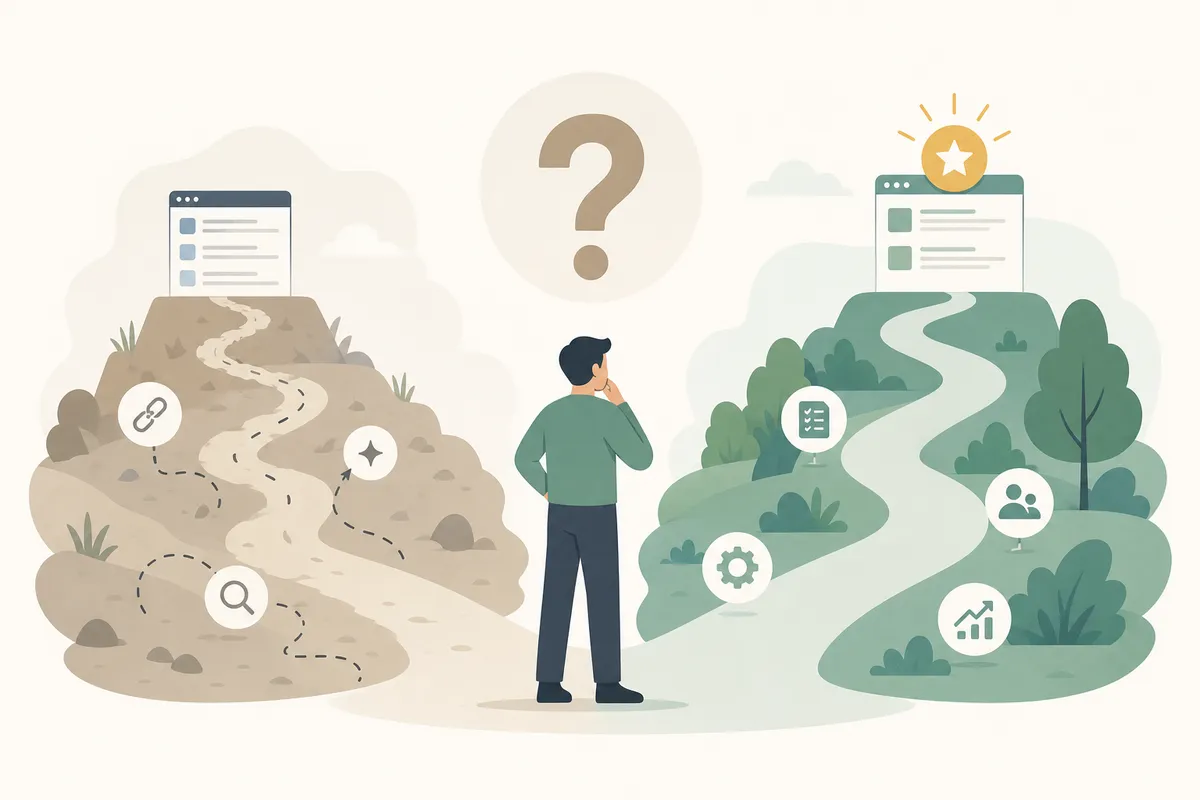
What to do instead of panicking about "is SEO dead"
If organic traffic dropped, the cause is rarely a reason to give up on SEO and is usually one of a handful of specific problems. Work through these in order:
- Check whether rankings dropped or only traffic did. AI Overviews can reduce clicks while a ranking holds steady, which is a different problem from losing the ranking itself.
- Audit for thin or outdated content, since pages that haven't been updated in years are the first ones AI systems and Google both deprioritize.
- Fix technical basics before touching content strategy. Broken schema, slow pages and crawl errors undercut everything else you do.
- Stop chasing keyword density targets. Repeating a phrase a fixed number of times per page is an outdated tactic, and keyword density as a percentage was never the ranking lever people assumed it was.
- Shore up brand signals. Google and AI systems both look for consistent evidence that a business is real and established, so see how brand signals get verified before blaming the algorithm.
- If you serve a specific area, keep local intent in view. A business with a physical footprint still wins or loses in the map pack, and local SEO fundamentals matter as much in an AI-search world as before.
Nothing here is exotic. It's the same discipline SEO always required, applied with more care because tolerance for mediocre content has dropped.
FAQ
Is SEO dead in 2026?
No. Search engines and AI tools both still rely on crawled, indexed web content to generate answers. What has died is low-effort SEO such as keyword stuffing and link schemes, while genuinely useful, well-structured content still ranks and gets cited.
Will SEO still matter in five years?
Most SEO practitioners expect it to matter more, because AI systems need a reliable source of trustworthy content to draw on. The mechanics will keep shifting toward structure, clarity and demonstrated expertise rather than exact-match keywords.
Did AI Overviews kill organic traffic?
AI Overviews reduce clicks for simple factual queries where a short answer fully satisfies the search. For complex, comparative or commercial searches, users still click through to read more, and that traffic hasn't disappeared.
Do keywords still matter for SEO?
Yes, as a signal of topic and intent rather than a literal phrase to repeat. Search engines now match content to the meaning behind a query instead of the exact words typed into the search box.
Should I hire an SEO agency or do it myself?
DIY SEO works for small sites with limited competition, and fixing titles, metadata and basic site speed covers a lot of ground. Once you're competing for commercial or local keywords, an agency or specialist tool typically closes gaps a DIY approach misses, particularly on technical audits and backlink health.
Get a straight answer on your own site
The fastest way to learn whether "is SEO dead" applies to your business is to look at your own pages, your own rankings and your own technical gaps, since a debate about the industry won't tell you. Talk to the team and get a sample SEO report built around your actual site rather than a generic take on the state of search.
Resources / References
Sources
About the author
SearchBlueprint researched, wrote and scored this article with the content pipeline our customers run on their own sites. The score in the byline is what our content engine gave this page before it published. Nothing here is reviewed by hand, which is the point: it is the product's output, published where anyone can check it.