How to Build Backlinks for Strong SEO Results
SearchBlueprint · · 15 min read · scored 92/100

Here's how to build backlinks for strong SEO results: earn links from relevant, trusted sites instead of collecting them anywhere you can. Reclaim unlinked brand mentions, fix broken links that point at you, answer journalist requests, and publish original data other writers need to cite. A handful of editorial links beats hundreds of weak ones.
That is the whole game in one paragraph. The rest of this guide shows you how to run it in practice: how to judge a link before you chase it, which tactics pay off for a small team, how to write outreach that gets answered, and how to tell whether any of it moved your rankings. The stakes are real money. Semrush reports that SEO agency Semcore credits link building for around 30% of its revenue, about $660,000 a year, driven largely by outreach to sites that already mention its clients.
Why backlinks still decide rankings
A backlink is a link from someone else's website to yours. Google reads each one as a vote of confidence, which is the core idea behind its original PageRank algorithm. Pages with more high-quality votes tend to outrank pages with fewer. That is why backlinks sit at the heart of off-page SEO, the work you do away from your own pages.
The numbers back this up. NP Digital's guide cites a study finding that over 96% of websites in Google's top 10 positions had more than 1,000 backlinks from unique domains. Correlation is not causation, and links are one signal among many. But no other off-page signal correlates with rankings as consistently.
Something newer matters just as much. AI answer engines learn who you are from the same editorial web that Google crawls. When trusted sites link to you and mention you next to a topic, large language models start associating your brand with that topic. That association decides whether you get cited in AI Overviews, ChatGPT, Perplexity, and Gemini answers. Backlinko's analysis of Angi's pricing guides makes the point well: one water heater cost article has over 900 backlinks and shows up in AI Overviews for more than 200 keywords. If you want the mechanics in more depth, read this breakdown of how external links actually move rankings.
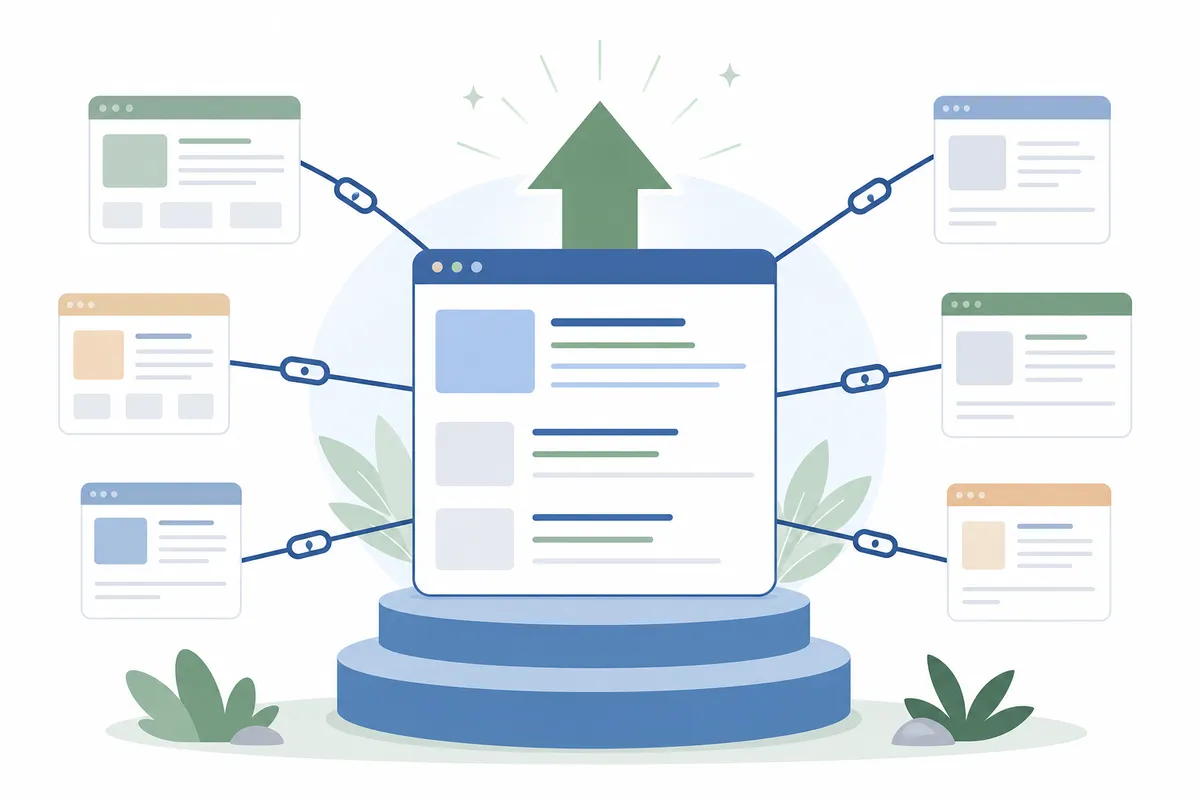
How to build backlinks: the four routes
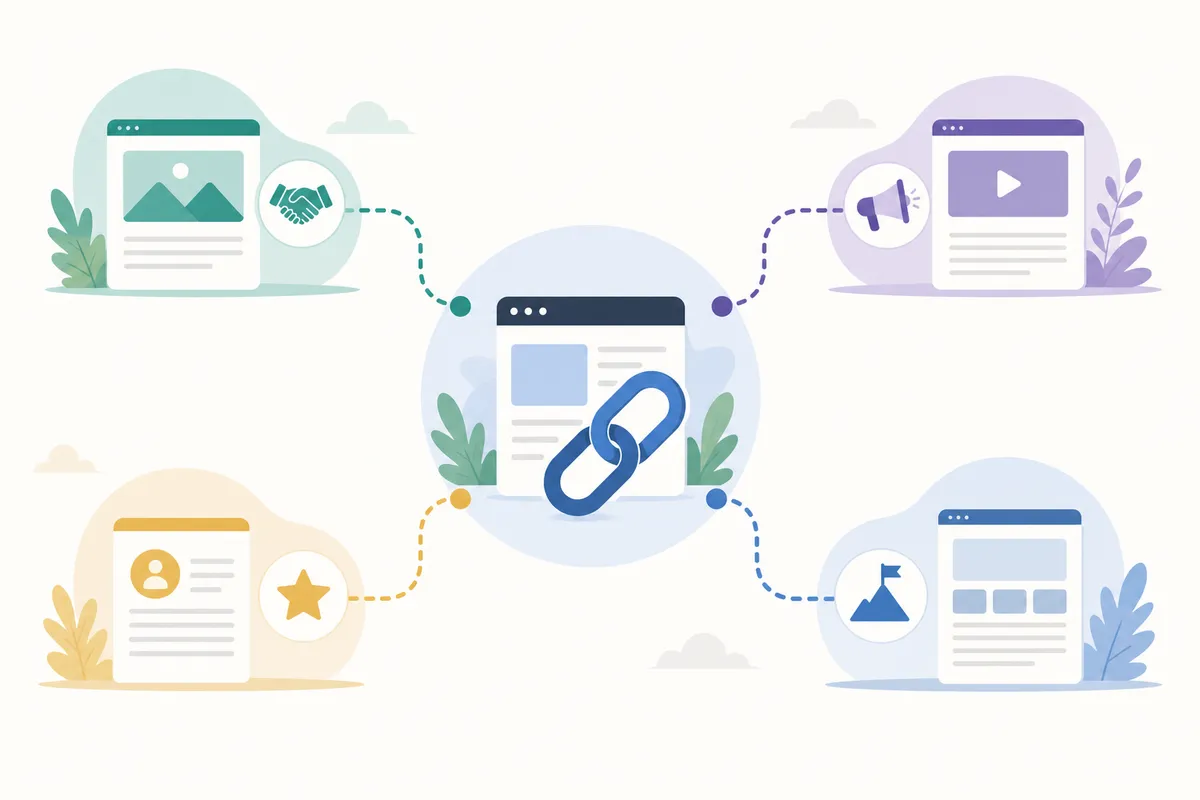
Every tactic you will ever read about fits one of four routes. Knowing which route you are on tells you what the link is worth before you spend an hour chasing it.
| Route | How it works | SEO value | Example tactics |
|---|---|---|---|
| Adding links | You place the link yourself on a site you do not own | Low, because anyone (including competitors) can do the same | Business directories, social profiles, forum posts |
| Asking for links | You email a site owner and make a case for linking | Medium to high, depending on the page and the pitch | Guest posts, broken link outreach, unlinked mentions |
| Buying links | You pay for placement, openly or not | Negative risk; violates Google's spam policies when it passes ranking credit | Paid guest posts, link marketplaces, PBNs |
| Earning links | You publish something people cite without being asked | Highest, and it compounds over time | Original research, free tools, digital PR |
Two of these deserve a note. Added links are weak but not worthless: professional link builders often start a brand-new site with a few dozen "foundational" profile and directory links, because Google expects a real business to have them. Ahrefs points out that its own X profile page has attracted 11,000 backlinks from over a thousand websites, so even profile pages can carry some weight. Bought links are the opposite case. They look like a shortcut and function as a liability, which the section on link schemes below covers.
What makes a backlink strong in 2026
The old checklist was a high domain authority score, a follow link, and exact-match anchor text. That checklist is out of date. The signals that matter now are contextual, and you can evaluate all four in about a minute per prospect.
The four quality signals
| Signal | Question to ask | Strong answer | Warning sign |
|---|---|---|---|
| Relevance | Does this site cover topics close to mine? | The linking page and your page share an audience | A press release site linking to a productivity app |
| Credibility | Does the site have real traffic and editorial standards? | Organic visitors, named authors, an editing process | Thin content, no bylines, ads everywhere |
| Placement | Did an editor choose this link because it adds value? | The link sits in body copy, explained in context | A footer, a sidebar, or an author-bio-only link |
| Status | Does the link pass ranking credit? | A standard followed link in indexable content | Every link on the site carries nofollow or sponsored |
NP Digital's digital PR team applies a similar screen in practice: solid domain authority (35 or higher), at least 1,000 organic visitors a month, and content that fits the brand. Semrush adds a floor on the other end, suggesting you avoid domains with toxicity scores in the 60 to 100 range.
Follow, nofollow, and what actually counts
Only standard followed links pass authority directly. But Google has said publicly that it treats nofollow as a hint rather than a directive, a change announced through Google Search Central. Nofollow links from real publications still drive referral traffic, build brand recognition, and put your name in content AI systems read. Judge them on those terms rather than writing them off; there is a full explainer on whether nofollow backlinks still help SEO if you want the details.
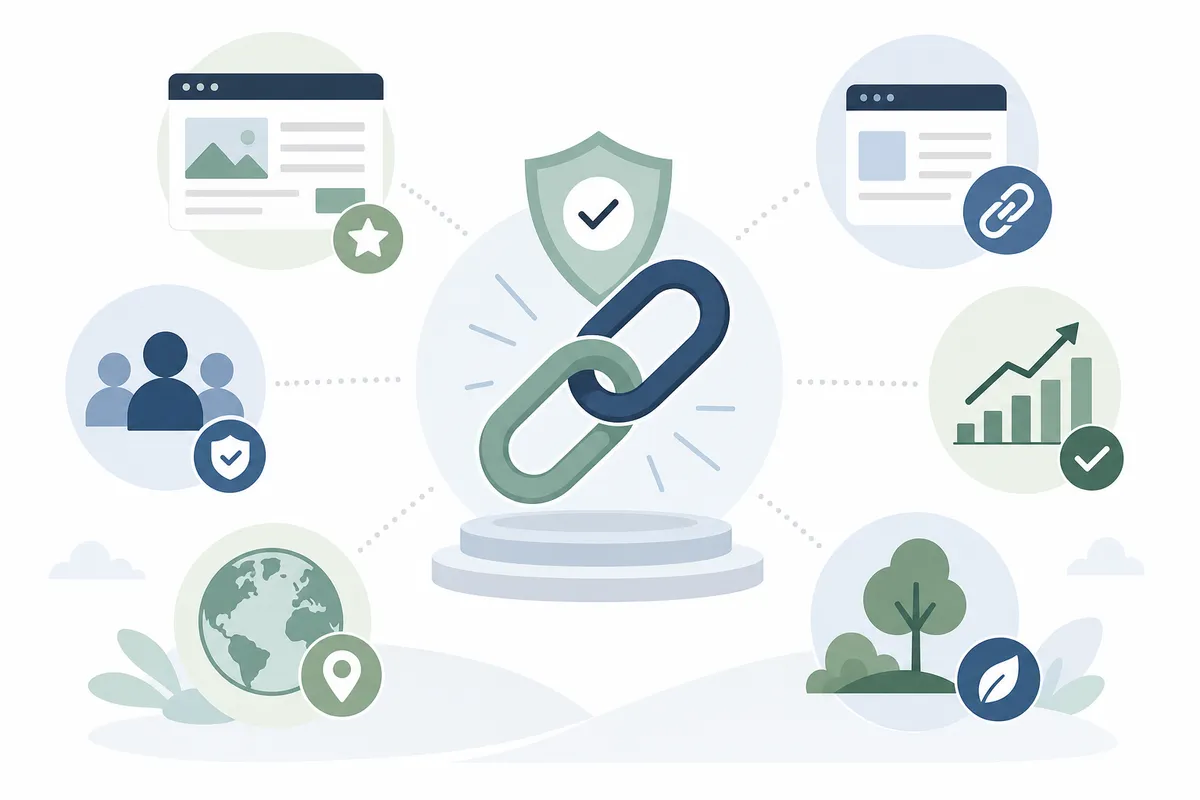
Get your site ready before you build a single link
Outreach fails quietly when the destination is weak. Before you send an email, make sure three things are true.
The page has to deserve the link
People link to pages that are interesting or useful, full stop. If the best page you can offer is a 600-word summary of what everyone else already published, your outreach success rate will round to zero. Go deeper than the current results, add original figures or expert input, and match the format searchers actually want. This is where your on-page work and your link work meet; if the boundary between them is fuzzy, this guide to on-page, off-page, and technical SEO draws the lines.
The site has to look legitimate
Editors check you out before linking. HTTPS, a branded domain, clean design, a real about page, author bios, and visible contact details all lower the perceived risk of citing you. None of these earn links directly. All of them stop you losing links you would otherwise have won.
Lay the foundational links once
Claim your social profiles and the few dozen directories and review sites where a business like yours naturally appears: think Yelp, Trustpilot, or the equivalents in your niche. Then stop. Going beyond the natural set wastes time and starts to look like a scheme. These links are weak individually, but they anchor your brand entity, and Google surfaces them in knowledge panels on its own.
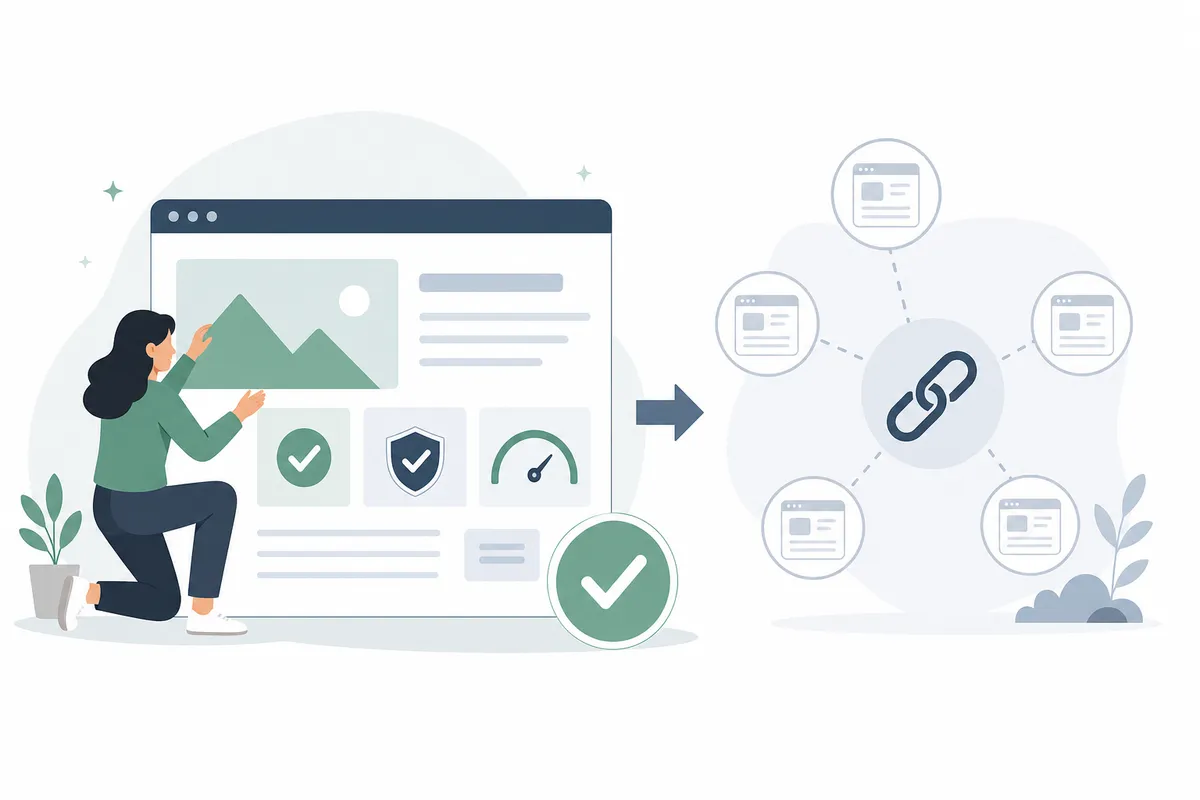
Eight ways to build backlinks that earn their place
These tactics are ordered roughly by speed to first result. For a wider menu, there is a companion piece covering nine tactics that earn real links; the eight below are the ones that reward a small team's time most reliably.
1. Reclaim unlinked brand mentions
Someone already wrote about you and forgot the link. A short, polite email converts these faster than any other tactic because the hard part, getting noticed, is done. Search your brand name minus your own domain, check podcast show notes and YouTube descriptions, and scan roundup posts. While you are there, suggest sharper wording: a mention that says what you do and who you serve builds the topic association that AI systems learn from. This is the core of brand mention SEO, and it is the tactic behind much of that $660,000 a year Semcore attributes to link building.
2. Fix broken links, yours and your competitors'
Links pointing at your 404 pages pass you nothing. Find them, then ask the linking site to update the URL; you are fixing their reader experience, so acceptance rates are high. The competitor version works the same way: find dead pages on rival sites that still hold links, build a live alternative, and offer it as the replacement. A backlink checker, including the free ones worth trusting, surfaces both lists in minutes.
3. Become a source for journalists
Reporters post questions; you answer with genuine expertise; they quote you and usually link. Backlinko reports that Connectively partners with more than 2,500 media outlets, that HARO sends journalist queries by email three times a day, and that Jolly SEO's team, after 200,000+ pitches, saw over 600 of its last 1,000 placements come through Featured. The pattern across all of it: fast, specific, credible answers win, and obviously AI-written ones get binned. Eucalypt Media notes the same time pressure from the agency side: once a journalist has a few good responses, they stop reading.
4. Publish original data
Writers need numbers, and they cite the original source. Backlinko's 2019 content study has drawn about 19,000 backlinks and, per the team, still generates new ones seven years later. You do not need a research department. Survey your customers, analyze a public dataset in a new way, or anonymize patterns from your own product data the way Credit Karma did for its 2021 State of Credit and Debt Report. Eucalypt Media reports upwards of 50 new links from a single research report within a few months when paired with outreach, and suggests having a mailing list of at least several thousand before relying on a survey.
5. Build free tools, templates, and calculators
Utility earns links for a different reason: your asset helps someone do their job, so they include it in their post without being asked. A calculator, a checklist, or a genuinely useful template keeps earning citations for years. The bar is the same as for data: it has to be specific enough that a writer reaches for it when making a point.
6. Guest posts and expert roundups
Writing for other sites still works when the publication is real: actual audience, actual editorial standards, topical fit. It earns a byline, referral traffic, and a link, and it builds the relationships that make every future ask easier. What died is the scaled version, thin posts on sites that exist to sell placements. Roundups are the low-effort cousin: contribute one sharp quote to a collaborative post and share it when it goes live. Both sit near the top of the link building strategies list SEO specialists run first.
7. Digital PR
Package a story journalists want to tell: fresh survey results, a contrarian data point, expert commentary on breaking news. The wins are outsized because news sites carry the most authority. NP Digital describes earning 20 top-tier media links, including CNBC and Retail Wire, for a personal finance client from one data-driven asset, and drawing over 1,400 shares, likes, and comments on a study ranking roadside restaurants for truck drivers. Note what worked in both cases: a specific angle a journalist could headline, not a press release about the company.
8. Testimonials and partnerships
Vendors love showcasing happy customers, and the showcase usually links back to you. Write a detailed testimonial for tools you genuinely use, naming specific results. Then look at partners, integrations, and affiliates you already work with; a partner page link converts far more often than a cold email because the relationship exists.
| Tactic | What you need first | Speed to first link | Best suited to |
|---|---|---|---|
| Unlinked mentions | An existing brand people talk about | Days | Established brands with press or podcast coverage |
| Broken link fixes | A backlink checker and live replacement pages | Days to weeks | Any site with history, or rivals with dead pages |
| Journalist requests | Real expertise and fast response times | Weeks | Founders and specialists who can answer credibly |
| Original data | A survey audience or first-party dataset | Months, then compounding | Teams that can invest once and harvest for years |
| Free tools | Design and build capacity | Months, then compounding | Products with an audience that shares resources |
| Guest posts | Writing time and topical credibility | Weeks to months | New sites building relevance and relationships |
| Digital PR | A newsworthy angle and a media list | Weeks to months | Brands chasing top-tier authority links |
| Testimonials | Tools and partners you already use | Days | Small teams with little content capacity |
Outreach that actually gets replies
Most link building lives or dies on email, and the base rates are humbling. Ahrefs' link building guide calls five links from a hundred outreach emails a result to be proud of. You cannot change the game, but you can change your odds.
Prospect before you pitch
Relevance does the selecting. A data science blog will never link your cookie recipes, so build your list from sites that share your audience: pages already linking to competitors, sites citing content like yours, and writers covering your topic this quarter. More care in prospecting means fewer emails and more links.
Write pitches people finish
Short wins. Keep the email under five sentences, paragraphs to two lines, and the ask unmistakable. Lead with what their readers gain, not what you want: "your guide covers cost factors; this data breaks them down by city" beats "please link to my post." And warm beats cold every time. A note from someone the editor has traded replies with on X or met at an event gets read; the identical note from a stranger gets archived. Build the relationship before you need it.
Do it yourself or hire it out?
DIY is the right call when you have more time than budget, a clear niche, and real expertise to quote. It is also how you learn what a good link costs. Hire an agency or freelancer when volume matters more than your hours, but only once you know enough to judge their work: which sites, which tactics, what quality bar. If a vendor guarantees a fixed number of links per month at a flat price, that is usually a volume operation, and volume is not the goal.
What to skip: link schemes and shortcuts
Every tactic above survives scrutiny. The ones below do not, and the difference is worth being precise about.
What Google's spam policies actually ban
Buying or selling links that pass ranking credit, excessive link exchanges, private blog networks, and automated link placement all fall under the link spam section of Google Search Essentials. The penalty is not only algorithmic. Cheap links tank your reputation with exactly the editors and journalists you need later, and cleanup costs more than the links ever earned. Sponsored placements are fine when disclosed and marked so they pass no ranking credit; it is the disguise that breaks the rules.
Quantity, quality, and variety
Do you need hundreds of links? No. Would hundreds of great ones help? Obviously. The honest answer is that both quantity and quality matter, quality leads, and a third factor gets ignored: variety. A profile that is 90% guest posts, or 90% one tactic of any kind, looks manufactured because it is. Mix editorial links, mentions, directories, and community presence; the case for backlink diversity over raw volume is strongest in competitive niches. And if you run several sites, the temptation to interlink them aggressively is its own trap; here is how multi-site link building scales without penalties.
Measure whether your backlinks produce strong SEO results
Link building without measurement turns into busywork. Track a small set of numbers and review them on a schedule.
| Metric | Where to track it | Healthy pattern | Why it matters |
|---|---|---|---|
| Referring domains | Any backlink checker | Steady growth from relevant sites, month over month | Unique domains predict rankings better than raw link counts |
| Links won per outreach round | Your outreach sheet | Improving hit rate as prospecting sharpens | Tells you which tactic deserves next month's hours |
| Rankings for target pages | A rank tracker | Movement in the weeks and months after links land | The result the links were built for |
| Referral traffic | Analytics | Visits arriving through the new links | Separates real-audience links from decorative ones |
| AI citations for branded queries | Manual checks across AI engines | Your brand appearing in answers on your topics | The signal mentions and links now feed |
Expect lag. Links typically take weeks to months to show up in rankings, and reclamation tactics pay faster than research assets. Watch trend lines, not single links, and give each tactic a fair window before you cut it. The compounding is the point: every strong link makes the next one easier to earn, because editors cite sites that other editors already cite. That flywheel is covered properly in this piece on how organic search authority compounds and why it pays.
FAQs
How many backlinks do I need to rank?
There is no fixed number; it depends on what the current top 10 holds for your keyword. A study cited by NP Digital found over 96% of top-10 sites had 1,000+ referring domains, but those are established sites measured across their whole history. Check the pages actually ranking for your target term and aim to beat the links of the weakest one, with better content.
Are nofollow backlinks worthless?
No. They do not pass ranking credit directly, but Google treats nofollow as a hint, and these links still deliver referral traffic, brand visibility, and mentions that AI systems read. A nofollow link from a major publication beats a followed link from a spam site every time.
How long does link building take to affect rankings?
Typically weeks to months. Google has to recrawl the linking page, process the link, and re-evaluate yours. Reclaimed mentions and fixed links tend to show results sooner than long-play assets like research reports, which start slowly and then compound.
Should I ever buy backlinks?
Not links that pass ranking credit; that violates Google's spam policies and risks both algorithmic and manual penalties. Clearly disclosed sponsorships marked so they pass no credit are legitimate marketing. If a seller promises ranking power for a fee, walk away.
Do backlinks help with AI search like ChatGPT and Google AI Overviews?
Yes. Links and the mentions around them teach AI systems what your brand is about and who to cite. Pages that earn many citations show up in AI answers too; Backlinko found one heavily linked Angi pricing article appearing in AI Overviews for over 200 keywords.
See where your own link profile stands
Open the sample SEO report to see how link gaps, authority signals, and competitor comparisons get mapped for a real site, then talk to the team about running the same analysis on yours. An hour with your own data teaches you more about how to build backlinks for strong SEO results than another month of reading.
Resources / References
Sources
About the author
SearchBlueprint researched, wrote and scored this article with the content pipeline our customers run on their own sites. The score in the byline is what our content engine gave this page before it published. Nothing here is reviewed by hand, which is the point: it is the product's output, published where anyone can check it.