Future of SEO: What Changes and What to Fix First
By Toy Wen Da, Co-Founder · Updated · 6 min read · scored 96/100
The future of SEO is a split into two jobs: ranking in classic search results and getting cited inside AI-generated answers such as Google's AI Overviews, ChatGPT or Perplexity. Start by auditing whether your best pages already appear in those answers, then fix the ones that don't.

SearchBlueprint's generative engine optimization tooling is built around this gap. It checks whether your existing pages are structured clearly enough for a large language model to quote, and it flags the ones that aren't. It also names what's missing, such as a direct answer near the top. Beyond that, it looks at entity signals and at whether an AI assistant has a source it can trust.
Why "will AI replace SEO" is the wrong question
People ask whether AI will replace SEO because the two feel like competitors, but AI-generated answers still pull from crawled, indexed web pages. They repackage what they find instead of linking to ten blue links. A page that never gets crawled or indexed, or never answers a question clearly, still won't get cited. The fundamentals Google has always described in its Search Essentials guidance are original content with a clear structure and a real reason to exist, and those same fundamentals make a page quotable by an AI system.
What changes is where the win shows up. A ranking at position three used to mean a click. Today it might mean a citation inside an AI Overview and no click at all, which is still visibility of a different kind.
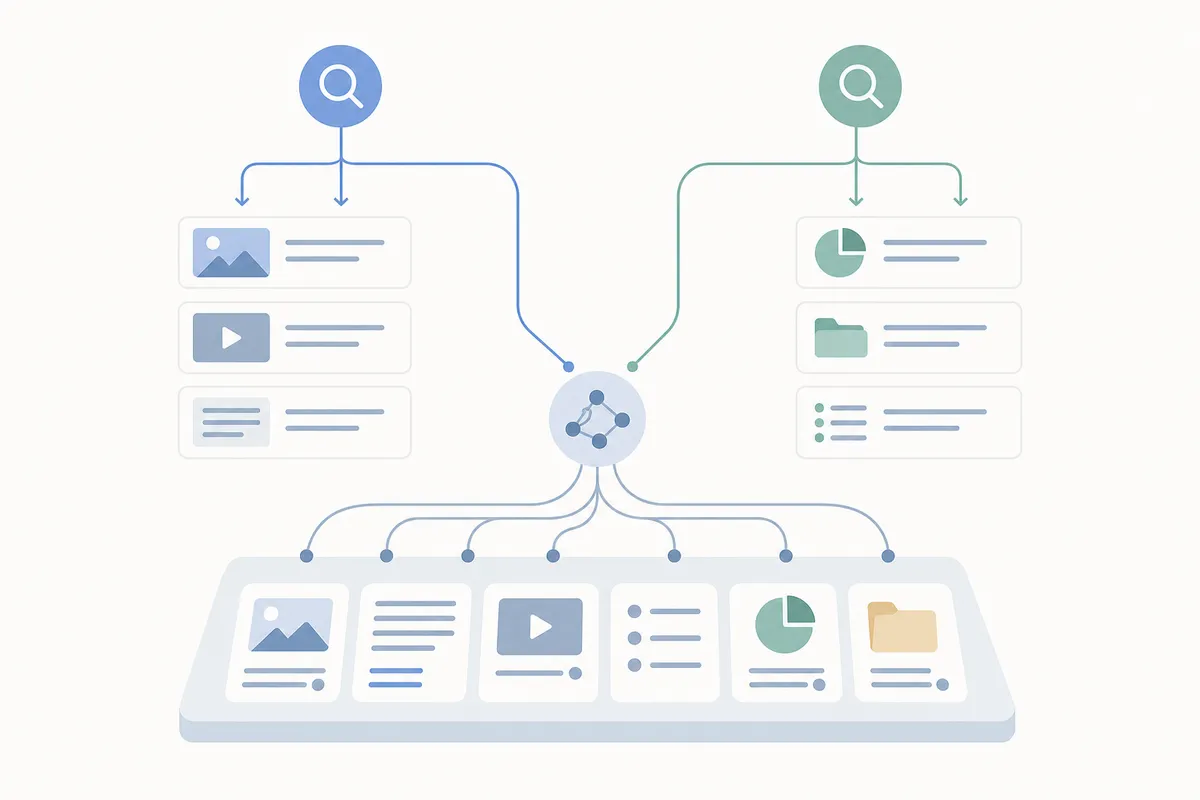
What's actually different in search right now

Four shifts are happening at once, and they compound.
- AI Overviews and chat-style assistants increasingly satisfy the query on the spot, so the click you used to count on may never happen.
- People search for recommendations on TikTok and Reddit as often as they type into a search bar, and they do the same on Amazon. Those platforms feed back into what AI tools cite.
- Search systems increasingly understand topics as entities, meaning the people, places and products a page is about. They reward pages that reinforce the same facts consistently over pages stuffed with a phrase.
- Measurement has to follow, since a ranking report alone misses the part of your visibility that now lives inside AI answers.
On-page SEO still matters, but the bar for a well-structured page is higher than it was.
The fix: make your existing pages quotable

You don't need to rebuild your site to prepare. You need your best pages to answer their own question clearly, near the top, in a form a machine can lift out of context.
Step by step
- Pick one high-traffic or high-intent page. Fixing the whole site in one pass is a mistake, so start where the stakes are highest.
- Add a direct, self-contained answer in the first few sentences, and state the conclusion before the explanation. AI systems favor passages that still make sense when pulled out of context.
- Clean up the metadata and structured data. Title tags and meta descriptions, plus structured data built on the schema.org vocabulary, are the clearest signal you can give search engines and AI crawlers about what a page is. Our breakdown of the real importance of metadata for SEO covers the specific tags worth fixing first and the mistake that quietly undoes them.
- Check for duplicate or thin content nearby. A page competing against near-duplicates on your own site confuses both rankings and AI citation.
- Re-publish, then check over the following weeks whether your brand or page starts appearing in AI answers for that query.
When your own website's tools are enough, and when they aren't
A free checker is genuinely enough for some jobs and genuinely insufficient for others.
| Situation | Is a one-off free tool enough? | Why |
|---|---|---|
| Checking one page's meta description or title length | Yes | A single-URL check is a one-time task with a clear pass/fail answer. |
| Confirming one page is mobile-friendly or has clean canonical tags | Yes | Again, one URL, one question, no ongoing tracking needed. |
| Monitoring whether dozens of pages keep ranking and getting cited over time | No | This is a recurring job that needs scheduled tracking rather than a single snapshot. |
| Managing SEO across an entire e-commerce catalog or multiple client sites | No | Scale and recurrence both argue for a dedicated system over manual spot checks. |
E-commerce sites feel this especially hard because landing pages multiply fast as the catalog grows. Our piece on the importance of landing pages for e-commerce SEO explains why that growth compounds the tracking problem instead of solving it.
Old SEO focus vs. the new reality
| Old SEO Focus | New Reality | Why It Matters |
|---|---|---|
| Keyword rankings on page one | Being cited inside AI-generated answers | Visibility now depends on authority and structure as well as position |
| Click-through rate from the results page | Zero-click visibility and brand mentions | A page can "win" the query without ever getting a click |
| Optimizing for Google alone | Discovery across TikTok, Reddit, Amazon and AI assistants | Audiences research in more places than one search bar |
Common mistakes to avoid
- Chasing every AI platform at once. Fix your core pages first, because spreading effort across five platforms before one is solid wastes time.
- Treating a zero-click result as a loss. A citation with no click still builds recall and trust, so track mentions as well as visits.
- Dropping technical SEO. Crawlability and structured data, plus page speed, still underpin whether anything gets indexed in the first place, per Google's own Search Essentials guidance.
- Skipping citation measurement. If you only track rankings, you'll miss the part of your visibility that's growing fastest.
FAQs
Will AI replace SEO completely?
No. AI-generated answers still draw from crawled and indexed web content, so pages that are clear and well-sourced keep getting used as source material.
What is Answer Engine Optimization (AEO)?
Answer Engine Optimization (AEO) is the practice of structuring content to answer a question directly, with short self-contained passages under clear headings and schema markup. The goal is for the content to be pulled into featured snippets and AI-generated answers as well as ranked as a link.
How do I know if my site is already showing up in AI answers?
Ask the question your page targets in an assistant such as ChatGPT or Perplexity, or in a Google AI Overview, and see whether your site or brand gets named as a source. There's no single dashboard yet that covers every AI platform at once.
Does this mean I should stop worrying about keyword rankings?
No. Classic search still sends real traffic for most queries, so rankings still matter. They are just no longer the only measure of whether people are finding you.
Is this different for a small local business versus a big e-commerce site?
The underlying fix is the same: clear, quotable pages. A site with thousands of product pages needs a recurring monitoring system, while a small site with a handful of key pages can often manage with periodic manual checks.
Start with your one best page
Pick the single page that matters most to your business right now and make its answer clear in the first few sentences. Then ask the same question in an AI assistant and see whether your page shows up. This one test will tell you more about where your site stands than any theory can. If you want to see where your own pages currently stand, talk to the team and run a sample report against your site.
Sources
About the author
SearchBlueprint researched, wrote and scored this article with the content pipeline our customers run on their own sites. The score in the byline is what our content engine gave this page before it published. Nothing here is reviewed by hand, which is the point: it is the product's output, published where anyone can check it.