Backlink Outreach Automation: What It Can (and Can't) Do
SearchBlueprint · · 11 min read · scored 95/100

Backlink outreach automation is the use of software and AI to find link prospects, send personalized pitches, and schedule follow-ups. It tracks replies at a scale manual work can't reach. It speeds up prospecting and follow-up scheduling, but pitch relevance and relationship judgment still need a person behind the keyboard.
What Backlink Outreach Automation Actually Does
Strip away the marketing language and backlink outreach automation is really a handful of connected tasks. It means pulling a prospect list from a data source, enriching it with contact details, and drafting a personalized first message. Then it means sending that message on a schedule and following up when nobody replies. Finally, it means checking later that the link is still live. Most tools handle two or three of those steps well and leave the rest to you. That's why "automation" so often means a stack of tools rather than one platform.
Google still sends the overwhelming majority of organic traffic to most sites. Industry estimates put its share of all site traffic at around 93%. So link building still matters as much as it ever did for ranking in that channel. The process has just gotten more competitive. Rising link costs and tighter editorial scrutiny have made cold outreach harder to do well by hand. So has a stronger focus on topical relevance. For a broader breakdown of what to automate in SEO and what to leave to a person, it's worth reading. Read it before you commit budget to any single tool.
The prospecting phase: finding people worth emailing
Prospecting is where APIs do the most legitimate work. A backlink or domain database (SE Ranking, Ahrefs, Semrush) shows you who links to your competitors but not to you. That's usually the fastest way to build a qualified list. SE Ranking bundles a Data API and a Project API under one subscription. It can stream up to 100,000 backlinks in a single call. That matters if you're comparing referring domains across several competitors at once. Ahrefs is known for the depth of its backlink index. Its free Webmaster Tools plan covers your own site with limited data. Full prospecting access requires a paid plan starting at $99 a month.
Beyond backlink databases, SERP APIs surface which pages already rank for your target topics (useful for finding resource pages and roundups). Social platform APIs help you find journalists and industry voices actively discussing your subject. None of this replaces judgment about whether a prospect is actually a fit. It just removes the hours of manual searching that used to come before that judgment call. If you want tactics rather than tools, nine backlink tactics that still earn real placements is a good next stop.

The outreach phase: sending, following up, tracking
Once you have a list, outreach bots take over the repetitive parts: scheduled follow-ups, reply detection, and basic A/B testing. Tools built for this (Mailshake, Lemlist, Smartlead, and similar platforms) typically watch for prospect behavior, such as no reply after 3 to 5 days. They then trigger a follow-up automatically, rather than relying on someone remembering to check a spreadsheet. Some also use natural language variation so the second and third emails in a sequence don't read as an obvious template.
Link monitoring is the other half of outreach automation people forget about. Once a link goes live, a periodic crawl (the kind of thing tools like Screaming Frog are built for) checks that it's still there. It flags the link the moment it returns a 404 or gets quietly removed. That gives you the chance to follow up and try to get it restored. For six outreach plays that consistently earn replies, the tactics matter more than the tooling. Automation is what lets you run those plays at volume instead of one email at a time.
Benefits and Risks of Automating Your Outreach

What you gain
The honest case for automation is time, not magic. Traditional outreach is resource-heavy: researching a prospect, writing a custom pitch, sending it, and tracking the reply. That's close to a full-time job when done by hand at any real volume. Industry benchmarks put the average time from a cold outreach email to an acquired backlink at around eight days. That clock only moves faster when follow-ups and reply tracking happen without someone manually checking an inbox. Reported industry adoption backs this up. One 2024 survey found 86% of SEO professionals had already folded AI into their workflow in some form.
We automated pieces of our own SEO workflow rather than trying to do everything by hand. It contributed to a documented traffic increase, detailed in our case study of growing our own traffic by 347%. The pattern that worked was narrow: automate the repetitive steps, keep a person on the steps that require judgment.
Where it can backfire
The failure mode is predictable: automation makes it cheap to send a lot of irrelevant emails. Irrelevant emails get ignored or reported as spam. Even with heavy automation, most campaigns still produce modest volume. One widely cited figure has 73% of marketers who run link-building campaigns landing fewer than 10 links a month. That suggests the bottleneck usually isn't sending speed. It's targeting quality.
There's also a policy risk worth naming plainly. Google's spam policies treat link schemes built purely to manipulate rankings as a violation regardless of who, or what, sent the email. Automating the outreach doesn't change whether the underlying ask is legitimate. A templated blast to hundreds of unrelated sites is a spam signal whether a person or a bot pressed send. See Google Search Essentials for the full policy. The safest use of automation stays inside sites that are genuinely relevant to your content. That's the same standard a careful human outreacher would apply manually.
Popular Backlink Outreach Tools and APIs in 2026
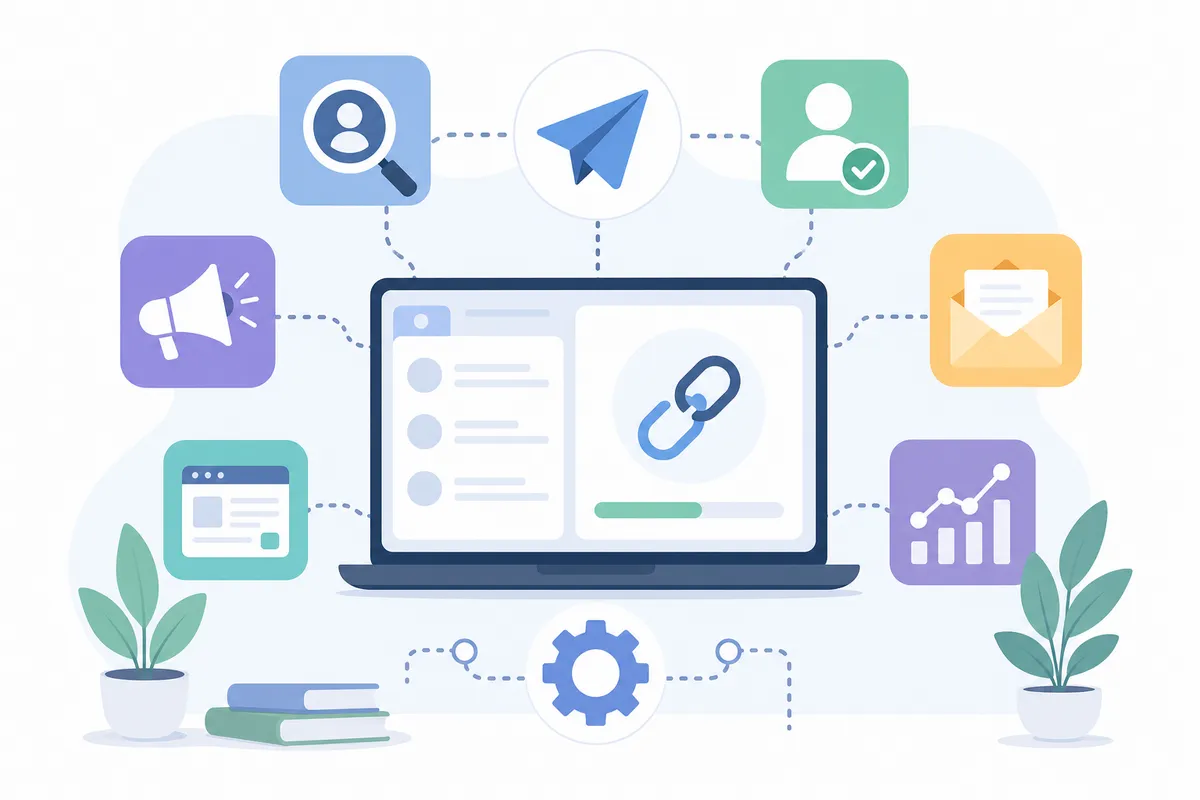
Pricing and focus vary a lot across this category. Picking the wrong one usually means paying for prospecting depth you don't need, or outreach automation a data-only tool doesn't offer.
| Tool | Best For | Starting Price | Automation Focus | Notable Detail |
|---|---|---|---|---|
| BlazeHive | Founders and small teams wanting a done-for-you approach | From $39/month, 14-day trial | Fully automated AI-matched reciprocal link exchange | Most users report a first verified backlink within about 7 days |
| SE Ranking (Data + Project APIs) | Teams wanting one subscription for data and workflow | Included with SE Ranking plans | Competitor backlink-gap prospecting, connects to AI assistants | Streams up to 100,000 backlinks per API call |
| Ahrefs | Deep prospecting research | $99/month for paid plans | Prospecting only; export to a separate outreach tool | Free Webmaster Tools plan covers your own site with limited data |
| Semrush Link Building Tool | All-in-one prospecting plus connected email outreach | $129.95/month | Prospecting, CRM-style pipeline, integrated send/track | Higher tiers needed for more projects and tracking limits |
| BuzzStream | Small teams that want an outreach CRM, not a full suite | $24/month (Starter) | Contact management, email automation, browser prospecting | Growth tier is $124/month, Professional is $299/month |
| Pitchbox | Agencies running high-volume, multi-client campaigns | No public pricing; custom quote | Prospecting, contact verification, multi-stage sequences | Typically prices in the mid-to-high hundreds of dollars a month |
None of these tools replace the judgment step: deciding whether a site is actually a good fit for a link. They also can't decide whether the pitch angle is one an editor would want to publish. That part still has to happen before or after the automated steps, never instead of them.
How to Implement Backlink Outreach Automation Without Losing the Personal Touch
Step 1: Build the prospect list with real data
Start from competitor backlink gaps rather than a generic keyword search. Pull the sites linking to two or three direct competitors but not to you. Then filter by relevance to your actual content, not just domain authority. An AI SEO agent that runs research and outreach prep from a single URL can shortcut a lot of this groundwork. It turns a domain into a working prospect list without manual spreadsheet building.
Step 2: Personalize before you automate, not instead of it
GPT-style drafting tools are genuinely useful for a first-pass email. But a template with only {{first_name}} and {{company}} filled in reads as a template. Add one line that references something specific. It could be a recent article the prospect published, a stat from their own site, or a reason your resource fits the exact page you're pitching. That one sentence is usually what separates a reply from a delete.
Step 3: Sequence follow-ups on a schedule
Set your first follow-up for 3 to 5 days after silence, not the same day and not two weeks later. Tools built for this vary the cadence and wording slightly across the sequence, so the third email doesn't read as a copy-paste of the first. They also log opens and replies automatically, so you're not manually checking a spreadsheet after every send. Running A/B tests on subject lines is worth the setup time here too; small wording changes measurably move reply rates.
Step 4: Monitor link status after placement
A link earned today isn't guaranteed to still be there in six months. Schedule a recurring crawl of your placed links, and treat a 404 or a removed link as a task, not background noise. Reach out again, offer an update if your content has moved, and ask for the link to be restored. This step is the one automation stack most campaigns skip, and it's the one that quietly erodes a link profile over time.
Measuring Success: The Metrics That Actually Matter
Volume alone is a poor scorecard. Most campaigns land fewer than 10 links a month even with automation in place. So the more useful question is whether the links you do land are worth the effort behind them.
| Metric | What It Tells You | Healthy Signal | Where To Check It |
|---|---|---|---|
| Reply rate | Whether your pitch and targeting are relevant | Above your outreach tool's own historical average for your niche | Outreach platform's campaign report |
| Placement rate | How many replies convert to a live link | Improves over time as you refine the prospect list | CRM or outreach tool pipeline stage |
| Time to link | How fast a pitch turns into a placement | Trending toward the reported industry average of about 8 days | Outreach tool timestamps |
| Referring domain growth | Whether new, unique domains are linking in, not just repeat sites | Steady month-over-month growth | Backlink database (SE Ranking, Ahrefs, Semrush) |
| Link retention | Whether placed links stay live | Few or no 404s on a monthly crawl | Link monitoring crawl report |
Optimizing a campaign usually means tightening the prospect filter (dropping sites with weak topical overlap) before it means writing better copy. A more relevant list improves every metric in that table at once.
Automation and Human Judgment: Where to Draw the Line
The honest take is that automation earns its keep on the mechanical steps. It loses value fast the moment it tries to replace judgment. Segmentation, data pulls, follow-up timing, and link monitoring are safe to hand off entirely. Deciding which prospect is actually worth pursuing, what angle will land with a specific editor, and how to pitch a journalist through a sourcing platform are not. Those calls benefit from someone who's read the site and has an opinion about it.
That split is the same one that shows up across SEO generally, not just outreach. A closer look at what to automate in AI-driven SEO work, and what it actually costs, walks through the same tradeoff. That tradeoff applies to other parts of the workflow too. If you're weighing how much of your own outreach to automate, that framework transfers directly. Automate the parts that are the same every time, and keep a person on the parts that aren't.
FAQs
What is backlink outreach automation?
It's the use of software and AI to handle the repetitive parts of link building. That means finding prospects through APIs, drafting a first-pass personalized email, sending follow-ups on a schedule, and monitoring whether placed links stay live. It speeds up the mechanical steps; deciding which prospects and pitches are worth pursuing still needs a person.
Does automating outreach violate Google's link spam policies?
Not by itself. Google's spam policies target link schemes built to manipulate rankings, not the use of software to send a legitimate, relevant pitch. The risk comes from using automation to blast hundreds of unrelated sites at once. That reads as a manipulative pattern whether a person or a bot sent it.
How much does backlink outreach automation cost?
Entry-level outreach CRMs like BuzzStream start around $24 a month. Mid-tier all-in-one tools like Semrush's Link Building Tool start at $129.95 a month. Agency-grade platforms like Pitchbox skip public pricing entirely. They typically land in the mid-to-high hundreds of dollars a month for a custom quote.
How many backlinks can I expect from an automated campaign?
Modestly more than doing it by hand, not dramatically more. Even with automation in place, industry data suggests most marketers running link-building campaigns land fewer than 10 links a month. Automation raises your ceiling on volume; it doesn't guarantee more replies from a poorly targeted list.
Can AI write outreach emails without sounding robotic?
It can write a usable first draft. The line that actually gets a reply is usually a specific reference to the prospect's own content or site. It still needs a human to add before the email goes out. Skipping that step is the fastest way to make an AI-drafted email obviously AI-drafted.
See What a Full Audit Would Catch Before You Automate Around It
Backlink outreach automation only pays off if the site you're building links to is worth linking to in the first place. Talk to the team and see a sample SEO report. It'll show you what a full technical and content audit would surface before you put outreach on autopilot.
Sources
- AI & automation in outreach: Scaling link building with APIs ...
- Beginner here - is there really no way to automate reaching ...
- Automated Backlink Outreach AI Agent - Free No-Code Setup
- Backlink Building Outreach Strategies + Email Templates
- 12 Best Automated Link Building Tools Compared (2026)
Disclaimer: This article is general legal information, not legal advice, and does not create a solicitor-client relationship. The law changes and its application depends on your particular facts. Speak to a qualified lawyer in the relevant jurisdiction before acting — some rights and claims are subject to strict time limits.
About the author
SearchBlueprint researched, wrote and scored this article with the content pipeline our customers run on their own sites. The score in the byline is what our content engine gave this page before it published. Nothing here is reviewed by hand, which is the point: it is the product's output, published where anyone can check it.