8 Best Ecommerce Software for SEO in 2026 (Free and Paid)
By Toy Wen Da, Co-Founder · Updated · 8 min read · scored 93/100
The best ecommerce software for SEO depends on what's slowing your store down. If you need keyword research and competitor tracking in one place, Semrush is the strongest all-rounder. If your biggest problem is broken links and duplicate product pages, Screaming Frog handles that job better than any all-in-one suite.

How we chose these tools
Readers comparing ecommerce SEO software usually want a short list rather than a 40-tool roundup, so we narrowed the field with four questions. Does the tool offer something usable at $0, or only a time-limited trial? What does it do better than its competitors, whether that's keywords, backlinks, technical crawls or on-page content? Can it handle category pages, faceted navigation and large product catalogs? And where does it fall short, since every tool has a limit and you should hear about it before you pay?

1. Semrush: best for all-around keyword and competitor research
Semrush puts keyword research, rank tracking, backlink analysis and a site audit tool in one dashboard. For an ecommerce team, the standout is competitor gap analysis, which shows the product and category terms rivals rank for that you don't.
Semrush offers a limited free plan and a paid trial. Confirm the starting price on its pricing page, as of October 2026.
Pick it if you want one login for keyword research and competitor comparisons. Skip it if you only need technical crawl data, because its audit tool is broader but shallower than a dedicated crawler.
2. Ahrefs: best for backlink and content-gap analysis
Ahrefs is best known for its backlink index, which helps ecommerce sites work out why a competitor's category pages outrank theirs. Its Content Gap tool also flags keywords that competitors rank for and your product pages miss entirely.
Ahrefs has a free Webmaster Tools tier for verified sites, and paid plan pricing is on its pricing page, as of October 2026.
Pick it if link building and competitor backlink research matter to your strategy. Skip it if you need deep on-page content guidance, since Ahrefs leans toward link and keyword data.
3. Screaming Frog SEO Spider: best for technical site audits
Screaming Frog crawls your site the way a search engine does and surfaces broken links, duplicate titles, redirect chains and thin category pages, all common on large product catalogs. It's a desktop tool rather than a dashboard, which some teams prefer for raw control. Filters, sort options and faceted navigation often create thin or duplicate pages on ecommerce sites, which runs against Google's guidance on helpful, reliable content.
The free version crawls up to 500 URLs, and paid licensing details are on Screaming Frog's pricing page, as of October 2026.
Pick it if you suspect duplicate content from filters or faceted navigation. Skip it if you want keyword research or rank tracking, which it doesn't do natively.
4. Moz Pro: best for teams new to SEO software
Moz Pro packages keyword research, rank tracking and a site crawl into a simpler interface than Semrush or Ahrefs. That makes it a reasonable entry point for a small team without a dedicated SEO hire.
Moz offers a free trial, and ongoing pricing is listed on its pricing page, as of October 2026.
Pick it if your team is new to SEO software and wants fewer features that work more simply. Skip it if you've outgrown the basics, since Moz's data depth generally lags Semrush and Ahrefs at scale.
5. Surfer SEO: best for optimizing product and category page content
Surfer scores a page against top-ranking competitors for a given keyword and suggests a word count, headings and terms to include. For ecommerce it works well on category pages and buying guides, and less well on individual product descriptions.
Surfer's starting price is on its pricing page, as of October 2026. There is no permanent free plan, only a trial in some cases.
Pick it if you're rewriting category pages and want a content scorecard. Skip it if you need technical audits or backlink data, because Surfer focuses narrowly on on-page content.
6. SE Ranking: best for budget-conscious agencies managing several stores
SE Ranking covers rank tracking, site audits and keyword research at a lower price point than Semrush or Ahrefs. Agencies managing several small ecommerce clients often shortlist it for that reason.
It has a free trial, and the starting price is on its pricing page, as of October 2026. If you're building out a full agency toolkit, this guide to SEO software pricing for agencies breaks down what to expect across tiers.
Pick it if you manage several stores and need to watch cost per client. Skip it if you need the largest keyword or backlink databases, since bigger platforms generally have deeper data.
7. Yoast SEO: best for WooCommerce stores
Yoast is a WordPress and WooCommerce plugin rather than a standalone platform. It handles on-page basics such as meta titles, descriptions and readability directly inside the product editor, and it adds schema markup in line with Google's documentation on structured data markup.
Yoast's core plugin is free, and Yoast SEO Premium pricing is on its site, as of October 2026.
Pick it if your store runs on WooCommerce and you want SEO controls inside the page editor. Skip it if you're not on WordPress, because Yoast doesn't work outside that platform.
8. Plug in SEO: best for Shopify merchants who want no-code fixes
Plug in SEO scans a Shopify store for common issues and explains the fixes in plain language, so you don't need a developer. Those issues include missing alt text, which W3C's accessibility guidelines treat as a baseline requirement for images, as well as duplicate titles and broken links.
The app has a free plan with limited checks, and paid tiers are listed on the Shopify App Store, as of October 2026. For a broader look at store-specific options, see this roundup of ecommerce SEO tools and their costs.
Pick it if you run a Shopify store and want SEO issues flagged without touching code. Skip it if you need keyword research or competitor data, since it only audits your own site.

Comparison table
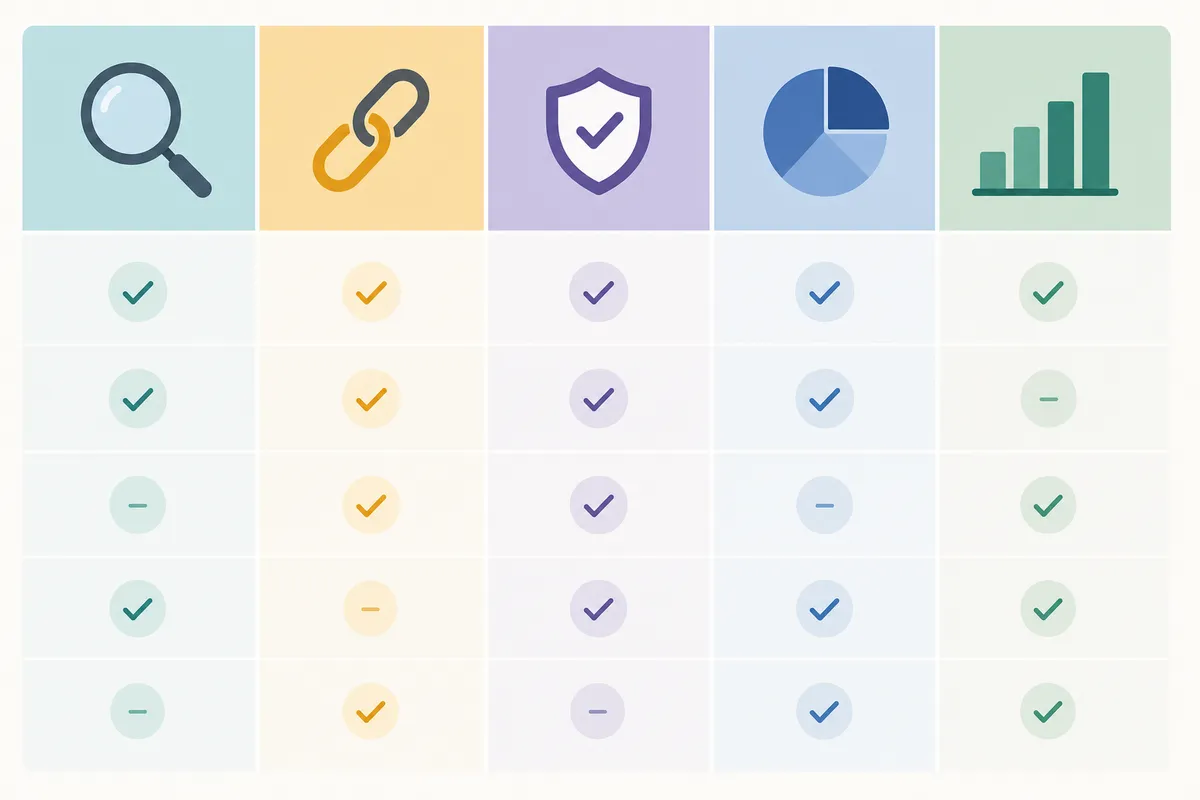
| Option | Best For | Free Plan | Starting Price | Main Limit |
|---|---|---|---|---|
| Semrush | All-around keyword and competitor research | Limited free plan | See their pricing page | Broad but not deeply technical |
| Ahrefs | Backlink and content-gap analysis | Free Webmaster Tools tier | See their pricing page | Less on-page guidance |
| Screaming Frog | Technical site audits | Free up to 500 URLs | See their pricing page | No keyword or rank data |
| Moz Pro | Teams new to SEO software | Free trial only | See their pricing page | Data depth lags at scale |
| Surfer SEO | Optimizing page content | No permanent free plan | See their pricing page | Narrow focus, no audits |
| SE Ranking | Budget-conscious agencies | Free trial only | See their pricing page | Smaller data index |
| Yoast SEO | WooCommerce stores | Free core plugin | See their pricing page | WordPress only |
| Plug in SEO | Shopify merchants | Free plan with limits | See their pricing page | Audits only, no research |
How we compared
We read each vendor's public pricing and feature pages and cross-checked them against the review sites listed in Sources. We did not open paid accounts or test any of these tools ourselves. Details were checked for general accuracy rather than exact current pricing, which is why the table points you to each vendor's pricing page.
When the free plan is enough, and when it isn't

A free plan or trial is usually enough if your store has a small catalog, you're fixing a handful of known issues, or you're getting oriented before committing budget. Screaming Frog's free 500-URL crawl, for instance, covers most stores under a few hundred products.
It stops being enough once your catalog passes a few hundred SKUs, you track rankings for dozens of keywords every week, or you need historical data to show a client or manager progress over time. By then the free tier's caps on crawl size, tracked keywords and report history cost you more in workarounds than a paid plan would.
FAQs
What is the best ecommerce software for SEO if I only have one tool budget?
For most stores, Semrush is the safest single pick because one subscription covers keyword research, rank tracking and a basic site audit. If you later find technical issues it doesn't catch, pair it with a free crawler like Screaming Frog.
Do I need separate SEO software for Shopify versus WooCommerce?
Not strictly. Store-specific tools like Plug in SEO (Shopify) or Yoast (WooCommerce) do handle platform-specific fixes, such as Shopify's URL structure or WordPress schema, that general platforms don't touch directly.
Can free ecommerce SEO tools replace a paid subscription?
For a small catalog, yes, though often only for a while. Free crawl limits, trial periods and capped keyword tracking tend to become the bottleneck as a store's product count and keyword list grow.
Does ecommerce SEO software fix duplicate product pages automatically?
No. Tools like Screaming Frog or Semrush's site audit flag duplicate titles, descriptions and thin category pages, but a person still needs to rewrite or canonicalize them, per Google's structured data and content guidelines.
How is SEO software for ecommerce different from general SEO software?
The underlying mechanics are the same. Ecommerce use cases such as faceted navigation, large product catalogs and category-page cannibalization matter more, so look for crawl limits and reporting features sized to your catalog.
Pick one tool and run it on your top 20 pages this week
Don't try to evaluate all eight tools at once. Pick the one that matches your biggest known problem: a crawler if you suspect duplicate pages, a keyword platform if you aren't ranking for obvious terms. Then run it against your 20 highest-traffic product or category pages. That's enough to tell you whether the tool is worth a full subscription. If you want a clearer picture of where your own store stands before choosing, talk to the team by requesting a sample SEO report. The best ecommerce software for SEO is the one that fits your actual bottleneck, whatever the longest feature list says.
Resources / References
- Google's guidance on helpful, reliable content
- Google's documentation on structured data markup
- W3C's accessibility guidelines
Sources
- [20 Ecommerce SEO Tools for 2025 That Don't Suck)
About the author
SearchBlueprint researched, wrote and scored this article with the content pipeline our customers run on their own sites. The score in the byline is what our content engine gave this page before it published. Nothing here is reviewed by hand, which is the point: it is the product's output, published where anyone can check it.