Why Focus on Organic Reach? The Case for Compounding Growth
SearchBlueprint · · 9 min read · scored 92/100

Why focus on organic reach? Because it is the only visibility you keep. Rankings, AI citations, and returning readers build on each other month after month, while paid traffic stops the moment the budget does. If you sell anything online, organic reach is the asset that lowers your cost per customer every year it exists.
This guide is written for business owners and marketing leads deciding where the next quarter's growth budget should go. It covers what organic reach includes in 2026, why it beats paid channels on cost over time, where ads still earn their place, and how to start building visibility that lasts.
What organic reach means in 2026
Organic reach is every visit, view, and mention your business earns without paying for placement. You rent an ad slot. You own the page that earns a ranking or a citation.
In 2026 that ownership covers more surfaces than the classic ten blue links:
- Search rankings on Google and Bing, for both broad and long-tail questions
- AI answer citations, where Google AI Overviews, ChatGPT, Claude, and Perplexity name your page as a source
- Local visibility in map results and "near me" searches
- Earned repeat traffic: the branded searches and direct visits that follow once your content has helped someone

The bar for earning any of these is public. Google's Search Essentials describes what qualifies: pages the crawler can access, content written to help a person, and nothing designed to trick the ranking systems. That is the whole entry fee. No auction, no bid, no daily budget.
Why focus on organic reach instead of ads?
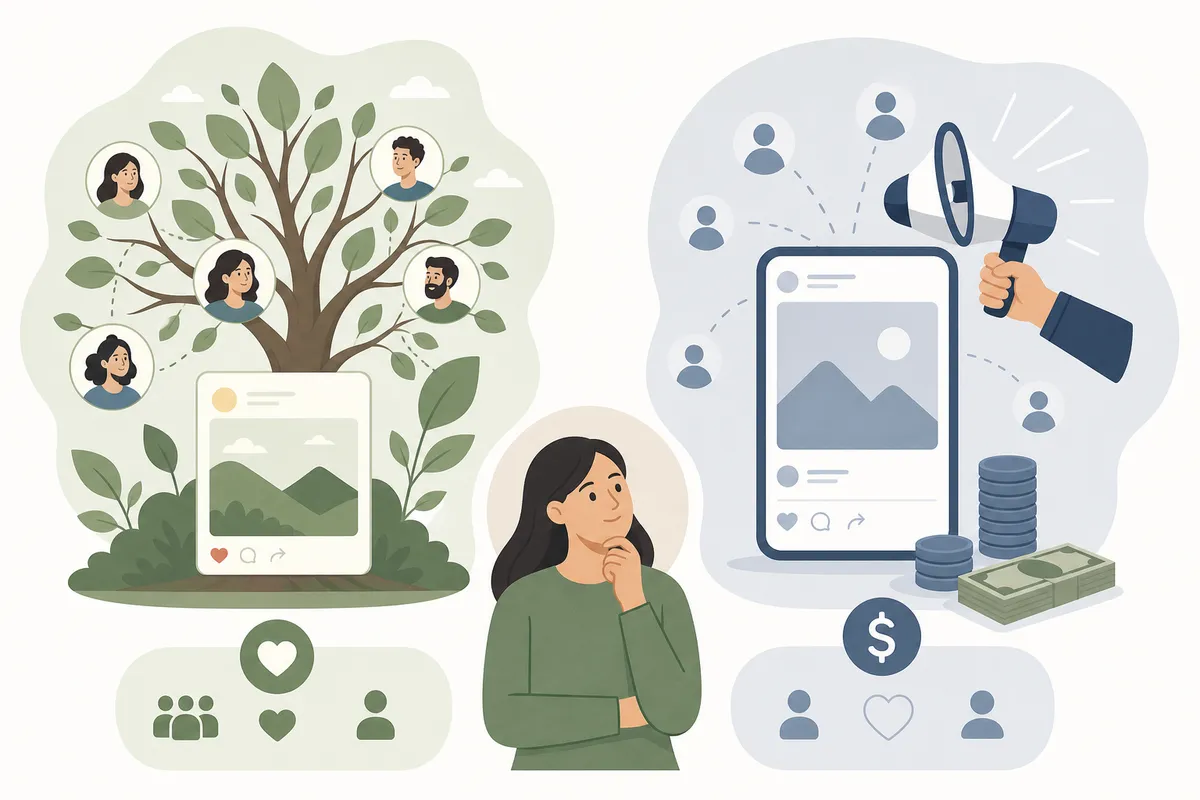
The short answer is cost behavior. Paid reach is linear: every visit costs roughly what the last one did, and the flow stops when spend stops. Organic reach is cumulative: the work you did last year still brings in this year's visitors, so your cost per visit keeps falling while an advertiser's holds steady or rises.
| Question | Paid ads | Organic reach |
|---|---|---|
| What happens when spend stops? | Paid traffic ends the day the budget ends. | Traffic keeps arriving from rankings and citations already earned. |
| How does cost per visit move over time? | Cost per click tends to rise as more advertisers bid on the same auctions. | Cost per visit falls, because one page keeps answering new searches at no extra cost. |
| Who does it reach? | Whoever matches the targeting you paid for, ready to buy or not. | People actively searching for the problem you solve, at the moment they search. |
| How fast does it start working? | The same day a campaign goes live. | Typically months for new content, though technical fixes can pay off sooner. |
| How do AI answer engines treat it? | Ads can appear near AI answers but are not cited as sources. | AI Overviews, ChatGPT, and Perplexity cite organic pages when they answer. |
The cost curve bends the other way
Ad platforms are auctions. When a competitor enters your market, your clicks get more expensive without your ads getting any better. Content works in reverse: the cost is front-loaded in research and writing, and the marginal cost of the next visit is close to zero. A page that answers a durable question can serve searchers for years with only occasional updates.
You reach people at the moment of intent
A search is a raised hand. Someone typing "emergency plumber open now" or "best accounting software for contractors" has told you exactly what they need and when. Ads can bid on that same intent, but only at auction prices, and only on the head terms that justify the spend. Organic reach also captures the hundreds of specific, low-volume questions your buyers ask on the way to a decision. No ad account covers those economically.
Trust follows earned placement
Many searchers skim past results labeled as sponsored and settle on the sources that earned their position. That behavior is hard to measure precisely, but you have probably done it yourself this week. An earned ranking carries an implicit endorsement that a paid slot cannot buy, and that endorsement follows the visitor onto your page. If you want the full argument on the investment side, read the case for investing in organic SEO for lasting business growth.
The long-term benefit: organic reach compounds
The reason to prioritize organic reach is not any single ranking. It is what repeated publishing does to your whole site.

Content becomes an asset, not an expense
An ad creative fatigues in weeks and gets replaced. A well-built guide behaves more like property: it keeps producing, it can be renovated cheaply, and its value shows up in every month's traffic report. Businesses that treat content as a balance-sheet asset make very different decisions from businesses that treat it as a monthly cost, and the difference widens every quarter.
Authority makes every next page cheaper to rank
Search engines judge sites, not just pages. Each useful page that earns links and engagement raises the trust of the whole domain, which means your next page starts from a higher floor. Internal links then move that strength deliberately, from guides that attract readers to the pages that sell. The mechanics are worth understanding properly: here is how search authority is built, and why it pays.
This loop is not theoretical. The growth story published on this blog documents a 347% organic traffic gain from running exactly that process on this site: audit, fix, map keywords to pages, publish, interlink, repeat.
Why most small businesses underestimate organic reach
Three biases keep organic reach underfunded, and none of them is about whether it works.
First, dashboards favor ads. Paid platforms report spend and conversions the same day, while organic results lag the work by months. When a channel reports slowly, it looks weaker than it is, so budgets drift toward whatever produces the fastest chart.
Second, "free" traffic tends to have no owner. Ads get a budget line and a person responsible. Organic gets squeezed into spare time, which means it never gets the consistency that compounding requires.
Third, AI panic. Plenty of owners concluded that assistants answering questions directly makes SEO pointless. The opposite is closer to the truth, as the next section explains.
The gap is widest in local markets, where a handful of well-built pages can carry an independent business past bigger rivals. If that is your situation, start with how to get on the first page of Google in your city without ads.
AI search changes the math, and it favors organic
Assistants cite sources, not advertisers
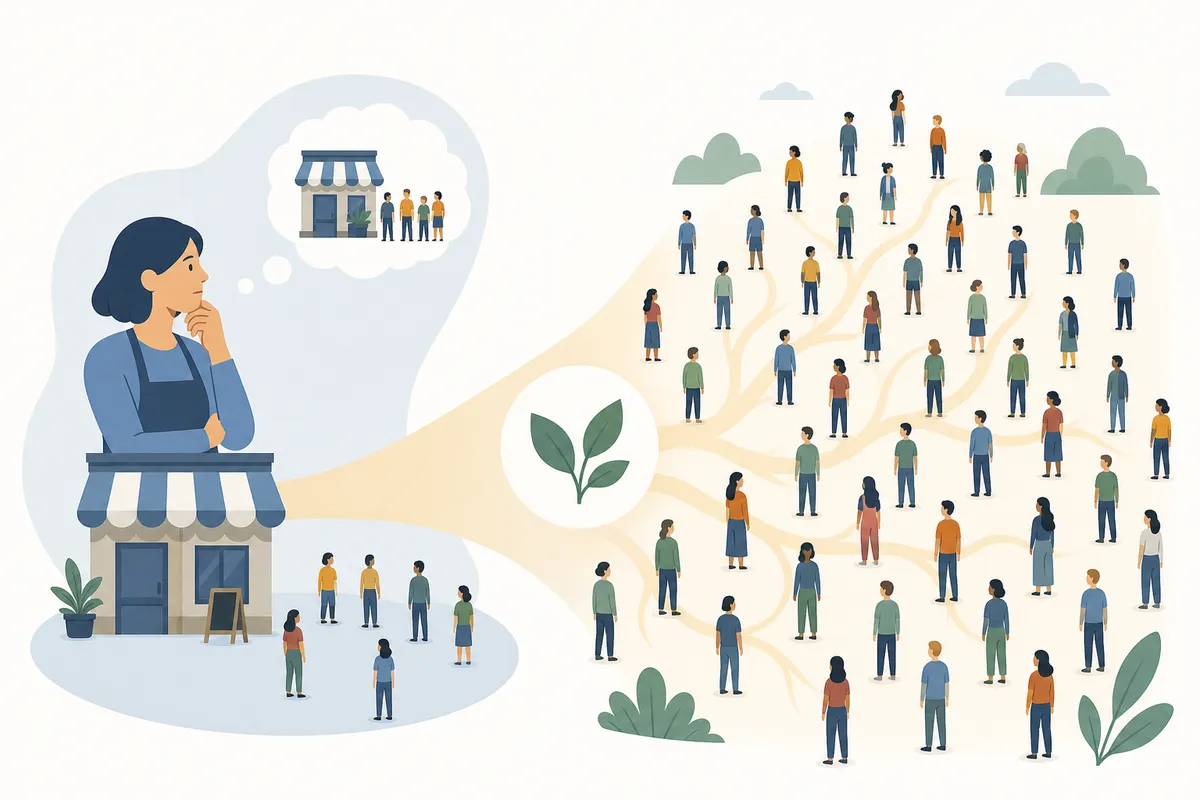
When Google AI Overviews, ChatGPT, or Perplexity answer a question, they synthesize from pages they trust and cite them. There is no auction for those citations. The only way in is to be one of the clearest, most credible sources on the question, which is organic reach by another name. Sponsored placements may sit near AI answers, but they are not what the answer is built from.
Quotable beats long-winded
Being citable rewards a specific writing style: answer the question directly in the first lines, keep passages self-contained, use tables and FAQs that a machine can lift cleanly. Yes, simple informational queries now resolve without a click more often than before. But the citations concentrate on fewer sources, the readers who do click arrive pre-sold, and a named citation builds your brand even when no click happens. Fewer clicks per impression, more value per click.
How to build organic reach in 2026
The order below matters. Each step makes the next one work better, and the full sequence is laid out in the 2026 organic SEO playbook that compounds.
| Step | Focus area | What to do | Why it pays |
|---|---|---|---|
| 1 | Technical health | Make every important page crawlable, indexable, and fast, and fix broken links and redirects. | Quickest wins: it unlocks demand your site already deserves. |
| 2 | Keyword-to-page mapping | Give every buying question its own dedicated page instead of stretching one page across many intents. | One page, one intent is how pages win rankings and stay easy to improve. |
| 3 | Proof-rich content | Answer real customer questions with specifics: process, pricing logic, trade-offs, honest limits. | Specific pages earn links, citations, and conversions that generic pages never do. |
| 4 | Internal linking | Connect related pages so authority flows from guides to the pages that sell. | Links you control are the cheapest authority you will ever acquire. |
| 5 | Answer engine readiness | Front-load direct answers, add FAQs, keep passages self-contained. | Structured answers are what AI Overviews and assistants lift and cite. |
Can you do this yourself?
Mostly, yes, at the start. Setting up Search Console, fixing obvious title and heading problems, writing one honest page per service, and keeping your Google Business Profile current are all within reach of a motivated owner, and they cover a surprising share of the results.
Get help when the problems go past what your CMS exposes: crawl and indexing faults you cannot see, a competitive niche where content depth decides winners, or simply no bandwidth to publish consistently. Consistency is the ingredient DIY efforts most often lack, and an inconsistent program forfeits the compounding that justified the work.
Where paid ads still earn their place
Honesty requires the other side. Ads remain the right tool for launches, time-boxed offers, retargeting warm visitors, and testing which message converts before you build content around it. Speed is real value, and organic cannot deliver it on demand.
The strongest programs run both, in that order of dependence: organic as the base layer that keeps acquisition costs falling, paid as the burst capacity on top. What rarely survives contact with a finance review is paid as the only layer, because its costs never stop and never shrink.
FAQs
What is organic reach in digital marketing?
Organic reach is the audience your business earns without paying for placement: search engine rankings, AI answer citations, local map visibility, and returning readers. You own the pages that earn it, so the traffic continues without per-click spend.
Is organic reach better than paid ads?
They do different jobs. Ads buy immediate, predictable traffic that stops with the budget. Organic reach builds slowly but compounds, so its cost per visit falls over time. Most durable growth plans use organic as the base and ads for speed.
How long does organic reach take to build?
Technical fixes can show results within weeks because they unlock demand the site already earned. New content typically needs months to rank, with the timeline depending on competition and your site's existing authority. The curve is flat early and steep later.
Does organic reach still matter now that AI answers questions directly?
Yes, arguably more. AI Overviews, ChatGPT, and Perplexity build answers from organic sources and cite them, and there is no way to buy those citations. Pages structured to answer clearly are the ones assistants quote.
Can a small business build organic reach without an agency?
The foundations, yes: fix obvious on-page problems, publish one specific page per service, and keep local listings accurate. Bring in help for technical faults you cannot diagnose, highly competitive niches, or when you cannot publish consistently on your own.
Talk to the team
The clearest answer to "why focus on organic reach" is a report on your own site rather than an argument. Talk to the team, and start by reading a sample SEO report to see exactly what gets measured, what gets fixed first, and what compounding looks like on a real domain. Your site already has demand it is not collecting; the report shows where.
Resources / References
About the author
SearchBlueprint researched, wrote and scored this article with the content pipeline our customers run on their own sites. The score in the byline is what our content engine gave this page before it published. Nothing here is reviewed by hand, which is the point: it is the product's output, published where anyone can check it.