Understanding SEO Best Practices for Your Business: What Works Now
SearchBlueprint · · 16 min read · scored 89/100

Understanding SEO best practices for your business means mastering five things. Match content to what buyers actually search. Optimize each page's title and structure. Keep your site fast and crawlable. Earn links that prove credibility. And measure results in Google Search Console. Everything else, including AI search visibility, builds on those five foundations.
That's the whole game in one paragraph. The rest of this guide unpacks each piece, shows you what Google itself says matters (and what it says doesn't), and gives you an honest read on what you can do yourself versus where a tool or a professional earns its keep.
Key Takeaways
- SEO best practices reward businesses that answer real search intent, not businesses that repeat keywords the most.
- Five components carry most of the weight: keyword targeting, on-page optimization, technical health, content quality, and backlinks.
- Google says some changes show up in search within hours, while others take months, plan on a few weeks before judging any single change.
- Several popular "rules" are myths: Google ignores the meta keywords tag, there's no magic word count, and E-E-A-T is not a direct ranking factor.
- The same structural habits that win Google rankings, clear headings, direct answers, self-contained paragraphs, also win citations in AI answer engines.
Why Understanding SEO Best Practices for Your Business Matters

SEO best practices are the proven, repeatable methods that help search engines find, understand, and rank your pages, and help searchers decide your result is worth clicking. They matter because organic search is one of the few channels where effort compounds. A page you optimize once can bring in customers for years without a per-click cost.
The stakes have risen, not fallen. Search results now include AI Overviews, and tools like ChatGPT and Perplexity answer buying questions directly. The businesses those systems cite are overwhelmingly the ones already following classic SEO fundamentals: clear structure, direct answers, demonstrated expertise. Backlinko's Brian Dean, in a guide last updated in June 2026, frames it plainly, getting the fundamentals right helps you "rank higher on Google and earn more AI citations and mentions."
There's a second reason this matters for owners specifically. SEO rewards decision-makers who understand the why. You'll constantly face trade-offs: which pages to build first, whether to write content yourself, when a technical fix justifies developer time. If you'd rather see those decisions laid out as a sequenced plan, SearchBlueprint publishes a dedicated SEO roadmap for business owners that maps the same fundamentals onto a month-by-month order of operations.
One expectation to set early: Google's own documentation notes that some changes take effect within a few hours, while others can take months. It generally suggests waiting a few weeks to see whether your work is having an effect in results. SEO is not a light switch. It's a flywheel.
The Five Components That Do the Heavy Lifting
Before going deep on each area, here's the map. Every credible guide to SEO best practices, from Google's own starter documentation to Semrush and Backlinko, converges on roughly the same core components.
| Component | What it means in practice | Why it matters | First action to take |
|---|---|---|---|
| Keyword & intent research | Finding the terms buyers use and understanding what they expect to see | Content that mismatches intent doesn't rank, no matter how well written | List 20 questions customers ask before buying, then check what currently ranks for each |
| On-page optimization | Titles, headings, meta descriptions, keyword placement, image alt text | These are the signals Google reads first to understand a page's topic | Put your main keyword in the title tag and within the first 100 words |
| Technical SEO | Crawlability, indexing, page speed, mobile usability, HTTPS | If Google can't crawl or render a page, nothing else you do counts | Check the Page Indexing report in Google Search Console for errors |
| Content quality & E-E-A-T | Original, useful, experience-backed content with clear authorship | Google's systems reward helpful, people-first content over thin filler | Add an author bio and one first-hand example to your most important page |
| Backlinks & authority | Links from reputable, relevant sites pointing to yours | Quality links remain among the strongest trust signals in ranking systems | Create one genuinely linkable asset, original data, a tool, a definitive guide |
Each row stands alone as a starting point. The sections below add the detail.

Start With Search Intent, Not Keywords
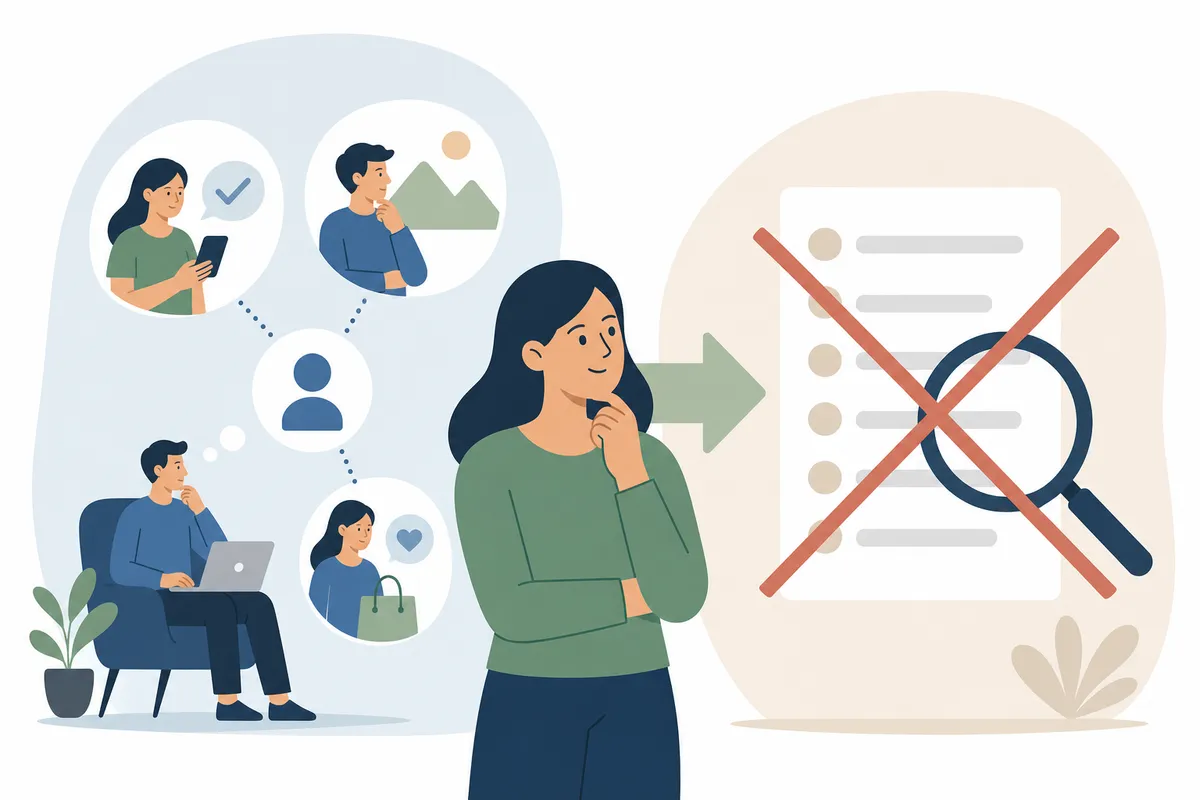
The most common mistake businesses make is picking keywords by volume alone. Search intent, the goal behind the query, decides whether you can rank at all. Someone searching "best CRM for small business" wants a comparison. Someone searching "CRM login" wants a doorway. A blog post targeting the second query will never rank, because it answers the wrong job.
How to read intent quickly
Search your target phrase and study page one. If the results are listicles, Google has decided the intent is comparative, write a comparison. If they're product pages, the intent is transactional, a blog post won't cut it. Semrush's team makes the same point: intent is more than a label. It's also about the format users expect, whether that's a table, a video, or a step-by-step guide.
Then check the same query in an AI assistant. If ChatGPT answers it with a short list of providers, that tells you the query has commercial intent, and that concise, structured answers are what gets cited.
Long-tail terms convert better
Broad terms like "accounting software" are expensive battles. Specific phrases, "accounting software for freelance photographers", have lower volume but far higher conversion potential and less competition. For a small business, ten long-tail pages that each convert usually beat one head-term page that never cracks page three.
You don't need a paid platform to do this research. This roundup of free SEO tools that genuinely cost nothing covers keyword suggestion, rank checking, and on-page analysis options for businesses that aren't ready to pay for enterprise software.
One page, one primary keyword
Assign each page exactly one primary keyword and treat related phrases as secondaries. Two pages chasing the same term compete with each other, and Google typically ranks neither well. Backlinko's checklist page illustrates the payoff. Optimized around the single term "SEO checklist," it reportedly went on to rank for hundreds of related keywords Google matched on its own.
On-Page SEO Best Practices That Still Move Rankings
On-page optimization is the part of SEO you control completely, which makes it the highest-leverage starting point for most businesses.
Get the title tag right
Google has said it's important to use high-quality titles on your webpages, and the title tag remains the single strongest on-page signal of topic. Three rules cover most of it:
- Front-load your main keyword where it reads naturally. Search engines and AI systems use titles to assess relevance, and earlier placement helps, but never at the cost of a title that reads awkwardly.
- Use one keyword per title. Stuffing multiple keywords into a title tag is exactly the pattern Google's spam guidance warns against.
- Write for the click. A title is an ad for your page. "What Office Cleaning Costs in Austin" beats "Office Cleaning Services Austin TX Cleaning Company" every time, for both rankings and click-through rate.
Place your keyword early in the content
Location matters, not just presence. Mention your primary keyword at least once near the top of the page, Backlinko recommends within the opening section, and its own guides often use the target term twice in the first 25 words. This helps search engines, language models, and skimming humans confirm the page's topic instantly.
Every page must be unique
Google has stated you should avoid duplicate or near-duplicate versions of your content across your site. That applies to title tags, meta descriptions, product pages, and category pages alike. If you publish a page, the content on that page has to be 100% unique. That's easy for a small blog. It's genuinely hard for an e-commerce catalog with thousands of near-identical product variants. That's why stores lean on canonical tags, consolidated pages, and templated-but-differentiated descriptions. Shopify and BigCommerce merchants face this at scale, which is exactly the problem a purpose-built e-commerce SEO workflow is designed to handle.
Don't skip images
Image optimization is quick and underused. Use descriptive filenames (blue-ceramic-teapot.jpg, not image89.png), write alt text that says what's in the image, compress files, and place images near the text they relate to. Google has confirmed it uses both filenames and alt text to understand images. Image search is a real discovery channel for visual businesses.
There are more checks than fit in one section, heading order, meta description length, URL slugs, internal anchors. This pre-publish on-page SEO checklist of 27 items covers the full list, and if you want an instant read on a live page, run it through a free on-page SEO scorer before and after your edits.
Content Quality: The Best Practice That Outranks All Others
Google's own starter guide is blunt about priorities. Creating content people find compelling and useful will likely influence your search presence more than any other suggestion in the guide. Every technical tactic is an amplifier. Content is the signal being amplified.
What "helpful content" actually looks like
The traits show up consistently across Google's documentation and every serious industry guide:
- Comprehensive coverage, the page answers the question fully, including the follow-up questions a reader would ask next.
- Original insight, something that can't be found on ten other pages: your data, your process, your worked example.
- Readable structure, short paragraphs, descriptive headings, lists and tables where they genuinely help. For general audiences, content pitched at roughly a seventh-to-ninth-grade reading level maximizes comprehension.
- Freshness, reviewing older content and updating or removing it as needed, rather than letting stale pages pile up.
- Demonstrated expertise, author bios, cited sources, real examples from your own work.
That last point is where E-E-A-T (Experience, Expertise, Authoritativeness, Trustworthiness) comes in. Two things are true at once. First, Google has said E-E-A-T is not itself a ranking factor. Second, the signals that demonstrate it correlate strongly with the content Google's systems reward: first-hand experience, credible sourcing, transparent authorship, and a secure site with findable contact information. Treat E-E-A-T as a quality rubric, not a checkbox.
The honest answer on AI-written content
Most businesses now use AI somewhere in their content pipeline, and that's fine, Google's guidance targets low-quality content, not the tool that produced it. What tanks rankings is publishing unedited, generic AI output at volume with no expertise added. The workable middle ground: AI for drafts, outlines, and scale; humans for experience, accuracy, and the details only your business knows. If you're weighing where to draw that line, this breakdown of when AI content beats human writing and when it doesn't is a useful decision framework, and there's a companion guide on using AI writers without hurting your rankings that covers the editing and verification steps that keep quality intact.
Technical SEO: The Foundation Under Everything
Technical SEO is a precursor to visibility, not an optimization on top of it. If Google can't crawl, render, or index a page, that page effectively doesn't exist, in classic search or in AI answers. AI systems lean heavily on the same indexes.
The four checks that matter most
- Indexing. Search
site:yourdomain.comin Google. If your key pages don't appear, start with the Page Indexing report in Search Console and fix errors before anything else. - Speed. Page speed is one of the few ranking factors Google has confirmed publicly. Benchmark with PageSpeed Insights, then compress images, trim heavy themes and scripts, and consider a CDN. Backlinko notes that lazy-loading images can boost a site's loading speed by 50% or more. The trade-off: images appear as users scroll, which not everyone loves.
- Mobile usability. Google's index is mobile-first: it primarily uses the mobile version of your content for indexing and ranking. If your site is awkward on a phone, you're being ranked on your worst version.
- Render parity. Google should see your page the way a user does. If critical content is hidden behind blocked CSS or JavaScript, it may not be understood, or ranked. The URL Inspection tool in Search Console shows you exactly what Google sees. The full technical requirements are laid out in Google Search Essentials, which is worth a read because it also defines the spam behaviors that can get a site suppressed entirely.
Site structure and internal links
Organize related pages into logical directories, use descriptive URLs (/services/roof-repair, not /p/8823), and connect related pages with internal links using descriptive anchor text. Internal links do three jobs at once: they help Google discover pages, they distribute authority across your site, and they guide real visitors toward a purchase. The hub-and-spoke pattern, a comprehensive pillar page linking to focused subpages, each linking back, is the cleanest way to build topical authority. It's also the structure Google and AI systems both parse easily.
One caveat on implementation: technical fixes look different on WordPress than on Shopify, Webflow, or a custom build. Platform-specific guidance, like these SEO playbooks organized by publishing platform, saves you from generic advice that doesn't map to your CMS.
Backlinks and Authority: Earned, Not Bought
Quality backlinks remain among the most powerful ranking signals, external votes of confidence that your content is credible. But the rules have hardened. Buying links or participating in link schemes violates Google's spam policies, and quality now beats quantity decisively. One link from a relevant, authoritative site in your industry can outweigh dozens of low-value directory links.
The strategies that still work are the unglamorous ones:
- Create linkable assets. Original research, free tools, data-backed guides, and genuinely definitive resources attract links without outreach.
- Guest contributions to reputable industry publications, chosen for audience relevance rather than raw domain metrics.
- Relationship-based outreach, journalists, industry writers, and complementary businesses who have a real reason to reference you.
- Local citations and community involvement for businesses that serve a geographic area.
Two hygiene notes from Google's own guidance: use nofollow (or similar annotations) on links you can't vouch for, and make sure user-generated links, forum posts, comments, carry those annotations automatically so spammers can't ride on your domain.
If you're an agency managing this across many client sites, the workload multiplies fast; that's the problem agency-focused SEO strategy tooling exists to compress.
The New Layer: Optimizing for AI Search
AI Overviews, ChatGPT, Claude, and Perplexity now sit between your content and a growing share of searchers. The good news is that visibility in these systems is not a separate discipline, it's an extension of the same SEO best practices, with extra weight on structure.
Concretely, AI systems favor content that is:
- Self-contained. A paragraph lifted out of context still makes sense and still answers a question. Write so each key passage could be quoted on its own.
- Front-loaded. Answer the question in the first sentence after each heading, then elaborate. Systems extracting answers reward pages that don't make them dig.
- Specific. Vague claims don't get cited; concrete ones do. "It depends" is never quoted. "Google suggests waiting a few weeks to judge a change" is.
- Marked up. Schema types like FAQPage, Article, and HowTo (defined at Schema.org, the official structured-data standard) give machines explicit context about what your page contains.
- Conversational. Voice queries and AI prompts are phrased as full questions. Content that mirrors natural question-and-answer phrasing matches them better.
If your pages already follow the on-page and content practices above, you're most of the way there. The gap for most businesses is simply auditing existing pages against these criteria and restructuring the ones that bury their answers.
SEO Myths Google Has Explicitly Debunked
A surprising amount of small-business SEO effort goes into things Google has publicly said don't matter. This table summarizes the biggest ones, drawn from Google's own starter guide and Search Central documentation.
| Myth | What Google actually says | What to do instead |
|---|---|---|
| The meta keywords tag helps rankings | Google Search does not use the meta keywords tag at all | Spend that time on the title tag and meta description, which do influence results |
| Keywords in your domain name boost rankings | Keywords in a domain or URL path have minimal ranking effect beyond breadcrumb display | Choose a domain that's good for your brand and marketing, not for keywords |
| There's an ideal word count | Content length alone doesn't matter for ranking, there's no magic number | Match the depth the query demands; cover the topic fully, then stop |
| Duplicate content triggers a penalty | Same content at multiple URLs is inefficient but not a spam violation (copying others' content is different) | Set canonical URLs or redirects; don't panic about internal duplication |
| E-E-A-T is a direct ranking factor | Google states E-E-A-T itself is not a ranking factor | Build the underlying signals, experience, sourcing, transparency, that quality systems reward |
| Perfect heading order is required | Google barely relies on strict HTML heading semantics | Use headings for readers and accessibility; don't obsess over validator warnings |
The pattern behind every myth: it promises a shortcut that avoids the real work. The real work is content, structure, and authority.
Understanding SEO Best Practices for Your Business: Do It Yourself or Get Help?
Here's the honest assessment most guides skip. A meaningful share of SEO is genuinely DIY-able for a motivated business owner, and pretending otherwise is a sales tactic. But some of it isn't, and knowing the line saves you both money and stalled months.
| Task | DIY difficulty | Worth outsourcing? | Notes |
|---|---|---|---|
| Keyword & intent research | Low–moderate | Rarely | Free tools plus manual SERP review cover most small-business needs |
| On-page optimization | Low | Rarely | Checklists and free page scorers make this systematic, not skilled |
| Content writing | Moderate | Sometimes | Your expertise is the asset; outsource polish and scale, not knowledge |
| Technical SEO fixes | Moderate–high | Often | Indexing errors and speed work frequently need developer hours |
| Link building | High | Often | Time-intensive outreach; also the area with the most scammy vendors, vet hard |
| Ongoing measurement & strategy | Moderate | Depends | Search Console is free; interpreting it and prioritizing actions is the skill gap |
Rules of thumb: if the task is repeatable and documented (on-page checks, publishing cadence), keep it in-house. If it requires code changes, specialized outreach, or you've plateaued for two-plus quarters despite consistent effort, bring in help, and insist any provider shows you what they'll do before you pay, not just promised rankings. Anyone guaranteeing a #1 position is misrepresenting how Google works; Google itself says no tip automatically ranks a site first.
Measuring Whether Any of This Is Working
SEO without measurement is guesswork with extra steps. Google Search Console is free and sufficient for most businesses. Three reports carry most of the value:
- Performance, impressions, clicks, average position, and the exact queries bringing people in. The trend over months matters far more than any single week.
- Page Indexing, which pages Google has indexed and which have errors. Fix errors first; an unindexed page can't rank anywhere.
- Core Web Vitals, real-world loading, interactivity, and visual stability scores, with mobile scores deserving the most attention given mobile-first indexing.
Beyond Search Console, track what actually pays the bills: form submissions, calls, purchases, and which pages assisted them. Rankings are a means to an end. A page that ranks fifth but converts is worth more than one that ranks first for a query nobody buying ever types.
On timelines, anchor to what Google Search Central documents: some changes surface in hours, others take months, and a few weeks is the reasonable window before judging a specific change. Budget a quarter before judging a strategy, and a year before judging the channel.
FAQs
What are SEO best practices in simple terms?
SEO best practices are the proven methods that help search engines find, understand, and rank your website, including keyword research, optimized titles and headings, fast mobile-friendly pages, genuinely useful content, and links from reputable sites. They work because they align your site with how ranking systems evaluate quality and relevance.
How long does SEO take to show results for a small business?
Google's documentation says some changes take effect within hours while others take months, and it generally suggests allowing a few weeks to see whether a change had an effect. For a new or lightly optimized site, plan on several months of consistent work before organic traffic becomes a reliable channel.
Do I need to pay for SEO tools to follow best practices?
No. Google Search Console, PageSpeed Insights, and the Rich Results Test are free and cover indexing, speed, and structured-data validation. Free keyword and on-page tools handle most small-business research needs. Paid platforms add scale and convenience, not access to secrets.
Does AI-generated content hurt SEO?
Not inherently. Google's guidance targets low-quality, unhelpful content regardless of how it was produced. AI content hurts rankings when it's published unedited, generic, and at volume with no real expertise added. AI drafts reviewed and enriched by someone who knows the subject can rank well.
How many keywords should one page target?
One primary keyword per page, with closely related variants worked in naturally. Pages optimized around a single clear topic routinely rank for hundreds of related terms Google matches automatically, while pages stuffed with multiple target keywords tend to rank well for none of them.
Score One Page Today
Pick your most important page, the one that should be winning customers, and audit it against this guide: title tag, keyword placement, structure, speed, and whether it answers its query in the first paragraph. That, in the end, is what understanding SEO best practices for your business looks like in action: one page, checked and improved. Then see what a full professional audit surfaces beyond that by reviewing a sample SEO report from the SearchBlueprint team, it shows exactly what gets measured, prioritized, and fixed, and the team can walk you through what your own site's version would look like.
Resources / References
Related reading: SEO Checklist for Websites: 46 Checks in the Right Order.
Sources
About the author
SearchBlueprint researched, wrote and scored this article with the content pipeline our customers run on their own sites. The score in the byline is what our content engine gave this page before it published. Nothing here is reviewed by hand, which is the point: it is the product's output, published where anyone can check it.