The Backlink Strategy That Builds Rankings Without the Risk
SearchBlueprint · · 9 min read · scored 95/100

A backlink strategy is a deliberate plan for earning links from other websites that signal trust to Google and AI search tools. The strongest ones prioritize relevance and context over raw volume, and combine content, outreach and technical cleanup rather than one single tactic.
What Is a Backlink Strategy, and Why It Still Works

A backlink strategy is the plan behind every link your site earns. It covers which pages you build them for, which sites you target, and which tactics you repeat. Without a plan, link building turns into scattered outreach emails and directory submissions that rarely move a ranking.
Google has said for years that links are one of several trust signals, not the only one. A link from a relevant, well-regarded site tells Google that real people vouch for your content. That signal weakens fast when the link comes from an unrelated or spammy source, no matter how many of them you collect.
How Backlinks Signal Trust to Google
Search engines cannot read intent directly, so they read behavior instead. A link is one of the clearest behavioral signals available. Someone chose to send their audience to your page instead of keeping them on their own site. Google's own Search Essentials guidance is explicit about this (Google Search Essentials). Links built purely to manipulate rankings violate its spam policies rather than earn real trust. That includes paid placements and link exchanges. A sound link strategy avoids that entirely by earning links the way a journalist earns a source: through relevance and credibility.
What Changed in 2026
Search results now include AI Overviews, and tools like ChatGPT and Perplexity answer questions directly instead of listing ten blue links. Those systems still lean on a familiar signal: how often your brand gets mentioned, and who mentions you. A backlink from a site that already carries authority on your topic does double duty. It passes traditional link value, and it puts your brand near names an AI model already trusts. That's why co-citation, appearing alongside recognized sources even without a link, has become part of how a modern backlink strategy gets measured.
Types of Backlinks and Which Ones Are Worth Building

Not every backlink carries the same weight. Before you build a strategy around one tactic, know which type of link you're actually chasing and what it's worth.
| Backlink type | How it's earned | SEO value | Effort required |
|---|---|---|---|
| Editorial link | A writer cites your page as a source inside original content | Highest, looks natural and sits in relevant context | High, needs real outreach or genuinely useful content |
| Guest contribution | You write for another site and link back to your own | Solid, especially from a site your audience already trusts | Medium |
| Resource or roundup listing | Your page gets added to a curated list of tools or guides | Moderate to high on niche-relevant lists | Medium |
| Directory or citation | A business or industry directory lists your site | Low on its own, useful for local trust signals | Low |
| Converted unlinked mention | An existing text mention of your brand gets a link added | High, equivalent to an editorial link once added | Low, the mention already exists |
For B2B sites, the mix looks different again. A partnership page, an integration listing or a case study a vendor publishes about you can outperform a generic guest post. We cover that breakdown in the types of B2B backlinks that actually drive results.
How to Build a Backlink Strategy, Step by Step

A working backlink strategy usually runs through the same sequence. Research where you're behind, fix what's easy to fix, then create something worth linking to. We break the full sequence into five repeatable steps for building backlinks. Here's the shorter version.
Start With Competitor Gap Research
Before you contact anyone, find out who already links to your competitors but not to you. A backlink tool that shows referring domains for a rival's site will surface dozens of realistic targets in minutes. Sort that list by relevance to your industry first, and by domain authority second.
Turn Unlinked Brand Mentions Into Links
Some sites already mention your brand without linking to it. A search for your brand name, minus your own domain, usually turns up a handful of these. A short, polite email asking the writer to add a link is often enough, because they already know who you are. One SEO and UX agency, Semcore, reports tactics like this account for around 30% of its revenue, close to $660,000 a year. That shows how much is left on the table when mentions go unclaimed.
Fix Broken Links, Yours and Theirs
Broken link building still works because every webmaster wants fewer dead links on their site, not more. Find pages that link to a competitor's dead URL, then offer your own live page as the replacement. It's a small favor for them and a real backlink for you. We go deeper on the exact outreach process in broken link building, the backlink tactic that still works.
Create Content Other Sites Want to Cite
The fastest way to make link building easier is to give writers a reason to cite you instead of a competitor. Format matters here more than most people assume.
| Content format | Reported link or share advantage | Why it works | Best use in a link building strategy |
|---|---|---|---|
| Long-form guides (3,000+ words) | About 77% more links than shorter posts, per Backlinko's analysis of 912 million blog posts | Covers a topic fully enough that writers cite it instead of re-explaining it | Pillar pages other sites reference |
| List posts | About 218% more shares than how-to posts, and 203% more than infographics, same analysis | Easy to skim and easy to link to a specific number | Roundups and resource pages |
| "Why" and "what" explainers | About 25.8% more links than videos and how-to posts | Answers a specific question a writer is already trying to source | FAQ-style and definition pages |
| Headlines of 14 to 17 words | About 76.7% more social shares than shorter headlines | Long enough to promise an outcome, short enough to scan | Any piece meant to earn shares before it earns links |
Once a page is built to be cited, place your links inside the surrounding text rather than a footer or sidebar. That context is what makes a link count for more than a mention. Our piece on the role of contextual backlinks in SEO rankings explains why placement changes how much weight a link carries.
Treat these four moves as a cycle, not a checklist you finish once. Running competitor research, mention conversion, broken-link recovery and content creation on a schedule separates a real backlink strategy from a burst. That burst fades after a month. That cyclical approach is exactly what we map out in streamlining your link-building workflow into five repeatable steps.
Common Pitfalls That Sink a Backlink Strategy
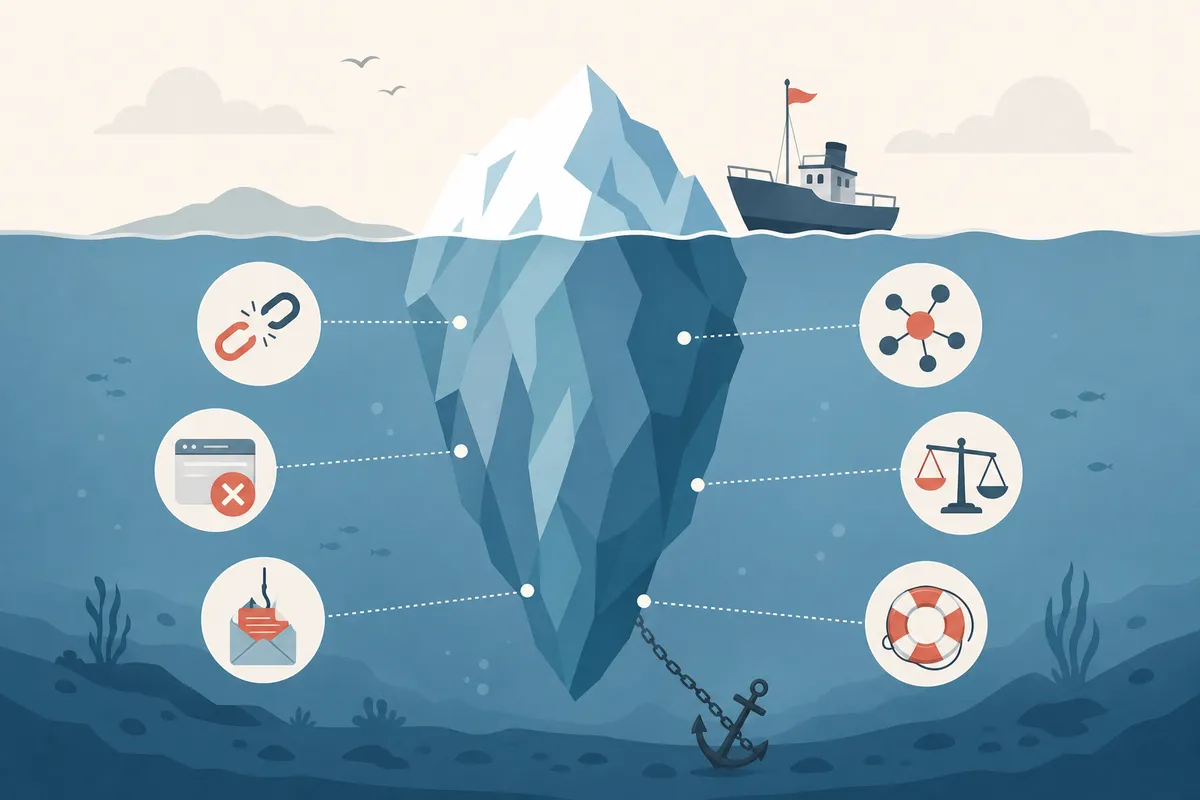
Most link building failures aren't from doing too little. They're from doing the wrong things too aggressively.
- Buying links outright, or joining a link exchange scheme, both sit squarely inside what Google's spam policies define as manipulative link building.
- Repeating the same exact-match anchor text on every link looks unnatural to Google, and it reads as unnatural to actual readers too.
- Chasing volume from low-quality directories dilutes a link profile instead of strengthening it.
- Ignoring where your links come from, rather than just how many you have, leaves you blind to a profile that's actually narrow. Backlink diversity, meaning links from a wide range of unique domains and link types, is something Google specifically rewards. Ten domains sending fifty links each won't get the same lift as fifty separate domains sending one each.
How to Know Your Backlink Strategy Is Working
| Metric to track | What it tells you | How often to check |
|---|---|---|
| Referring domains (unique) | Real growth, since one domain linking ten times only counts once | Monthly |
| New vs. lost links | Whether your profile is growing net-positive or quietly shrinking | Monthly |
| Anchor text spread | Whether you're relying too heavily on one exact-match phrase | Quarterly |
| Referring page relevance | Whether links come from sites your actual audience reads | Quarterly |
Most of the mistakes that quietly sink results don't show up as a sudden ranking drop. They show up as a slow plateau nobody investigates, covered in backlink analysis mistakes that quietly sink rankings. Checking these numbers on a set schedule, instead of only after a Google update, turns a one-time campaign into a habit. That habit compounds.
DIY Backlink Strategy or Hire a Pro?
Building your own backlink strategy is realistic if you have time for outreach and a genuine willingness to write content worth citing. The tactics above, unlinked mentions, broken links, competitor gaps, don't require an agency budget. They require consistency over months rather than weeks.
Hiring help makes more sense once outreach volume outpaces your time. It also makes sense once you need a strategy built to survive algorithm updates rather than chase a short-term spike. That distinction is building for durability instead of a quick bump. We walk through it in building backlinks for sustainable SEO growth that outlasts updates.
Either path works. What doesn't work is treating link building as a box you check once and forget.
FAQs
What is a backlink strategy?
A backlink strategy is a planned approach to earning links from other websites. It's built around specific tactics like content, outreach and broken-link recovery rather than random link collection.
How many backlinks does a website need to rank well?
There's no fixed number. A handful of highly relevant, editorial links from trusted sites in your niche typically outperforms hundreds from unrelated or low-quality domains.
Are backlinks still important now that AI Overviews answer questions directly?
Yes. AI systems weigh mentions and co-citations alongside links to judge which brands are credible on a given topic. A solid backlink strategy still feeds both traditional rankings and AI visibility.
What's the fastest way to build backlinks for a new website?
Converting unlinked brand mentions and fixing broken links on relevant sites both tend to produce results faster than cold outreach. You're offering something the site owner already wants.
How do I know if a backlink is hurting my site instead of helping it?
Watch for links from clearly unrelated or spammy domains and sudden spikes in exact-match anchor text. Also watch for any link you paid for or exchanged rather than earned. These are the patterns Google's spam policies flag first.
Run One Tactic Before You Add a Second
Every tactic in this guide works better once you've measured your starting point. Before you commit to outreach or content production, get a full picture of your site's links, on-page signals and technical health. Get a sample SEO report and use it to decide which part of your backlink strategy needs attention first.
Resources / References
Sources
About the author
SearchBlueprint researched, wrote and scored this article with the content pipeline our customers run on their own sites. The score in the byline is what our content engine gave this page before it published. Nothing here is reviewed by hand, which is the point: it is the product's output, published where anyone can check it.