SEO for Subdomains: When They Help and When They Hurt
SearchBlueprint · · 10 min read · scored 95/100
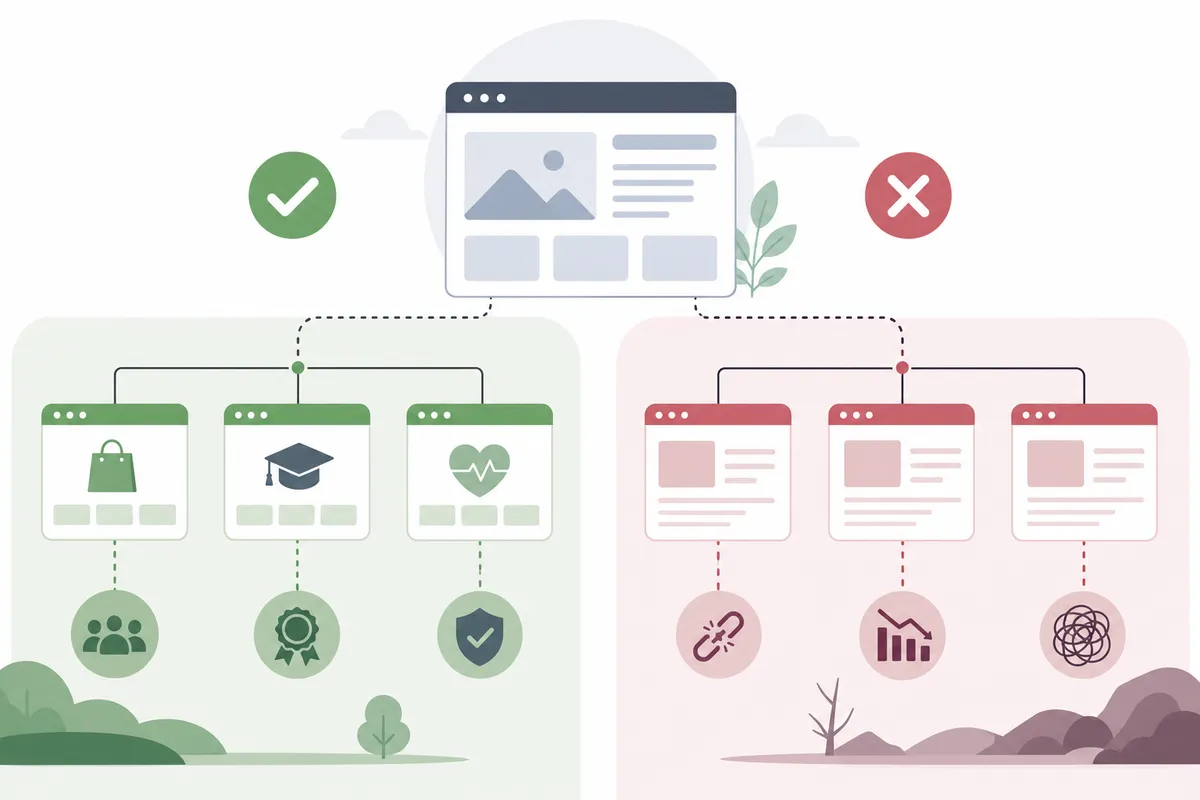
SEO for subdomains works when the subdomain has its own content, its own backlinks, and its own technical settings. It fails when a business treats it as a dumping ground for pages that belong on the root site. Google indexes and ranks a subdomain as a separate entity, so skipping that setup is the top reason subdomains underperform.
What Is a Subdomain, and How Is It Different From a Subdirectory?
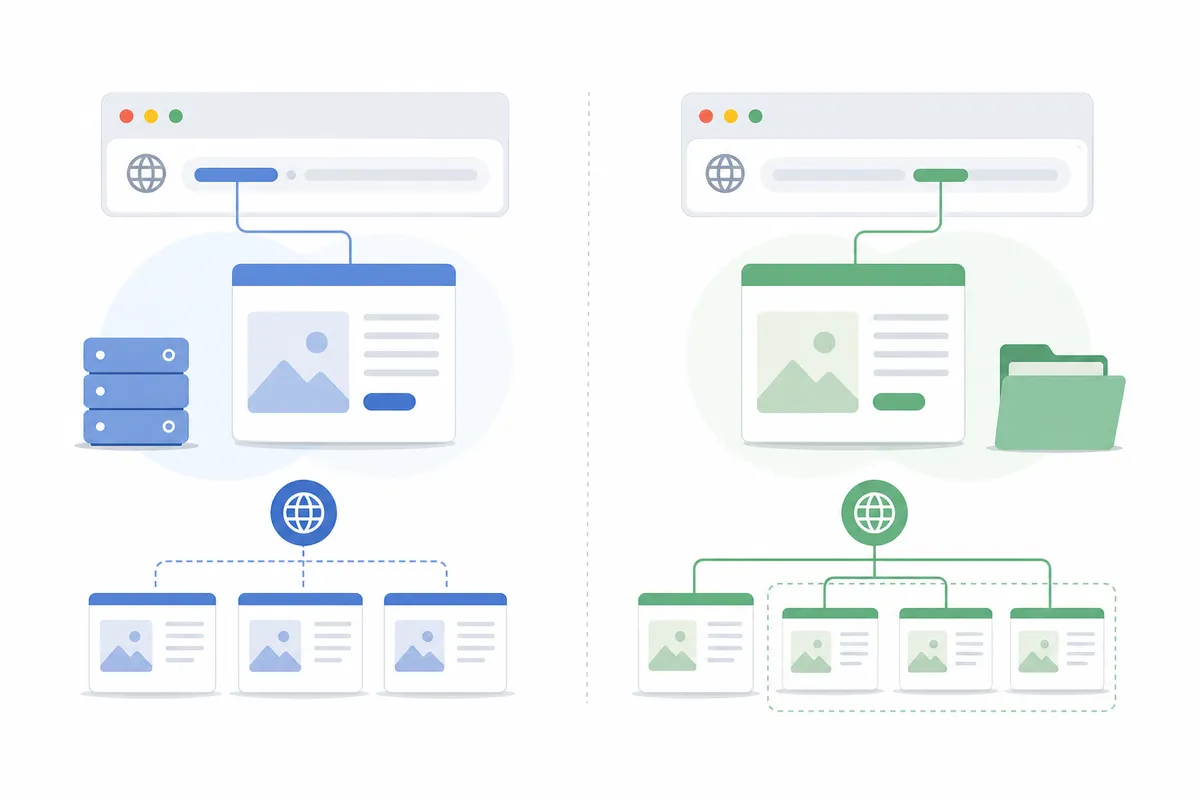
A subdomain is a third-level piece of your domain name, written before the root domain: blog.yoursite.com, shop.yoursite.com, help.yoursite.com. It sits in the Domain Name System hierarchy below the top-level domain (.com, .org, .io) and the second-level domain, which is your site's actual name.
A subdirectory is a folder inside your existing site: yoursite.com/blog. It shares the same hosting, the same domain record, and the same SEO history as every other page on the root domain.
That one structural difference changes almost everything about how search engines treat the two.
Subdomain vs. Subdirectory, Side by Side
| Factor | Subdomain (blog.yoursite.com) | Subdirectory (yoursite.com/blog) | What It Means for SEO |
|---|---|---|---|
| Domain authority | Builds its own, separate from the root | Shares the root domain's existing authority | A new subdirectory usually ranks faster than a new subdomain |
| Backlink profile | Needs its own links; root domain links don't transfer | Inherits every backlink pointing at the root domain | Subdomains cost more link-building effort to compete |
| Technical setup | Separate robots.txt, sitemap, and Search Console property | Covered by the root domain's existing files and property | Subdomains add ongoing technical maintenance |
| Hosting flexibility | Can run on completely different software or hosting | Usually tied to the root domain's hosting stack | Subdomains suit a different CMS or platform; subdirectories don't |
| Typical use case | Docs, help centers, international sites, test environments | Blogs, resource centers, most marketing content | Default to a subdirectory unless you have a specific reason not to |
Google's own guidance on crawling and indexing treats subdomains and subdirectories in broadly similar ways: both get crawled, both can rank, and neither structure is inherently favored (source: Google Search Central). The practical difference shows up in execution, not in any built-in penalty.
SEO for Subdomains: Does It Help or Hurt Rankings?
Neither, by default. A subdomain is a tool. What determines whether it helps or hurts is how it's built and maintained.
Where Subdomains Genuinely Help
A subdomain can target keywords your main site doesn't own, without diluting the root domain's focus. A software company with a product called "Fathom" that also sells a line of office furniture can run furniture content on office.fathom.com instead of forcing both topics onto one domain. It can also isolate resource-heavy content, like a searchable documentation library, so that doesn't slow down or compete with the marketing site.
Where Subdomains Create Risk
The research backs up how rarely subdomains actually win top rankings. A joint study by GA Agency and SE Ranking found subdirectories made up more than 20% of page structures holding a top-three ranking position, while subdomains accounted for only about 3%, a share concentrated mostly in multilingual and regional sites. That gap isn't a Google penalty. It reflects how often subdomains are launched without a real SEO plan behind them.
The sharper risk is duplicate content. If a subdomain repeats text that already exists on the main site, both can lose visibility for the same queries, a problem commonly called keyword cannibalization. Google's own spam policies also note that a single compromised or spam-laden subdomain can put the reputation of the entire domain at risk, not just that one subdomain (source: Google Search Essentials). Understanding why technical SEO carries so much weight in these decisions matters more for subdomains than for almost any other structural choice.

Why Create a Subdomain? Four Situations Where It Pays Off

To Separate Content by Region or Language
International businesses sometimes run a subdomain per market, such as fr.yoursite.com for France. It keeps each market's content, currency, and tone distinct. Many SEO practitioners still prefer subdirectories for this instead, because hreflang tags and shared domain authority are simpler to manage across yoursite.com/fr/ than across a separate subdomain. Either structure can work; the subdomain route just adds more moving parts to maintain.
To Separate a Different Business Line or Product
If your main brand name doesn't match a second product or service, a subdomain can carry the keywords your root domain never will. A bakery selling baked goods under yoursite.com and also launching a coffee subscription might put that under coffee.yoursite.com, so coffee-related searches don't compete for space with the bakery's core identity.
To Give Resource-Heavy Content Its Own Technical Environment
A documentation portal, a knowledge base, or a data-heavy dashboard often runs better on its own subdomain. It can use different hosting, different caching rules, and a different tech stack without touching the main site's performance. Offloading content this way can protect your core site's Core Web Vitals scores, the loading and responsiveness metrics Google measures directly (source: web.dev).
To Test Changes Safely Before Rolling Them Out
A subdomain gives you a sandbox: a new CMS, a redesign, or an unproven content format, tested without risking the main site's existing rankings. This only works as a true test if the subdomain is kept out of search results (via noindex) until you're ready to launch it for real.
Building SEO for Subdomains: A Step-by-Step Strategy
Treat the subdomain as a second website that happens to share your brand. That mindset shift drives every decision below.
Content: Target Keywords Your Main Domain Doesn't Own
Before publishing anything, map out which keywords genuinely belong on the subdomain versus the root site. Running them through a structured keyword research process upfront prevents the two from fighting over the same search terms later. Each page on the subdomain also needs its own titles, meta descriptions, and heading structure. The same on-page SEO settings that matter on your main site matter here too, and nothing about running on a subdomain changes that.
Avoid Duplicate Content From Day One
If the subdomain and the main domain ever present near-identical text, pick a single-source answer immediately. Pointing the duplicate at canonical tags built for exactly this problem tells search engines which version to index, before it becomes a ranking issue on both domains.
Backlinks: You're Starting From Zero
A subdomain does not inherit the backlinks pointing at your root domain. Every link to yoursite.com stays credited to yoursite.com. Building the subdomain's own backlink profile means pursuing links from sites genuinely relevant to what the subdomain covers, which is often a different set of sites than the ones linking to your main brand.
Link Your Domain and Subdomain to Each Other
Internal links between the two speed up discovery and pass some signal between them, even though they remain separate entities for ranking purposes. Get this wrong and you risk the kind of site structure mistakes that quietly cost rankings, where a subdomain sits orphaned with no path back to the main site a visitor actually trusts.

The Technical Side of Running a Subdomain
A subdomain needs its own robots.txt file. The file on your root domain does not cover it, and a misconfigured one can block search engines from crawling the subdomain entirely.
It also needs its own XML sitemap, submitted separately through Search Console, so Google can discover and index its pages on its own schedule rather than relying on crawl paths from the main site.
If the subdomain serves a different language or region, add hreflang attributes so search engines know which audience each version targets. And on the hosting side, pointing a subdomain at a hosted platform is often as simple as a single DNS CNAME record, while adding that same service as a subdirectory on separately hosted infrastructure usually requires a reverse proxy configuration.
None of this is optional. Getting these technical fixes that actually move rankings right is what separates a subdomain that gets fully indexed from one that quietly sits unseen for months.
Tracking Results: Search Console, GA4 and Rank Reports
A subdomain is invisible to your existing Search Console property until you add it separately. Google Search Console treats each verified property independently, the same as adding any new site.
Google Analytics 4 can report on a subdomain two different ways, and the choice matters for how clean your data looks.
| Approach | How to Set It Up | Best For | Watch Out For |
|---|---|---|---|
| Track together | Set cookieDomain to auto; add the subdomain to the referral exclusion list |
Seeing the whole customer journey across domain and subdomain in one report | Without the exclusion list, GA4 counts subdomain hops as new sessions and inflates referral traffic |
| Track separately | Create a distinct GA4 data stream and Search Console property for the subdomain | Judging the subdomain's own SEO performance in isolation | You lose the combined cross-domain user journey view unless you also track together |
Most teams benefit from doing both: a combined view for the full customer journey, and a separate view for judging whether the subdomain itself is earning its keep in search. Before deciding, it helps to see what a complete picture actually looks like; a sample SEO report shows the kind of coverage worth tracking for any domain or subdomain you're running.
Should You Use a Subdomain for Your Site?
Ask three questions before committing. Does this content genuinely differ from what's already on the main site, not just in topic but in audience and purpose? Do you have the resources to run what is effectively a second SEO project, with its own content calendar and its own link-building effort? And does the technical reason for separating it (different software, different performance needs, a genuine test environment) actually exist, or would a subdirectory do the same job with less overhead?
If you answered yes to all three, a subdomain can genuinely expand what you rank for. If you hesitated on any of them, a subdirectory is almost always the lower-risk choice, because it inherits the authority you've already built instead of asking you to earn it twice. Reviewing what actually moves organic rankings before you decide is worth the hour it takes, given how much ongoing work either path commits you to.
FAQs
Does a subdomain inherit my main domain's authority?
No. Google treats a subdomain as a separate entity for ranking purposes, so links pointing at your root domain don't automatically pass authority to a subdomain. Internal links from the main domain help with discovery, but the subdomain still needs its own backlink profile to compete.
Will Google flag my subdomain as duplicate content?
Only if the subdomain repeats text that already lives on the main domain, closely or word for word. A regional subdomain with recycled boilerplate copy, or a staging subdomain left open to crawlers, is the usual trigger. A canonical tag pointing at the preferred version, or a noindex on the duplicate, resolves most cases.
Should a blog live on a subdomain or in a subdirectory?
A subdirectory, such as yoursite.com/blog, is the safer default for most sites. It shares the main domain's authority and needs no separate backlink campaign, sitemap, or Search Console property. A subdomain only makes sense for a blog running on different software that can't be integrated into the main site's path structure.
Does Google rank subdomains lower than subdirectories?
Not by default. Google has stated it processes both structures similarly for crawling and indexing. The gap between subdirectories and subdomains in top-three rankings reflects how site owners typically use each structure, not a built-in penalty against subdomains themselves.
Can a problem on one subdomain hurt my whole domain?
In specific cases, yes. Google can treat an entire domain, including every subdomain under it, as compromised if one subdomain hosts malware or gets hacked. Spammy or keyword-stuffed subdomains built purely to manipulate rankings also put the wider domain's standing at risk.
Get a Straight Answer on Your Subdomain Setup
A subdomain can expand what your business ranks for, or it can quietly compete with the site that's paying the bills. The only way to know which one yours is doing is to look at the actual data: crawl coverage, duplicate content, and which keywords each domain currently owns. Start with a sample SEO report to see what that kind of data actually looks like, then decide whether your subdomain setup needs fixing first.
Skipped: I did not pull live DataForSEO keyword-volume data for "seo for subdomains" or verify current SERP rankings; all figures used (the 20%/3% study, Google's stated crawling stance) come only from the research block provided, nothing was looked up independently. Risk: the GA Agency/SE Ranking study stat is paraphrased from the competitor's own blog post (cited by study name, not by linking to their page) since no original study URL was provided; if a client later needs a direct source link for that figure, you'll need to find the original GA Agency/SE Ranking report.
Resources / References
Sources
About the author
SearchBlueprint researched, wrote and scored this article with the content pipeline our customers run on their own sites. The score in the byline is what our content engine gave this page before it published. Nothing here is reviewed by hand, which is the point: it is the product's output, published where anyone can check it.