9 traffic generation strategies, ranked by cost and speed
SearchBlueprint · · 14 min read · scored 94/100

The best traffic generation strategies pair one channel that pays off fast, such as paid search or email, with one that compounds, such as SEO and helpful content. Run each for one to two months, measure it in Google Analytics, and keep only what brings visitors who convert.
Plenty of tactics can push a visit count up for a week. Far fewer bring people who buy and then come back. Statista puts the time people aged 16 to 34 spend online at about seven hours a day, and one widely quoted figure says more than 90 percent of online experiences begin with a search, so the attention is there to win. This guide compares nine channels by what they cost in money and time, then gives you a simple way to test them.
What traffic generation means and what counts as good traffic
Traffic generation is the work of bringing the right people to your website on purpose. The number that matters is visits from people who could become customers. A spike from visitors who leave in five seconds does nothing for you.
Every visit arrives through one of five doors, and the door tells you a lot about what the visitor wants.
| Traffic source | How visitors arrive | Typical intent | What keeps it flowing |
|---|---|---|---|
| Organic search | Clicking an unpaid Google result | Often high, since they typed a specific question | Content and technical upkeep, with no cost per click |
| Direct | Typing your URL or using a bookmark | High, since they already know your brand | Awareness built by every other channel |
| Referral | Clicking a link on another website | Varies with the linking site | Guest content and partnerships |
| Social | Clicking from a social platform | Medium, since they were browsing | Regular posting and replies |
| Paid | Clicking a sponsored ad | Varies with the targeting | A budget that keeps running |
Organic search is the only source in that table that can keep growing while you sleep. If the idea is new to you, this plain guide on what organic traffic is and how to grow it covers the basics first.

Nine traffic generation strategies compared side by side
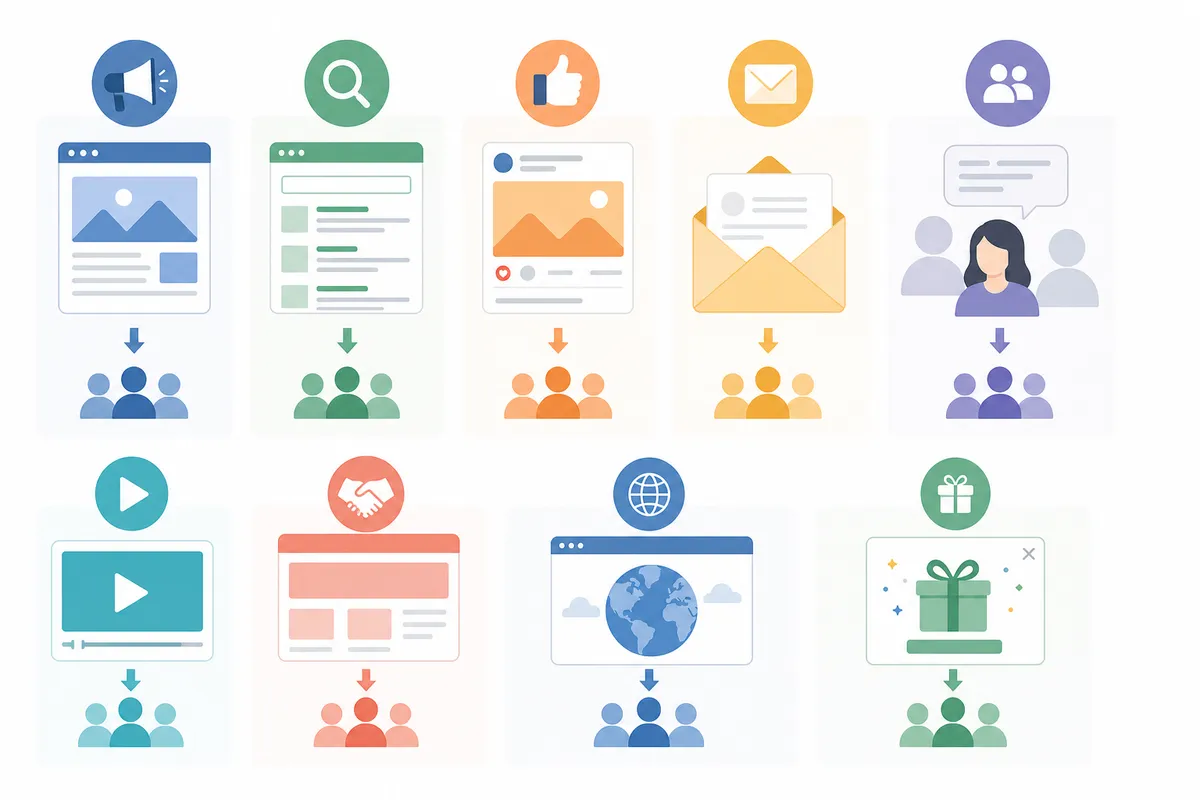
This table ranks each traffic strategy by what it costs to start, how fast the first visits come, and whether the traffic lasts once you stop. Both cost and speed shift with your niche.
| Strategy | Cost to start | Speed to first visits | Does the traffic last? |
|---|---|---|---|
| Paid search and social ads | High and ongoing | Same day | No, it stops when the spend stops |
| Email marketing | Low once you have a list | Days | Yes, while the list stays engaged |
| Online communities such as Reddit and Quora | Your time only | Days to weeks | Partly, since good answers keep getting found |
| Social media | Your time plus some design work | Weeks | Only while you keep posting |
| Influencer collaborations | Medium to high | Days after the post goes live | Short spikes unless the partnership continues |
| Guest posts and partnerships | Time spent on outreach | Weeks | Yes, published links keep sending visitors |
| Content marketing | Your time or a writer's fee | Weeks to months | Yes, and each piece supports the next |
| SEO | Time plus technical fixes | Months | Yes, the most durable channel here |
| AI search visibility | The same work as SEO and content | Months | Yes, while your pages stay current |
Need visitors this month? Paid ads and email are fastest. If you have more time than money, communities and SEO cost the least. For traffic that still arrives next year, SEO and content win, which is why most growing sites run at least one channel from each end of the table.
Search engine optimization: the channel that compounds
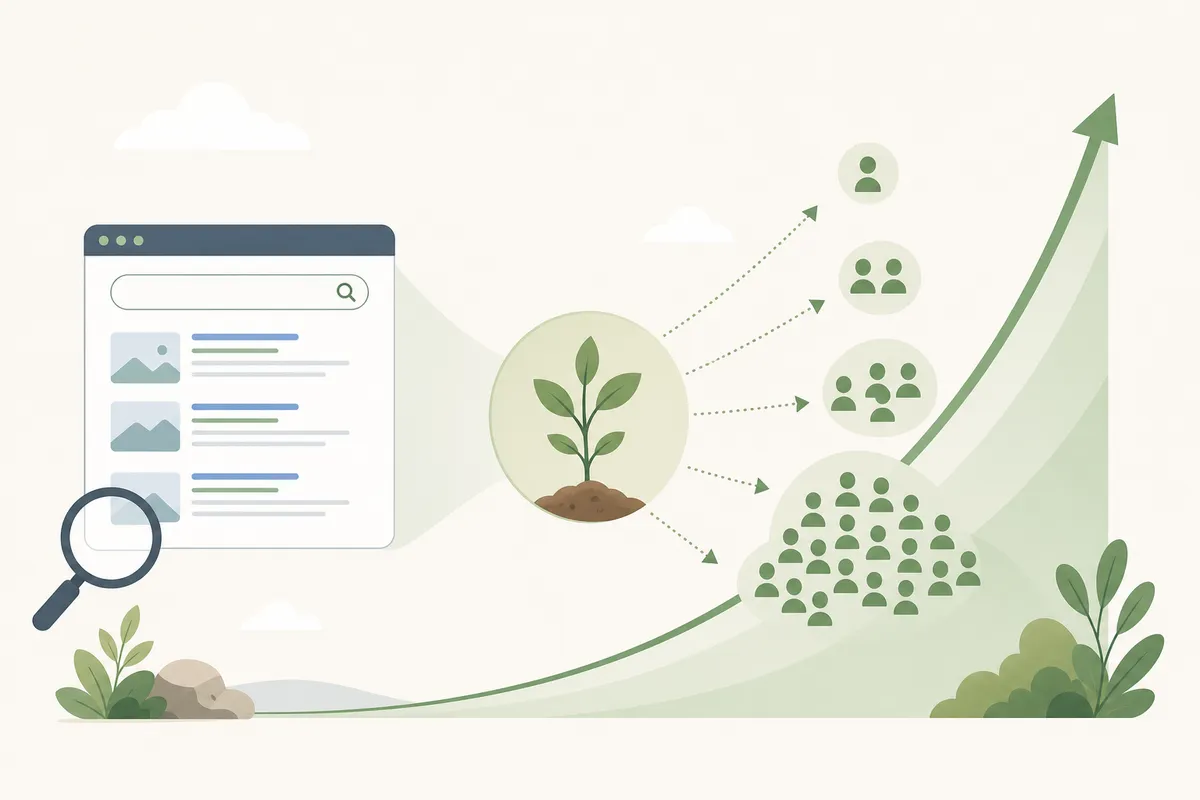
SEO earns you unpaid placement in search results. It starts slowly, but a page that ranks can send visitors for years with light upkeep. This guide to SEO traffic that compounds for years explains why the returns stack up.
Position matters. Backlinko reports that the first organic result on Google gets an average click-through rate of 31.7%, so moving a page from page two into the top three can turn it from invisible into your best source of leads.
Start with the keywords real buyers type
Begin with the questions your customers already ask. A keyword tool then shows which of those questions people actually type into Google, and how often, so you can spend your writing time where the demand is. Long, specific phrases are easier to rank for and closer to a purchase, as this guide to using long-tail keywords for more traffic and sales shows.
Use the main phrase naturally in your title and first paragraph. One agency guide suggests about 3% keyword density, but treat that as a ceiling. A page written for people, with the phrase and its variants spread out, reads better and carries less risk.
Fix the technical basics
Search engines have to crawl and understand a page before they can rank it. People on mobile devices made up 55.5% of all website traffic as of September 2023, which is why Airbnb made its platform 100% mobile-responsive. One agency guide adds that images should be compressed to under 300 KB and videos embedded from YouTube or Vimeo rather than uploaded, since both keep pages fast. Beyond that, serve every page over HTTPS, submit a sitemap, and check Google Search Console for crawl errors.
Google's own SEO Starter Guide is the best free reference for these basics.
Earn links with content worth citing
Links from reputable sites tell search engines a page can be trusted. You earn them by publishing something others want to reference, such as original data or a genuinely useful guide. Airbnb did it with local city guidebooks and by working with travel bloggers and news outlets. For the fuller picture, read this explainer on how organic website traffic grows.
If you serve a local area, complete your Google Business Profile with accurate hours and contact details, then keep the photos and reviews coming. It is one of the few search placements you control directly.
Content marketing that brings people back
Content marketing means publishing material that answers your audience's questions before they are ready to buy. As a traffic generation channel, it feeds your SEO and gives you something worth emailing.
HubSpot is the classic case. In 2005, co-founder and CEO Brian Halligan coined the phrase "inbound marketing," and the company built a huge library of guides and free courses around it. The blog, which started small, now draws millions of views a month.
Plan content in topic clusters
Random posts rarely build traffic. Choose one core topic and write a thorough overview page, then write supporting pieces that each answer a narrower question and link back to it. Search engines read that structure as depth, and readers always have a next page to open. This walkthrough on planning website content for more organic traffic shows how to map it out.
Be specific. A fitness coach who writes "5 quick workouts you can do between Zoom meetings" will beat one who writes "fitness tips," because the first title speaks to one reader's actual day.
Refresh what already ranks
Often your fastest content win is a post you already published. Pages stuck on page two usually need current facts and a clearer answer near the top. Updating them costs less than writing from scratch, and the page already has some trust. Here is why updating old content can lift your traffic, and how to choose which pages to refresh first.
Getting cited in AI search answers
More searches now end in an AI-written answer from Google AI Overviews, ChatGPT, Claude or Perplexity. Those answers still name and link their sources. Becoming one of them is the newest form of traffic generation, and most guides ranking for this topic skip it entirely.
The work overlaps almost completely with good SEO. A few habits simply count for more:
- Put a direct two or three sentence answer at the top of each section.
- Write paragraphs that still make sense when lifted out of the page.
- Use concrete figures and named examples, because vague claims rarely get quoted.
- Present comparisons as tables whose rows read well alone.
- Keep pages current. An outdated fact hands the citation to someone else.
Some searchers will read the answer and never click. The ones who do click tend to arrive with a clear question and a reason to trust you. For a step-by-step method, see this guide to growing organic traffic with AI-driven SEO.
Email marketing: traffic you own
An algorithm update can drop your rankings, and a platform can cut your reach without warning. Your email list is the one audience you keep.
For traffic generation, email has another strength: it moves people to act. Published figures show 59% of consumers say marketing emails influence their purchasing decisions, and 80% of business professionals say email marketing increases customer retention.
BuzzFeed grew repeat visits with newsletters split by interest, so each subscriber got the topics they chose. You can copy that on a small list. Segment by interest, write subject lines that are clear before they are clever, and design for a phone screen with one obvious button. Then send on a steady schedule and A/B test your subject lines.
Start collecting addresses early with a useful reason to subscribe, such as a checklist. A small, engaged list often sends steadier traffic than a big social following.
Social media and online communities
Both put you where people already spend their time. On social media you push content out, while in communities you answer questions people have already asked.
Social media: show what customers get
The scale is hard to ignore. Statista reports that Facebook has more than 2.9 billion monthly active users, and National Geographic built more than 100 million Instagram followers with strong photos and stories that send readers back to its site.
GoPro took a different route. It skipped the feature lists and shared videos its customers filmed under the #GoPro hashtag, plus regular photo challenges, which turned buyers into brand ambassadors. You can borrow the idea at any size by featuring real customer results and replying to comments. Pick one or two platforms your buyers actually use.
Communities: earn attention with answers
Reddit, Quora and Facebook groups can send highly targeted visitors if you show up to help. Marketer Connor Gillivan suggests a simple routine:
- Set up a profile that states your role and company honestly.
- Spend the first week reading, so you learn what each group values.
- Give it 30 minutes a day and answer questions in your field in full.
- Link to your own page only when it answers the question better than a reply can.
Spam gets you banned fast. A good answer, on the other hand, can stay a steady traffic source for years.
Referral traffic: guest posts, partners and influencers
Referral traffic comes from people clicking a link on someone else's site or feed. It is the traffic generation route where you borrow an audience that already trusts the host.
Guest posts and partner networks
Gillivan treats guest posting as a polite numbers game. List 50 or more blogs whose readers match your customers, pitch the editor a few titles that fit their content, and ask for their guidelines. Each published piece reaches new readers and usually earns a link that helps your SEO.
Partnerships work the same way. List 50 or more companies that serve your customers without competing with you, then start small with a newsletter swap. Podcasts are another door, since hosts always need guests. Once you have happy customers, a referral program turns them into a steady source of new visitors.
Influencer collaborations
Edelman reports that 63% of consumers trust influencers more than brands when making purchasing decisions. Daniel Wellington is the well-known case: the watch brand partnered with many Instagram creators who featured its watches, and those posts drove a wave of visitors to its site.
Choose creators whose audience matches your buyer, because fit matters more than follower count. Give each one a tracked link so you can see who actually sends visitors.
Paid ads: fast traffic you rent
Paid search and paid social are the quickest way to reach a chosen audience. Launch a campaign in the morning and you can see visitors by evening.
WordStream reports an average click-through rate of about 3.17% for Google Ads search campaigns. Social ads let you target by interest and job title. Monday.com, launched commercially in 2014, used paid campaigns to stand out in a crowded market of project management tools and to grow its sign-ups. Retargeting shows ads to people who visited without acting, which often brings them back once they are ready.
Paid traffic stops when the budget stops, so treat it as the short-term part of your traffic strategy. Use it to test offers quickly or to cover the months while SEO builds. Set a firm budget. Then track cost per lead and cut any campaign that fails to convert.
How to test traffic generation strategies without wasting months
The costliest mistake is running a channel for a year without ever learning whether it works. Treat each channel as an experiment with an end date and a number to beat.
Run each test for one to two months
Gillivan's rule of thumb is to run each new strategy for one to two months and measure it in Google Analytics. Then you make one of three calls.
| Result after one to two months | What it looks like in analytics | What to do next |
|---|---|---|
| Strong | Visits from the channel are growing and turning into leads or sales | Keep it, then find ways to repeat and scale it |
| Middling | Some visits and some conversions, but not yet worth the effort | Extend the test by one more month to gather more data |
| Weak | Few visits, or visitors who leave without taking any action | Pause it and move the time or budget elsewhere |
Expect three to six months of testing before you have a playbook that fits your business. It sounds slow. It still beats a year of effort spread across channels you never measured. Gillivan reports that the 30 tactics he tested together grew FreeeUp's traffic by 179.02%, from 342,902 sessions to 956,774.
Measure what matters
Tag every link you share with UTM parameters so each traffic source shows up clearly. Then look past visits to sign-ups and sales by channel, because a channel with half the visits and twice the conversions is the better one. After a quarter of simple logging, the answer is usually obvious. For a real example of this loop, read the SearchBlueprint growth story, which describes a 347% traffic increase from running the product on its own site.
Common traffic generation mistakes and when to get help
The same errors turn up whatever the size of the business:
- Chasing broad keywords, which are hard to win and mostly attract browsers. That is why long-tail keywords often bring more leads than head terms.
- Relying only on paid ads, which works right up until the budget runs out.
- Ignoring mobile, even though more than half of all traffic arrives on phones.
- Publishing in bursts, which teaches readers and search engines to stop checking.
- Skipping measurement, so you keep funding whatever feels busy.
What you can do yourself
Much of this suits a do-it-yourself approach. You can answer community questions and fix basics like image sizes with free tools. A few focused hours a week on traffic generation will get you real progress.
When a professional pays off
Bring in help when the problem is technical or the stakes are high. A site that search engines are not indexing is one example. A sudden traffic drop after a redesign or migration is another, and so is a paid budget large enough that wasted clicks hurt. An audit that shows what is holding your pages back usually costs less than months of guessing.
FAQs
What are the most effective traffic generation strategies for a new website?
Start with SEO and content for long-term growth, and pair them with one faster channel such as community answers or a small paid test. A new site has little authority, so specific long-tail topics are the easiest place to begin.
How long does it take for SEO to bring in traffic?
SEO usually takes months to show results, and the timing depends on your competition and how often you publish. Judge progress over a full quarter rather than after a few weeks.
Is paid advertising worth it for small businesses?
It can be, as long as you track cost per lead and stop campaigns that do not convert. Paid ads work best for testing offers and filling the gap while organic channels grow.
How do I know which traffic source is working best?
Tag your links with UTM parameters and compare channels in Google Analytics by conversions as well as visits. A source that sends fewer people can still be your best one if those people buy.
Do AI search tools like ChatGPT send traffic to websites?
Yes. AI answers from tools such as ChatGPT and Google AI Overviews cite and link their sources. Clear, specific pages are the ones most likely to be quoted and clicked.
Talk to the team about your first two channels
Pick two traffic generation strategies from the comparison table, one that pays off fast and one that compounds, and start a 60-day test on both this week. To see how a full site review lays out your rankings and fixes before you commit, open this sample SEO report, then talk to the team about which channel to test first.
Resources / References
Sources
About the author
SearchBlueprint researched, wrote and scored this article with the content pipeline our customers run on their own sites. The score in the byline is what our content engine gave this page before it published. Nothing here is reviewed by hand, which is the point: it is the product's output, published where anyone can check it.