Why Prioritize Local SEO Before Any Other Marketing Channel
SearchBlueprint · · 12 min read · scored 95/100

Why prioritize local SEO? Because it reaches buyers at the moment they decide. BrightLocal reports that 80% of US consumers search online for local businesses every week, and studies cited by local SEO platforms find that 76% of people who search for something nearby on a smartphone visit a related business within 24 hours.
Almost no other channel puts you in front of someone that close to a purchase, and none does it without charging for every click. This guide is for owners and marketers of businesses that serve a physical area, from restaurants and salons to electricians and multi-location brands. It covers the evidence, how local rankings are decided, who gains the most, and the order to do the work in.
The numbers behind why you should prioritize local SEO
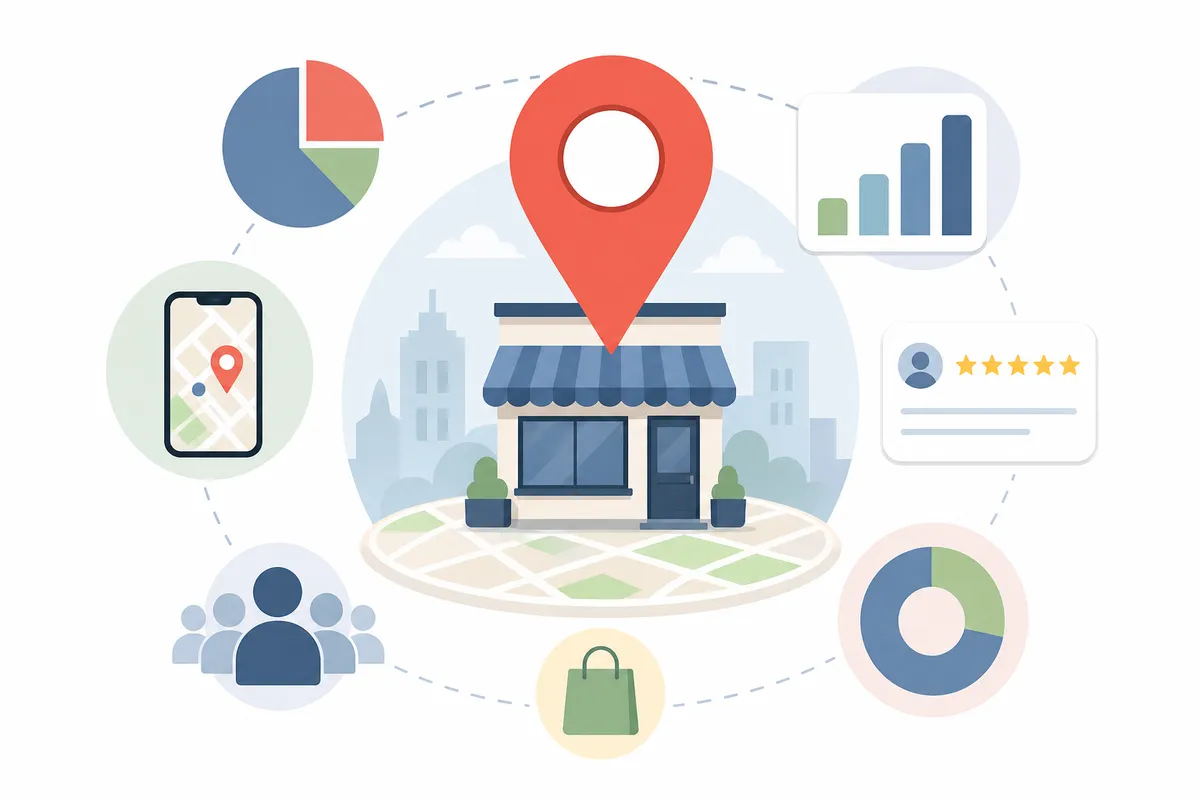
Local search is not a side channel. Nearly 46% of all Google searches are believed to have local intent, and BrightLocal's research finds 72% of consumers using Google when they look up local business information. Google found that mobile searches for "store open near me" grew by more than 250% between 2020 and 2022, with "where to buy" and "near me" searches growing by more than 200% over the same period. People now reach for a search box for errands they once handled from memory.
Local searchers act, and they act fast
A local query is rarely research. Someone typing "emergency electrician" has a tripped breaker and a dark kitchen. The urgency shows up in the data: beyond the 24-hour visit figure above, 92% of people are reported to pick a business from the first page of local results, which leaves page two with almost nothing. BrightLocal also finds that around one in eight people look up a local business online more than once a week, so a first-page position keeps paying long after you earn it.
Buyers already prefer local
BrightLocal found that 56% of consumers deliberately support local stores and seek out locally sourced products. You do not need to persuade anyone to shop nearby. You only need to be findable at the moment they try.
How local SEO differs from general SEO and paid ads
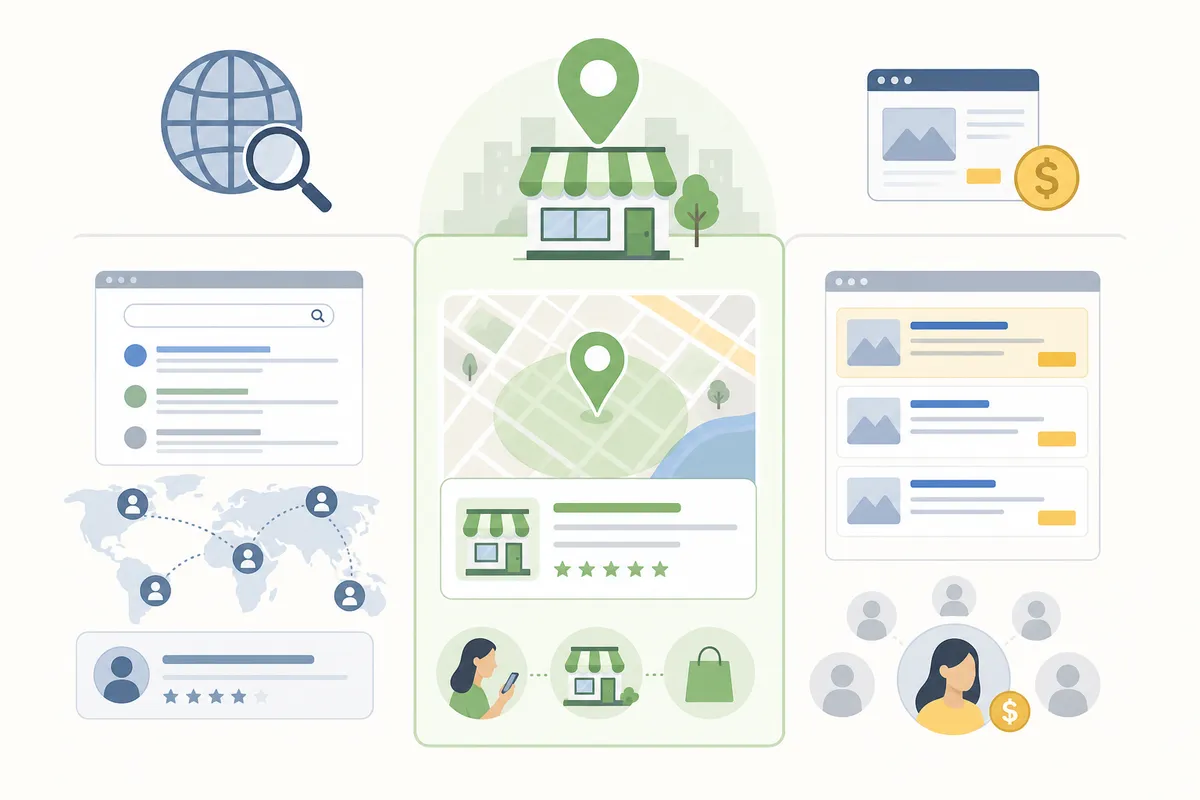
General SEO ranks pages. Local SEO ranks your business, in a specific place, for people near it. Google's guidance on local ranking names three deciding factors: relevance, how well you match the search; distance, how far the searcher likely is from you; and prominence, how well known and well reviewed you are. The documentation is public on Google Search Central.
Distance is the factor no budget can buy. A national chain can outspend you on content and links, but it cannot be closer to a searcher in your neighborhood than you are. That one variable is why the local game has different winners than the national one.
Local results also display differently. Google often answers with a map and three business listings above the standard results, and it does this even when the search never names a city. Type "best pizza" and Google assumes you mean nearby. Your website competes for the blue links while your Business Profile competes for the map, and local SEO works both at once, which is why it is not interchangeable with the SEO you would run for a national blog.
| Channel | Where you appear | Who you reach | What it costs | What happens when you stop |
|---|---|---|---|---|
| Local SEO | The map pack, Google Maps, and localized organic results | People near your business, often ready to buy today | Time, consistency, and tooling; clicks are free | Rankings fade slowly; your profile, reviews, and citations remain |
| General SEO | National organic results for topic searches | Anyone researching the subject, anywhere | Months of content and link building | Strong pages keep ranking, though competitors regain ground over time |
| Paid search ads | Sponsored slots above the results | Whoever you bid for, local or not | A charge for every click, at prices that climb with competition | Visibility ends the day the budget does |
Ads still have a job: they produce demand this week. An ad buys visibility for exactly as long as you pay for it, though, while local rankings keep working on effort you already spent. If you want the organic route mapped step by step, this guide to getting on the first page of Google in your city without ads walks the whole path.
Seven reasons to put local SEO first
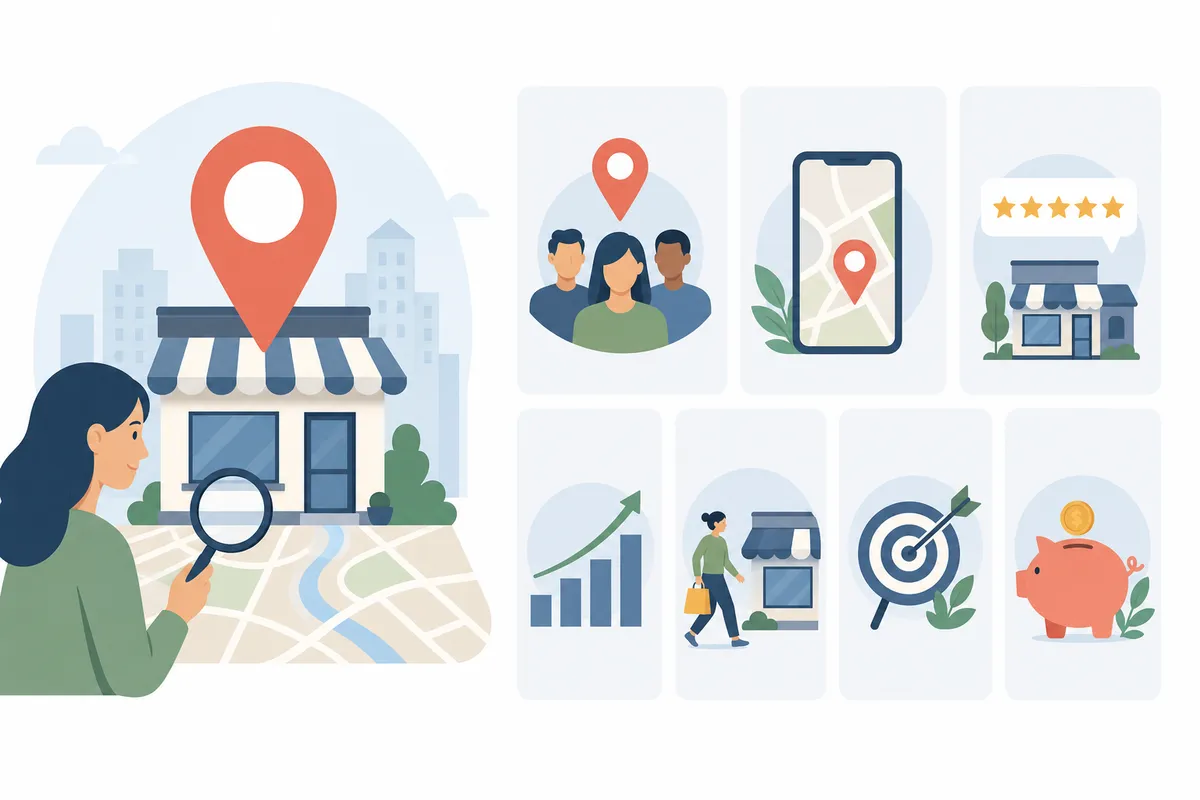
1. You appear where the decision happens
The map pack shows your rating, hours, phone number, and directions before your website ever loads. A searcher can call you straight from the results page. For a business that sells appointments or dinner seats, that is the shortest path from search to sale. Restaurants see it most clearly: turning searches into full tables is largely a matter of winning that one screen at 6 p.m.
2. The traffic qualifies itself
A visitor from "electrician near me" needs an electrician, in your area, now. You spend less time on leads who were never going to buy, and nothing on reaching people three states away. Fewer, better calls beat more, worse ones. The guide for electricians booking more jobs from Google shows what that looks like for one trade.
3. Reviews build trust you cannot buy
93% of consumers say online reviews influence their buying choices, and BrightLocal reports that nearly half of consumers trust online reviews as much as personal recommendations. Reviews also feed prominence, one of Google's three ranking factors, so the same stars that persuade customers help you rank. Salons and other appearance-led businesses feel this twice over, which is why turning local searches into booked chairs depends on reviews and photos more than on any blog post.
4. Clicks from the map are free
Every call and direction request from your profile costs nothing per interaction. The investment is up front: accurate data, real photos, review replies, a page per location. Paid channels charge you again for every customer, forever. Local SEO front-loads the cost, then keeps delivering on work you already did.
5. Distance and prominence beat brand size
Research cited by BrightLocal found that 94% of high-performing brands run a dedicated local marketing strategy, against 60% of average performers. The winners are not ignoring local search; they fund it. The map still levels the field, because a solo practice that is closer, better reviewed, and more complete can sit above a national chain's thin corporate listing. Veterinary clinics are a clean example of owning "vet near me" results against bigger networks.
6. The outcomes get measured, not promised
Local SEO produces numbers you can audit. BrightLocal's case studies report a 130% increase in organic sessions for the property emergency firm PuroClean and a 32% increase in Local Pack clicks for the automotive brand Valvoline after local SEO work. Your numbers will depend on your market and how far behind you start, but the channel leaves a paper trail you can check month by month.
7. The work compounds
A citation stays cited. A review stays published. A location page keeps ranking while you sleep. An ad account resets to zero every month, and last month's spend buys nothing this month. Starting local SEO early gives the asset more time to compound before a competitor starts building theirs.
Who gains the most when you prioritize local search
Any business that serves a defined area qualifies, and you do not need a storefront. Service-area businesses such as plumbers, tutors, and mobile groomers can hide their address and list the areas they cover instead. What matters is that your customer's search has a place attached to it.
| Business type | Typical search | Why local SEO pays quickly | The signal to feed first |
|---|---|---|---|
| Restaurants and cafes | "best ramen near me" | Diners pick from the map pack minutes before they eat | Reviews, photos, and accurate hours |
| Trades and home services | "emergency electrician in Austin" | Urgent jobs go to whoever ranks and answers the phone | Reviews and service-area settings |
| Health, dental, and pet care | "vet near me" | Patients choose nearby providers they can verify | A complete profile with recent reviews |
| Salons and studios | "balayage salon near me" | Bookings are local by definition | Photos, reviews, and a booking link |
| Multi-location brands | A brand or category plus a neighborhood | Each branch competes in its own map, on its own merits | A location page and consistent details per branch |
Industry specifics change the tactics more than the strategy. Hours, photos, and menus matter more for dining; response time and service areas matter more for the trades. The restaurant SEO page shows how far the same base moves can be tuned for a single industry.
Multi-location brands sit at both extremes. Each branch ranks or fails on its own profile and its own reviews, so a strong brand with a neglected branch listing loses that neighborhood to whoever maintains theirs. The upside is that the fix is repeatable: the process that lifts one branch lifts forty.
The first five moves, in order
| Order | Move | Why it comes first |
|---|---|---|
| 1 | Complete your Google Business Profile | It feeds the map pack directly, and research cited across the industry finds customers 2.7 times more likely to consider a business reputable when its profile is complete |
| 2 | Make every citation consistent | 62% of consumers would avoid a business after finding incorrect information about it online, so wrong data actively repels buyers |
| 3 | Ask for reviews and reply to every one | Reviews drive prominence and persuasion at the same time |
| 4 | Build one page per location or service area | It gives Google a local page to rank and searchers a local page to land on |
| 5 | Localize your on-page basics | City-level titles, headings, and an embedded map connect your site to your profile |
Start with the profile because it is the most productive hour you will spend: fill every field, keep hours current through holidays, and add photos you actually took. Then chase consistency. Your name, address, and phone number should be 100% identical everywhere they appear, down to the suite number, and that directory-by-directory cleanup is tedious enough that many competitors never finish it.
Location pages deserve real care. A good one carries genuinely local detail: the neighborhoods you serve, the routes you cover, the conditions that drive demand there. A bad one swaps a city name into a template, and Google treats it accordingly. A free location page generator can draft the structure, but the local specifics have to be true. If you would rather run the whole sequence in one place, there is a local SEO toolkit built around a rank grid and location pages that packages these moves.
Once those five hold, two slower plays extend the lead. The first is local content: pages and posts that answer what people in your area actually ask, such as where to park near your shop or how fast you can reach each suburb. The second is local links. A mention from a town newspaper, a local chamber of commerce, or a business association you belong to carries your name and details onto another trusted page, and every consistent mention makes your listing easier for Google to verify. Neither pays off in the first month, which is exactly why the map looks settled in markets where one business has taken local search seriously for years.
How to tell your local SEO is working
Measure before you start, or you will never know what changed. Three instruments cover most of it:
- A rank grid, which checks your map pack position from points across your city rather than one averaged location, so you can see where you win and where you disappear a few blocks away. Run one with this free local rank grid.
- Your Google Business Profile's own metrics: calls, direction requests, and website clicks.
- Organic sessions and conversions on your location pages.
Then attach money to the movement. An average job has a known value in most businesses, so an extra few calls a week is a revenue figure rather than a vanity metric. PuroClean's 130% organic session growth mattered because emergency calls sat behind those sessions.
Give the measurement a rhythm. Check the grid monthly and put the positions beside your booking or call log. Grid movement that never becomes diary movement means the wrong keywords are winning, and that is a targeting fix rather than a ranking one.
When another channel should come first
Local SEO is not the answer to everything. If you sell online to a national market with no service geography, general SEO and paid channels deserve the first dollar. If you need demand this week, ads deliver faster, since local rankings typically build over weeks and months rather than days. And no ranking fixes a product problem: a stream of two-star reviews is feedback to act on before it is a marketing issue. Most location-bound businesses do best running local SEO as the foundation and adding paid on top when they want speed.
FAQs
What does it actually mean to prioritize local SEO?
It means funding map pack and localized organic visibility before other marketing: completing your Google Business Profile, fixing citations, gathering reviews, and building location pages ahead of national content campaigns or always-on ads.
How long does local SEO take to show results?
It depends on your market and your starting point. Foundation fixes such as profile completion and citation cleanup can show movement within weeks, while competitive map pack positions typically take months of reviews and consistency to win.
Is local SEO worth it for a business without a storefront?
Yes. Service-area businesses like plumbers and mobile pet groomers can hide their address on their profile and list the areas they serve instead. Plenty of local-intent searches are for services that come to you, not places you walk into.
Do reviews affect local rankings, or only persuasion?
Both. Prominence is one of the three factors in Google's documented local ranking guidance, and reviews are a large part of how prominence is assessed. On the persuasion side, 93% of consumers say online reviews influence their buying choices, so reviews pay twice.
Can a small business outrank a national chain locally?
Yes, and it happens constantly. Distance cannot be bought, and a complete, well-reviewed profile from a nearby business regularly sits above a chain's thin corporate listing. The chain wins the national query; the map favors whoever is closest and best reviewed.
Put a number on your own map
The question of why you should prioritize local SEO gets settled fastest with your own data: measure where you rank across your city today and price what one extra call a day would be worth. Look through a sample SEO report to see exactly what an audit measures, then talk to the team about your market.
Resources / References
Sources
About the author
SearchBlueprint researched, wrote and scored this article with the content pipeline our customers run on their own sites. The score in the byline is what our content engine gave this page before it published. Nothing here is reviewed by hand, which is the point: it is the product's output, published where anyone can check it.