How to Leverage Influencers for Organic Growth That Lasts
By Toy Wen Da, Co-Founder · Updated · 10 min read · scored 92/100
Treat creators as a trust and content engine, and stop thinking of them as an ad slot. Pick partners whose audience matches yours and build long-term collaborations that produce tutorials, reviews and mentions. The attention then turns into branded search, backlinks and AI-answer visibility that outlive any single campaign.
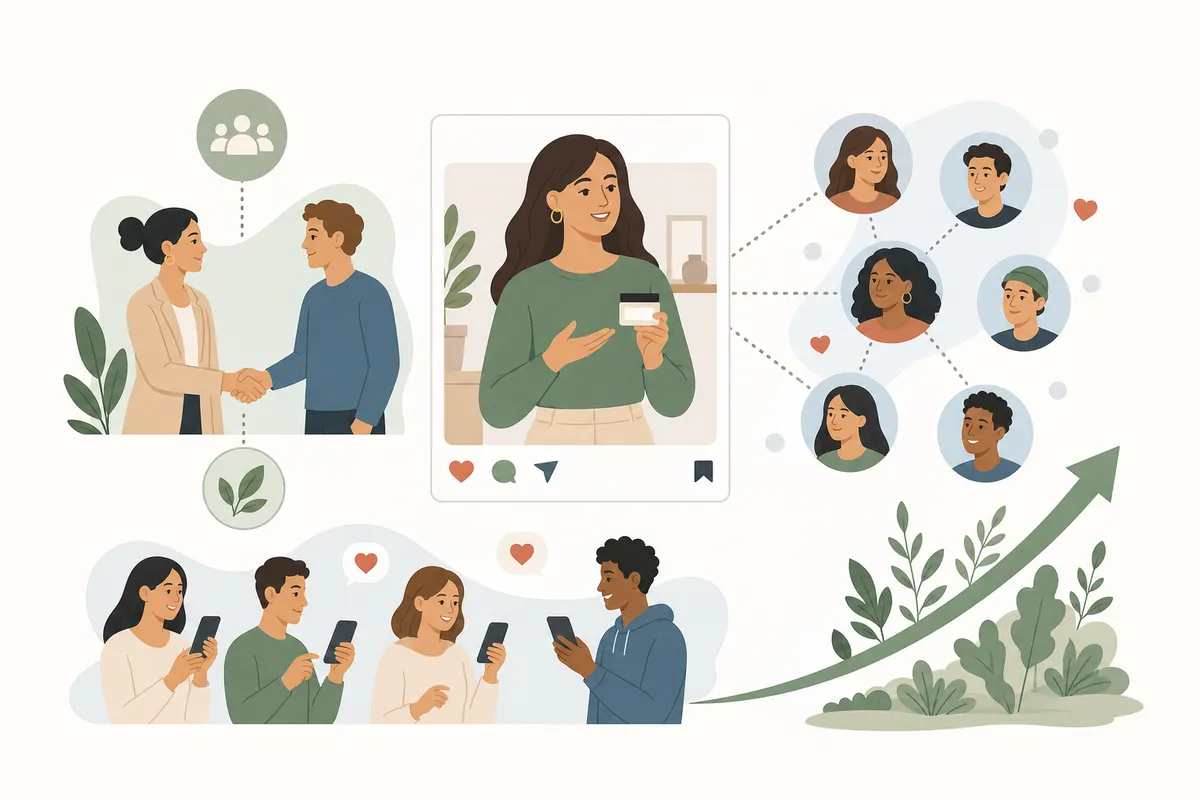
Most guides stop at reach: pick an influencer, pay for a post, count the impressions. This one covers the part that compounds. A follower count fades within a week, but the tutorial that ranks on YouTube, the rise in people searching your brand name and the mention an AI assistant quotes back to a buyer stay put.
Why influencers drive organic growth beyond impressions
Influencers transfer trust. A creator has already done the slow work of earning an audience's attention, and when they recommend you, some of that credibility moves to your brand. Deepak Bansal, a digital marketer who cites over 19 years in the field, wrote for the Forbes Business Council in December 2024 that influencers humanize a brand and create an emotional connection traditional advertising struggles to reach.
That trust has second-order effects a paid impression never produces. People who see a creator use your product search your brand name later, and they leave comments, film their own reactions and write reviews. Some run blogs and newsletters that link to you. Each of those signals feeds your organic presence, and none of them stops when the campaign budget does.
There is also a content-quality argument. Influencer strategist Sarah Adam covers it in a widely shared LinkedIn breakdown of creator partnerships. If you are focused on lead generation, she notes, an audience consuming 100% branded content gets bored fast because it is not relatable. Creators speak to your ideal customer in that customer's own register, which is the material search engines and AI assistants prefer to surface.
Choose the right influencer tier before you choose a name
The biggest early mistake is picking a famous name when a fitting one would do better. Influencers sort into four tiers by follower count, and each tier does a different job.
Match the tier to the objective
| Tier | Follower range | What it does best | The trade-off |
|---|---|---|---|
| Mega-influencers | 1 million+ | Mass awareness fast, ideal for major launch moments | Expensive, and audiences are broad rather than targeted |
| Macro-influencers | 100,000 to 1 million | Brand storytelling to a large but still engaged base | Fees climb, and niche fit needs careful vetting |
| Micro-influencers | 10,000 to 100,000 | High-trust recommendations inside a specific community | Small reach per post, so you usually need several partners |
| Nano-influencers | 1,000 to 10,000 | Highly personal, deeply trusted connections, cost-effective for small brands | Coordinating many small partners takes real management time |
For organic growth, the lower tiers usually win. A micro-influencer with 10,000 to 100,000 followers in your exact niche sends fewer people, but those who arrive already trust the recommendation, engage with the content and search for you by name. Bansal's Forbes piece makes the same call, prioritizing relevance and engagement over sheer follower count, and it suggests mixing tiers rather than betting everything on one big name.
Vet engagement before you sign anything
Before any outreach, define what you want: awareness, traffic, leads or sales. Then build a picture of your target audience and check that a candidate's followers match it on age, interests and location. Discovery tools such as BuzzSumo, Traackr and Upfluence help you find creators aligned with your niche, while SocialBlade and Heepsy let you sanity-check engagement rates and audience authenticity before money changes hands.
An account with 200,000 followers and a comment section full of bots will do less for you than a nano creator whose every post starts a genuine conversation. Engagement rate predicts whether attention converts into searches, links and sales far better than follower count does.
Ways to work with influencers beyond sponsored posts
A single sponsored post is the shallowest version of this channel. Sarah Adam's LinkedIn breakdown lists ten ways brands can work with creators beyond sponsorship, from education and events to community building, and even offering equity so a creator becomes a genuine extension of the growth team. The formats below produce assets you keep.
| Collaboration format | What the creator makes | The asset you keep | Where organic growth shows up |
|---|---|---|---|
| Tutorials and workshops | How-to videos, webinars, walkthroughs | Evergreen educational content that outlives the campaign | YouTube search, long-tail queries, embeds on your own pages |
| Expert commentary | Opinion posts and videos on LinkedIn and YouTube | Credible third-party voices attached to your topic | AI assistant answers, branded search interest |
| Ambassador programs | Ongoing mentions across channels over months | Repeated exposure to one warm audience | Branded search volume, direct traffic |
| Community building | Meetups, forums, member discussions | An owned audience plus steady user-generated content | Returning visitors, reviews, UGC that mentions you |
| Event collaborations | Talks, live coverage, recap content, registration drives | Coverage and links from people who attended | Referral links, brand mentions, follow-up searches |
Education and tutorials
Producing good product tutorials in-house is slow, and the results often feel corporate. Creators in your niche can make videos faster, and viewers find them more engaging. The format extends naturally to webinars and workshops, and a well-made tutorial keeps answering searches for years.
Expert commentary, ambassadors and community
Creators talk to your ideal customer better than your brand account does, so let a few of them carry your point of view across channels over time. Ambassadors who mention you routinely are what move branded search, whereas a single mention barely registers. Adam also suggests letting a small group of influencers build your community for you through meetups and active discussion, which would take a brand years to build from scratch.
Consultancy and honest product feedback
Influencers watch your market and your competitors all day. Bringing them in as consultants and asking for blunt feedback on the product often returns more value than the content itself. A creator who helped shape the product also promotes it more credibly.
Turn influencer attention into organic search growth
Most brands skip this step, and it is where the compounding happens. Creator collaborations also sit comfortably alongside the other traffic plays that work in a site's first 30 days, since they generate signals a brand-new domain cannot produce for itself.
Branded search and backlinks
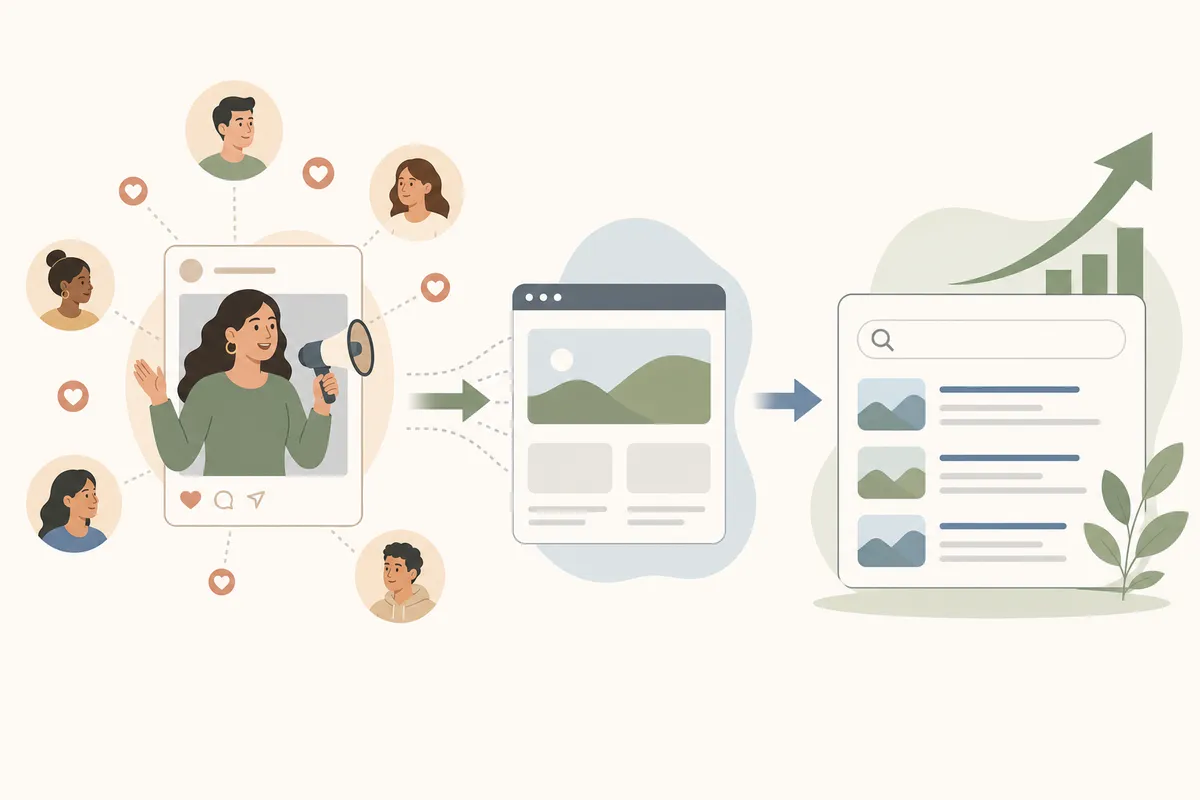
Links in social posts and video descriptions are usually nofollow, so they rarely pass authority directly. The organic value arrives sideways. Viewers who trust the recommendation search your brand name, and growing branded search is a strong signal to Google that people want you specifically. Meanwhile, bloggers, newsletters and industry media pick up the attention creators generate, and those pickups are real backlinks. One good creator campaign often earns more natural links than months of cold outreach.
Visibility in AI answers
Adam's LinkedIn post makes an observation worth acting on: large language models love YouTube and LinkedIn. You can brief creators to make content aligned with the exact questions your buyers ask AI assistants, in the formats those systems draw on most. When ChatGPT, Perplexity or Google's AI Overviews assemble an answer about your category, third-party creator content mentioning your brand is a credible source for them to cite. Few competitors brief for this yet, which makes it one of the cheapest visibility gaps left.
Repurpose creator content on your own site
Every collaboration should leave something on your domain. Embed the tutorial video on the relevant product page, quote the review (with permission) on your landing pages, and mine the comment sections for the questions people actually ask, then turn them into FAQ entries. If your pages do not convert the attention creators send, the problem is usually on your side of the fence, so work through the fixable reasons a website gets no traffic before you spend another dollar on partnerships.
Keep it authentic and disclosed
Audiences spot inauthenticity fast, and a partnership that reads as a paid script damages both parties. The fix is structural. Work with creators who would plausibly use your product anyway, give them a clear brief on messaging, and then leave the execution alone. Bansal's advice here is specific: provide guidance, but avoid over-restrictive content briefs, because creators earned their audience with their own style.
Long-term relationships win for the same reason. A March 2025 analysis from Lindenwood University's communications blog identifies extended partnerships as a defining trend. An influencer who integrates a brand into daily life over months produces endorsements that feel genuine and messaging that stays consistent. A single mention is an ad, but twenty mentions across a year form a relationship the audience believes.
Disclosure is required. Under FTC guidance for social media influencers, paid partnerships must be disclosed clearly, for example with #ad or #sponsored. Place the label where viewers will actually see it, ideally at the start of the content. Clear disclosure does not suppress results, while hidden sponsorships that surface later do damage.
Measure organic growth over vanity reach
Campaign dashboards measure the post, but you also need to measure what the post left behind.
Start with the direct layer: engagement rate, reach, click-through rate and conversions, tracked through Google Analytics, Meta's pixel and each platform's native insights. Unique promo codes, tracking links and campaign hashtags tie specific creators to specific outcomes, which tells you who to renew.
Then watch the organic layer over the following weeks. Ask whether more people are searching your name than before the collaboration, and whether people are typing your URL after seeing you in a video. Check whether blogs or media outlets picked the story up and linked to it, and whether pages related to the creator's content are moving in rankings. Finally, look for customers producing UGC and reviews you never paid for.
Attribution here is fuzzy. A viewer might watch a tutorial, search your brand a week later and convert from what analytics calls organic search. The channel is working as designed in that case, even if the report credits something else. Judge partnerships on the trend lines they bend rather than on last-click conversions alone, and expect the organic effects to build over weeks. For more on reading those trend lines, the guides on the SearchBlueprint blog cover branded search, rankings and traffic diagnostics in depth.
FAQs
What is the difference between influencer marketing and using influencers for organic growth?
Influencer marketing usually means paying for posts and measuring reach. Using influencers for organic growth means designing partnerships so the attention converts into durable assets: branded search demand, backlinks from coverage, evergreen tutorial content, user-generated content and mentions AI assistants can cite. The channel is the same, but the horizon is longer.
How many followers should an influencer have?
It depends on the job. Nano creators (1,000 to 10,000 followers) offer the most personal trust and are cost-effective for small brands, and micro-influencers (10,000 to 100,000) build strong authority within specific communities. Macro (100,000 to 1 million) and mega (1 million+) buy reach. For organic growth, engaged niche audiences usually outperform big generic ones.
How do I find the right influencers without a big budget?
Search tools like BuzzSumo, Traackr and Upfluence surface creators in your niche, and platforms like SocialBlade and Heepsy help you verify engagement and audience authenticity before committing. Starting with a handful of nano and micro creators keeps costs low while you learn which audiences respond.
Do influencer posts help SEO directly?
Mostly indirectly. Social links are typically nofollow, so they pass little direct authority. The SEO value comes from branded search growth and from real backlinks earned when media outlets cover the collaboration. Creator content ranking on YouTube for your topics and content you repurpose onto your own pages add to it.
What disclosure rules apply to influencer partnerships?
Under the FTC's Endorsement Guides, influencers must disclose paid or sponsored relationships clearly, using labels like #ad or #sponsored, or a verbal mention in video. The disclosure should sit where audiences will see it, ideally at the beginning of the content. As the brand, make disclosure a contractual requirement rather than leaving it to chance.
Fix your site before the first outreach email
Influencer traffic converts only as well as the site it lands on, so audit your own pages before you scale up creator partnerships. Look through a sample SEO report to see what a full audit checks, then talk to the team about running one on your domain. Close the technical and content gaps first, and every creator mention you earn afterward compounds instead of leaking.
Resources / References
- Forbes Business Council in December 2024
- nofollow
- Google's AI Overviews
- FTC guidance for social media influencers
- FTC's Endorsement Guides
Sources
About the author
SearchBlueprint researched, wrote and scored this article with the content pipeline our customers run on their own sites. The score in the byline is what our content engine gave this page before it published. Nothing here is reviewed by hand, which is the point: it is the product's output, published where anyone can check it.